- English
- French
- German
- Portuguese
- Spanish
- Russian
- Japanese
- Korean
- Arabic
- Greek
- German
- Turkish
- Italian
- Danish
- Romanian
- Indonesian
- Czech
- Afrikaans
- Swedish
- Polish
- Basque
- Catalan
- Esperanto
- Hindi
- Lao
- Albanian
- Amharic
- Armenian
- Azerbaijani
- Belarusian
- Bengali
- Bosnian
- Bulgarian
- Cebuano
- Chichewa
- Corsican
- Croatian
- Dutch
- Estonian
- Filipino
- Finnish
- Frisian
- Galician
- Georgian
- Gujarati
- Haitian
- Hausa
- Hawaiian
- Hebrew
- Hmong
- Hungarian
- Icelandic
- Igbo
- Javanese
- Kannada
- Kazakh
- Khmer
- Kurdish
- Kyrgyz
- Latin
- Latvian
- Lithuanian
- Luxembou..
- Macedonian
- Malagasy
- Malay
- Malayalam
- Maltese
- Maori
- Marathi
- Mongolian
- Burmese
- Nepali
- Norwegian
- Pashto
- Persian
- Punjabi
- Serbian
- Sesotho
- Sinhala
- Slovak
- Slovenian
- Somali
- Samoan
- Scots Gaelic
- Shona
- Sindhi
- Sundanese
- Swahili
- Tajik
- Tamil
- Telugu
- Thai
- Ukrainian
- Urdu
- Uzbek
- Vietnamese
- Welsh
- Xhosa
- Yiddish
- Yoruba
- Zulu
What glass jar is used for preserving food?
If you want to safely and effectively store food, the glass food canning jar is the standard for both large businesses and small-scale makers. These specific cases are carefully made from high-quality soda-lime or high-white glass. They are made to survive thermal sterilization methods while keeping oxygen and wetness out. Glass food canning jars have a non-reactive surface that keeps the original taste, texture, and nutritional value of foods that have been kept. Plastic options may leach chemicals. Because they can hermetically seal, they create the vacuum integrity needed for storage that doesn't need cooling. This makes them essential for makers who work with jams, pickles, sauces, and fermented foods.
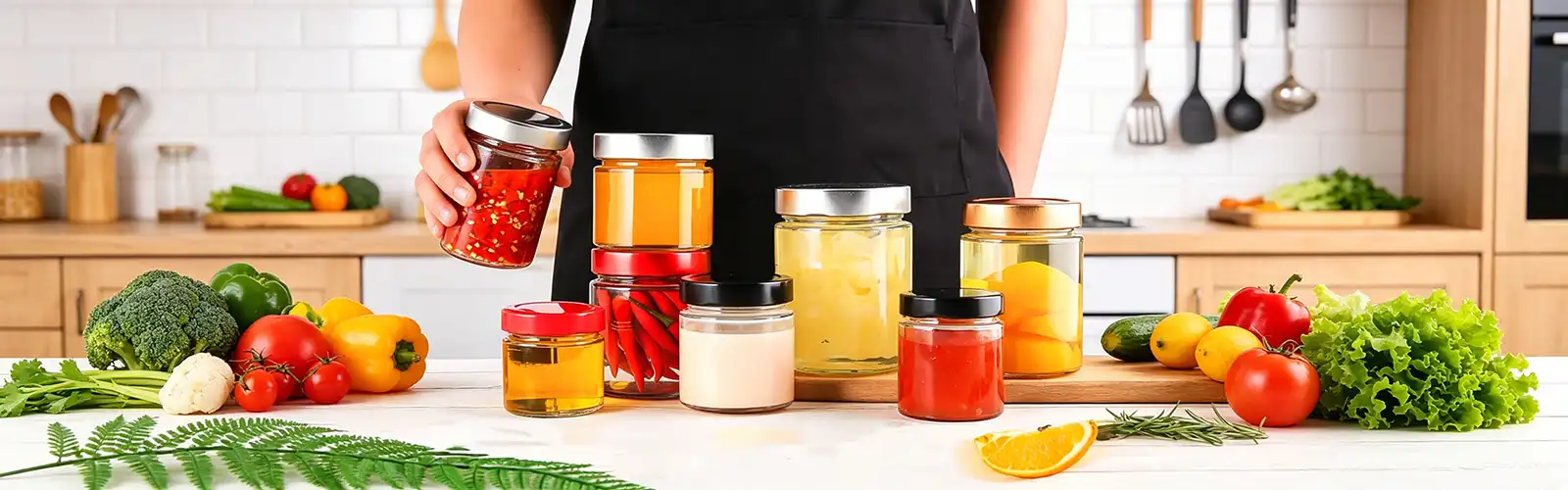
Glass Food Canning Jars: Types and Their Uses
Choosing the right container is very important when it comes to preserving food, and glass jars have changed a lot over the years to meet a wide range of business needs. High-white glass is used to make modern canning jars. This type of glass is very clear and pure, so customers can see right away how good the product is. This openness builds trust and makes products look better on store shelves, which is especially helpful for high-end food brands.
Material Composition and Safety Standards
High-white glass is a better type of soda-lime glass because it has less iron in it, which makes it very clear and free of the greenish tint that most glass has. This material's make-up makes sure it doesn't contain BPA and passes strict leaching tests according to ISO 7086 standards, which means it won't contain any heavy metals. The non-porous surface keeps flavors from spreading from one use to the next, which is a big problem for makers who have to deal with a lot of different product lines. Chemical resistance stays high, and hydrolytic resistance is rated at Class HGB1. This means that the glass stays strong even when high-acid foods like tomato products or vinegar-based pickles are stored for a long time.
Jar Size Specifications and Applications
It's helpful for commercial buyers to know how different jar sizes meet different business needs. Smaller sizes, like 100ml and 150ml, are great for sauces that you only need for one serving, handmade honey portions, or gift companies' favorite premium jam samplers. The 180ml versions come in both tall and short shapes, which gives you options for how to create the labels and where to put them on the shelf. The best sizes for store food items are in the middle, like 220ml, 280ml, and 380ml. These sizes are convenient for customers and don't cost much to package. Larger sizes like 500ml, 750ml, and 1000ml are good for food service businesses, bulk sales, and family-sized amounts that most supermarkets carry. Each standard helps buying managers make the most of their product portfolios by serving different types of customers.
Mouth Types and Sealing Mechanisms
Choosing between designs with wide-mouth or regular-mouth has a big effect on how efficiently they work. Wide-mouth jars make it easier to fill them faster on production lines, especially when chunky items like whole fruits or pickled veggies are being used. They also make cleaning easier and make it easy to check the grade. Regular-mouth jars need more accurate tools to fill, but their lids are made of less metal, which lowers the cost of materials for large-scale production runs. The strengthened bead finish around the rim makes sure that the seal always works, which is important for keeping the vacuum pressure difference that keeps food from going bad. This small part of structure design is easily missed, but it's what decides how long your preserved goods will last without having to be refrigerated.
How to Use and Maintain Glass Food Canning Jars for Long-Term Food Preservation?
Following the right steps for handling affects both the safety of the goods and the happiness of the customer. If you don't handle glass food canning jars properly during cleaning or filling, they can break, which costs a lot of money and causes production delays.
Sterilization Protocols for Commercial Operations
Sterilization works best before the food even hits the jar. Automated boiling systems put jars in water that is heated to 100°C for at least 10 minutes. This kills any bacteria spores or other contaminants that are still in the water. Tunnel pasteurizers are often used in large-scale operations. These machines mix controlled cooling steps with steam input to process thousands of jars an hour while keeping temperatures stable. It is required to heat the jars first before hot-filling them, because rapid temperature differences of more than 42°C can cause thermal fracture, which can shut down the production line and lose inventory. After filling, the vacuum integrity is checked using either standard tap tests that listen for the "ping" sound that a good seal makes or laser-based devices that can precisely measure lid deflection.
Filling Techniques and Temperature Management
For hot-fill processes, the container must be filled at temperatures above 90°C, and then the lid must be put on right away to form a vacuum seal while the contents cool. This method works well for things that are naturally acidic, like tomato soups and fruit preserves. For low-acid foods like bean preparations or vegetable stocks, pressure canning is needed. To reach the 121°C temperature needed to kill Clostridium botulinum germs, processing rooms must reach 10-15 PSI. By knowing these heat processing standards, you can avoid both under-processing, which can harm food safety, and over-processing, which lowers the quality of the product. Quality jars have walls that are all the same thickness all the way around. This makes sure that heat moves evenly, so there are no hot spots that could ruin the texture or make weak spots that could crack from thermal stress.
Cleaning and Reusability Standards
For something to be commercially reusable, it needs to be carefully checked and cleaned between production rounds. Alkaline detergents get rid of organic leftovers, and mechanical scrubbing gets rid of tough layers without damaging the glass. For smaller businesses, dishwashers with cleaning cycles that hit 82°C are a good option. Each jar should be looked at to see if it has any chips, cracks, or markings that could let bacteria in or weaken the structure. If you handle quality jars from reliable makers the right way, they can survive hundreds of processing cycles, giving you a much better return on your investment than single-use packing. Because glass can be recycled over and over again, it also supports sustainability goals that customers and business social responsibility programs that care a lot about the environment strongly support.
Procurement Guide: Buying Glass Food Canning Jars for B2B Clients
When making sourcing choices, you have to weigh a lot of factors, such as quality assurance, cost management, shipping reliability, and the ability to customize. Strategic relationships for buying things give businesses benefits over their competitors that go far beyond lower unit costs.
Manufacturer Direct Versus Distributor Channels
Working directly with makers gives you the most freedom and, most of the time, the best prices, especially for regular orders that set up predictable production plans. Direct ties make it easier to make custom molds, which lets brands make unique jar features that help them stand out on shelves and protect their trademarks. When working with production teams instead of middle-man sales reps, communication is much clearer, which speeds up problem-solving when standards need to be changed or quality issues arise. Distributors are helpful for buyers who need small amounts of mixed SKUs or who don't have a well-established import shipping system. However, because they are so convenient, they charge more, which cuts into the margins of high-volume accounts by a large amount.
Customization and Private Labeling Capabilities
Modern technology for making glass food canning jars allows for a lot of customizing, not just changes in volume. When logos are pressed or formed straight into glass, they stay there even after being washed and used again. Full-color images can be printed with food-safe paints that don't run when they come in contact with water or wear from handling. Specialized printing methods include decals, heat transfer, and screen printing. Lid compatibility needs to be carefully defined. Standard metal lids work for most uses, but bamboo caps, glass lids with silicone seals, or specialized closures with tamper-evident features may be better for high-end goods. Shipping costs and how items look in stores are affected by the type of packaging used. There are many choices, from bulk corrugated cases to retail-ready boxes with promotional images. With these customized options, plain containers become labeled items that support marketing messages and support high prices.
Quality Verification and Supplier Evaluation
When setting up new provider ties, doing your research ahead of time helps you avoid making mistakes that cost a lot of money. Ask for material certifications that show they are safe for food, results of heat shock tests, and quality management system accreditations like ISO 9001. Physical samples are still needed to check the uniformity of the wall thickness, the quality of the rim finish, and the accuracy of the dimensions against the specs. Vertical load testing proves the performance of stackability, which is important for the efficiency of the building and the safety of shipping. References from past clients are very helpful for figuring out how fast contact is, how reliable delivery is, and how well problem-solving works. Payment terms and minimum order amounts affect cash flow and the cost of keeping goods, so they should be negotiated along with unit prices. Setting clear quality acceptance standards and inspection methods before the first order stops disagreements and makes sure that everyone knows what is expected of them.
Ensuring Quality and Compliance in Glass Food Canning Jars
Quality assurance and following the rules protect the image of the business and keep customers safe. Food-contact packaging is closely inspected on all foreign markets, so companies that want to sell need to have approval paperwork.
Food Safety Certifications and Standards
In the United States, the FDA sets specific rules for glass food containers. These rules include movement testing that makes sure no dangerous substances get into food. European markets require that materials meant to come into contact with food must be in line with EU Regulation 1935/2004 and specific instructions about glass makeup. These guidelines require testing methods that measure heavy metals like lead, cadmium, and others at levels that can be found in parts per billion. Because people are worried about all kinds of plastic packages, BPA-free labeling has become a marketing must, even though glass doesn't naturally contain bisphenols. Included in documentation packages should be test records from approved labs, material safety data sheets, and certificates of compliance signed by quality managers that include production lot identification that can be tracked.
Thermal Shock Resistance and Durability Testing
Thermal shock resistance tells us if jars can handle the sudden changes in temperature that happen during hot-fill processing and water bath canning. Standard soda-lime glass can handle temperature differences of about 42°C without breaking. Specialized versions make this range go up to 60°C. According to the testing procedures, hot jars are put into cold water and the failure rates are tracked across statistically significant sample sizes. A mechanical strength measurement includes trying the jars' maximum weight before they break. This is done by simulating the stacking of pallets and applying a vertical load. Impact resistance testing involves dropping full jars from certain heights onto hard surfaces to see how well the packaging can handle handling and vibrations during shipping. These performance traits have a direct effect on business costs. For example, jars that break during handling waste both packaging and product, and jars that break during delivery cause problems with customer service and could be dangerous.
Real-World Implementation Case Studies
Leading regional canneries have seen big changes in quality after switching from containers that were shipped to glass food canning jars that were made in the United States and met confirmed thermal standards. One medium-sized processor that specializes in organic pickled veggies cut the number of broken items from 3.2% to 0.4% by following the pre-heating instructions suggested by their provider and moving to jars with higher thermal shock ratings. In a different example, a specialty jam maker got better store placement after redesigning their packing around custom-embossed jars that showed they were made with care and met strict European export standards. These success stories show how strategic decisions about packing affect both operating efficiency and market positioning. This means that choosing a provider is more than just a buying transaction; it's an important part of growing your business.
Conclusion
Choosing the right storage container has a big impact on the quality of the product, how well the business runs, and how people feel about the brand. When it comes to important factors like chemical inertness, temperature stability, and environmental friendliness, glass food canning jars are the best. Making the building out of high-white glass makes sure that the goods can be seen while still meeting international food safety standards. These jars come in a wide range of sizes, from 100ml to 1000ml, so they can be used for a wide range of business tasks, from small-scale home production to large-scale industrial operations. Instead of just looking at unit prices, successful procurement rests on judging suppliers based on their quality certifications, ability to customize, and dependability as a partner. Strategic sourcing gives businesses benefits over their competitors that last throughout the supply chain, from how well they make things to how customers feel about them and how likely they are to buy again.
FAQ
Can glass canning jars be reused safely in commercial operations?
Of course. If you check and take care of good glass jars the right way, they can handle being sterilized hundreds of times. Before being used again, each jar should be looked at closely for chips, cracks, or writing. Hygienic standards are met by using harsh alkaline cleaning solutions and then sterilizing them at high temperatures. Many makers set rotation plans that keep track of cycle counts to get rid of jars before their quality starts to decline. This is done by weighing the benefits of reusability against the risk of failure.
What temperature differential can these jars handle during processing?
Soda-lime glass jars can usually handle quick changes in temperature up to 42°C, but if they are made well, they can handle temperatures up to 60°C. It is best practice in the business to heat the jars before hot-filling them. This keeps thermal shock cracks from happening. Gradual changes in temperature during both the cooking and freezing processes make the jars last longer and prevent breakage that wastes product and throws off production plans.
How do I verify food-grade compliance for international markets?
Ask for lots of paperwork, like FDA compliance certificates, EU Regulation 1935/2004 conformity statements, and heavy metal leaching test results from labs that have been approved. Suppliers should give you material safety data sheets and the ability to track back to a specific output lot. When joining new export markets with strict rules, getting independent testing through well-known certification groups can give you extra peace of mind.
Partner with Xuzhou Pinyunyi Glass for Your Preservation Packaging Needs
Xuzhou Pinyunyi Glass Products Co., Ltd. has modern factories and almost 100 skilled workers whose only job is to make high-quality glass food canning jars that meet the strictest business needs. Our high-white glass design gives your products extra clarity and purity. It comes in ten different sizes, from 100ml to 1000ml, so you can fit all of your products in one container. As a reliable company that makes glass food canning jars, we offer full name printing services that turn plain containers into unique assets that help your business stand out in the market.
In addition to basic production, we also know how to use advanced processing technologies like decals, thermal baking, precision painting, and heat transfer uses to make packages look better while still meeting food safety standards. Direct ties with manufacturers cut out the costs of middlemen and give you the freedom to customize that you need to set your brand apart. We work with customers in Europe, the United States, Australia, and other places. Our reliable shipping schedules and quick technical support help with both domestic and foreign purchases.
Whether you're a brand of household goods looking for cheap daily storage options, a food processing facility needing certified storage containers, or a gift company making high-end product lines, our engineering team will work with you to come up with specifications that meet all of your needs. You can email us at 18168782056@163.com or visit our website at www.pyyglassware.com to talk about your needs for preservation packing, ask for samples, and learn more about how our production skills can help your supply chain and brand positioning in competitive markets.
References
- Downing, D.L. (2020). Complete Course in Canning and Related Processes: Volume 3 - Processing Procedures for Canned Food Products. Woodhead Publishing, Cambridge, UK.
- Robertson, G.L. (2016). Food Packaging: Principles and Practice (3rd Edition). CRC Press, Boca Raton, Florida.
- Marsh, K. & Bugusu, B. (2007). Food Packaging—Roles, Materials, and Environmental Issues. Journal of Food Science, 72(3), R39-R55.
- Fellows, P.J. (2017). Food Processing Technology: Principles and Practice (4th Edition). Woodhead Publishing, Cambridge, UK.
- Brody, A.L., Bugusu, B., Han, J.H., Sand, C.K., & McHugh, T.H. (2008). Innovative Food Packaging Solutions. Journal of Food Science, 73(8), R107-R116.
- Kirwan, M.J. & Strawbridge, J.W. (2003). Plastics in Food Packaging. In Food Packaging Technology (pp. 174-240). Blackwell Publishing, Oxford, UK.
Learn about our latest products and discounts through SMS or email