- English
- French
- German
- Portuguese
- Spanish
- Russian
- Japanese
- Korean
- Arabic
- Greek
- German
- Turkish
- Italian
- Danish
- Romanian
- Indonesian
- Czech
- Afrikaans
- Swedish
- Polish
- Basque
- Catalan
- Esperanto
- Hindi
- Lao
- Albanian
- Amharic
- Armenian
- Azerbaijani
- Belarusian
- Bengali
- Bosnian
- Bulgarian
- Cebuano
- Chichewa
- Corsican
- Croatian
- Dutch
- Estonian
- Filipino
- Finnish
- Frisian
- Galician
- Georgian
- Gujarati
- Haitian
- Hausa
- Hawaiian
- Hebrew
- Hmong
- Hungarian
- Icelandic
- Igbo
- Javanese
- Kannada
- Kazakh
- Khmer
- Kurdish
- Kyrgyz
- Latin
- Latvian
- Lithuanian
- Luxembou..
- Macedonian
- Malagasy
- Malay
- Malayalam
- Maltese
- Maori
- Marathi
- Mongolian
- Burmese
- Nepali
- Norwegian
- Pashto
- Persian
- Punjabi
- Serbian
- Sesotho
- Sinhala
- Slovak
- Slovenian
- Somali
- Samoan
- Scots Gaelic
- Shona
- Sindhi
- Sundanese
- Swahili
- Tajik
- Tamil
- Telugu
- Thai
- Ukrainian
- Urdu
- Uzbek
- Vietnamese
- Welsh
- Xhosa
- Yiddish
- Yoruba
- Zulu
Acacia Wood Lid VS Stainless Steel Lid Glass Jar
It is more important than you might think to choose between an Acacia glass storage jar with a wooden lid and one with a stainless steel lid when looking for high-quality storage options. Even though both choices are durable and stylish, they are best for different purposes and tastes. Acacia wood lids are warm, naturally antimicrobial, and look good while being good for the environment. Stainless steel lids, on the other hand, offer strength, ease of upkeep, and low costs over time. When procurement teams, brand owners, and wholesalers know about these differences, they can make smart choices that are in line with quality standards, environmental promises, and market positioning.
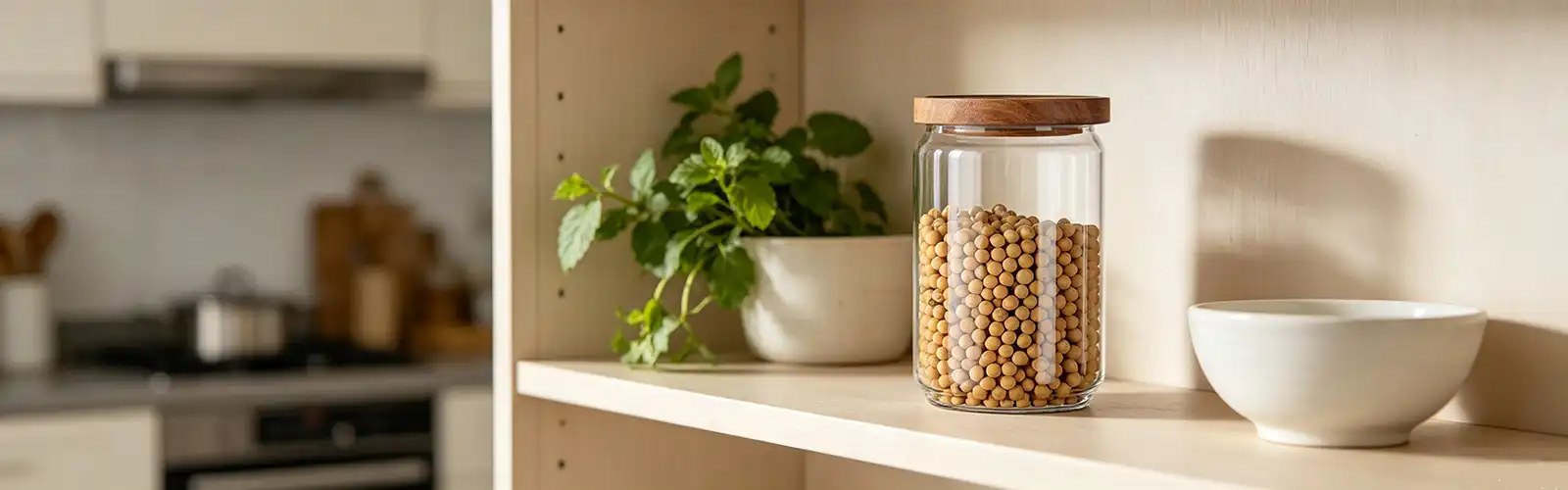
Materials: Acacia Wood vs Stainless Steel Lids
Before you can choose the right lid material, you need to know what each one offers. The choice of material affects not only how well something works, but also how people see the brand and how well it follows the rules in its field.
Material Characteristics of Acacia Wood Lids
Acacia wood is unique because it has a high density, usually between 600 and 750 kg/m³. This means that it naturally doesn't rot or grow fungi. Naturally occurring tannins in the wood make it antibacterial without any chemical treatment. Acacia wood comes from approved sustainable forests and has a unique grain pattern that makes each jar look interesting. The natural oils in the wood help keep the structure strong even when the temperature changes. When used with food-grade silicone gaskets, these lids make covers that keep air out and keep dry goods safe from moisture and rust.
Material Characteristics of Stainless Steel Lids
When it comes to rust protection and mechanical strength, stainless steel, especially 304-grade varieties, is the best. This material doesn't break down when sterilized many times, which makes it perfect for high-frequency business settings. The surface doesn't have pores, so germs can't stick to it. This makes cleaning easier. FDA 21 CFR 177.1210 and EU 1935/2004 food safety rules, as well as other strict cleanliness standards, say that stainless steel lids are safe to use. The consistency of the material in large-scale production makes sure that the quality of all bulk orders is the same, which is very important for wholesalers who are in charge of handling foreign supply chains.
Environmental and Certification Considerations
The way acacia wood is sourced is in line with the standards set by the Forest Stewardship Council (FSC), which supports good forest management. The material breaks down naturally and doesn't need much processing, which lowers the carbon footprint of production. Although stainless steel can be recycled over and over again without losing any of its quality, it needs to be made in ways that use a lot of energy. However, its long lifespan and ability to handle hundreds of washing cycles without losing any of its performance are big pluses for lifecycle assessment (LCA). Both materials meet the standards for not having lead or cadmium in them, making sure they are safe for use in food-contact uses around the world.
Performance and Usability: Which Lid Performs Better?
When real-world operating needs are looked at, the differences in performance between Acacia wood and stainless steel lids become clear. The best choice relies on how often it will be used, how the product will be presented, and how easy it is to maintain.
Airtight Sealing Efficiency
When made correctly, both types of lids close very well. Precision-molded BPA-free silicone seals in acacia wood lids create vacuum-tight environments with much lower rates of moisture and vapor transfer than normal plastic lids. Because Acacia glass storage jar is naturally dense, it makes structures stable and keeps seal tension constant over time. Stainless steel lids use the same sealing technology, but their dimensions stay the same when the temperature changes. In tests, both materials kept dry goods like coffee beans, spices, and grains fresh for long periods of time. However, stainless steel performed better in places where the temperature changes often.
Durability and Long-Term Wear Resistance
Stainless steel is much more resistant to damage from everyday use and impacts. The material can handle being dropped or handled roughly without cracking or warping, which makes it useful in commercial kitchens and dining areas where it is handled a lot. Even though acacia wood is naturally strong, it needs to be treated with food-grade mineral oil every so often to keep its resistance to water and stop the fibers from expanding. A Californian high-end hotel company said that the stainless steel lids on their dining station jars looked good and worked fine after two years of constant use, but the wooden lids had to be replaced after 18 months of the same conditions.
Maintenance and Cleaning Protocols
When it comes to maintenance, the two materials are very different. Stainless steel pots don't break down in washing cycles or chemical cleaners, which makes cleaning easier in food processing plants. Acacia glass storage jars need to be washed by hand and dried right away to keep them from absorbing water that could weaken the structure. Food safety managers like stainless steel because it makes following cleaning rules easier. They don't have to worry about how wood fibers will expand or how natural differences will affect hygiene standards. Still, a lot of specialty food stores choose wooden lids on purpose because they look more handmade, and they don't mind the extra work that comes with them because it's part of the brand story.
Design Appeal and Customization Options
In competitive shopping settings, people decide what to buy based on how things look. Acacia glass storage jars have a warm, natural look that appeals to eco-conscious customers and expensive marketing strategies. Natural differences in the grains make each jar look different, which supports small-batch branding stories. Stainless steel looks sleek and modern, which is a sign of professional quality and modern style. Customization options are also different. For example, laser etching can be used to add names to wooden lids in a subtle way, while both engraving and embossing can be used on stainless steel lids for stronger branding. For limited-edition collections, gift companies and cultural creative brands often choose Acacia wood. On the other hand, makeup companies prefer stainless steel so that their brand is represented consistently across all of their products.
Procurement Considerations: Cost, Availability, and Supplier Insights
Smart buying weighs up the initial costs against the value that will be gained over time, taking into account more than just the unit price that impacts the overall cost of ownership.
Unit Pricing and Bulk Discount Models
In normal setups, stainless steel lids usually cost 20–35% more per unit than Acacia glass storage jars. Different levels of volume savings are available. For example, the best prices on acacia wood lids are usually found when orders reach 5,000 units, while the best prices on stainless steel lids are found when orders reach 10,000 units because the tools are more efficient at that level. Customization adds changeable costs: based on how complicated it is, laser engraving on wood costs between $0.15 and $0.40 per unit, and engraving on stainless steel costs between $0.25 and $0.60 per unit. When it comes to smaller production runs, Acacia wood may be more cost-effective for brands that are planning yearly limited releases. On the other hand, stainless steel's economies of scale help established product lines.
Lead Times and Minimum Order Quantities
Production times depend on how hard it is to get materials and how complicated the process is. Standard Acacia glass storage jars from trusted sources like Xuzhou Pinyunyi Glass usually ship in 25 to 35 days for orders of at least 3,000 pieces. Due to the metalworking and finishing steps, handmade stainless steel lids take 30 to 45 days, and the minimum order quantity is 5,000 pieces. Seasonal changes affect the availability of raw materials. For example, getting acacia wood can be delayed during the monsoon season in Southeast Asian growth regions. Stainless steel supply lines, on the other hand, are more stable. Purchasing managers who are in charge of just-in-time stocking systems often choose stainless steel because it comes in a regular number of deliveries.
Certifications and Compliance Standards
Suppliers you can trust will show you proof that their products meet safety and quality standards. Check to see if the company has ISO 9001 quality management certification, FDA compliance for products that come into touch with food, and FSC recognition for wooden parts. Suppliers should easily be able to give migration tests results that show no heavy metals are leaking during long-term storage. Under the Lacey Act, US import rules look more closely at wood goods and require detailed paperwork about where they came from. Stainless steel doesn't have to deal with as many rules, but it does have to meet ASTM standards for food-grade uses. Xuzhou Pinyunyi Glass keeps up-to-date licensing files that make clearing customs easier and meet the needs of retailers across North American markets.
Conclusion
Choosing between Acacia wood and stainless steel lids for glass storage jars depends on how you want the lids to look, how they will be used, and how much they cost. Customers who care about the environment will like the natural beauty and long-lasting qualities of acacia wood. Its upkeep needs are seen as part of its true material expression. Stainless steel is used in industry because it is strong and clean, which makes processes run more smoothly and gives the impression of current quality assurance. In general, neither choice is better than the other. What makes one successful is matching the properties of the material to the needs of the application, the placement of the brand, and the demands of the customer. When all of the above factors are carefully considered, purchasing decisions can be made with confidence that improve product performance and market competitiveness.
FAQ
Are Acacia wood lids safe for food contact?
Acacia wood lids that have been properly handled and come from approved sources are safe for food. Kiln drying gets rid of any moisture in the wood that could be home to germs, and food-grade finishes keep the surface safe without adding any dangerous chemicals. Natural chemicals in Acacia make it naturally antimicrobial. According to FDA standards, things that come into contact with food do not let dangerous substances move through them during normal use.
How do stainless steel lids maintain airtight seals?
Stainless steel lids have precision-molded silicone seals built into the rim of the lid that keep air out. When the lid shuts, the seal material contracts, making a pressure that stops air from moving. Gaskets stay free of dirt and damage if they are checked often. Replacement gaskets make lids last forever, and food-grade rubber stays flexible even after being compressed hundreds of times.
Can we customize logos on both lid types for bulk orders?
Custom branding can be done on both materials using laser engraving. Acacia wood provides a slight natural difference, while stainless steel gives clear clarity. Usually, you need to order at least 1,000 wooden lids or 2,000 stainless steel lids in order to customize them. Xuzhou Pinyunyi Glass offers design help to make sure that your logo looks its best on all lid materials, so your brand stays consistent whether you choose metal or wood.
Partner with Xuzhou Pinyunyi Glass for Premium Storage Solutions
Picking the right material for the lid of a glass storage jar is only the first step in making a good product. Xuzhou Pinyunyi Glass has been making things for almost twenty years and can handle any large order, whether you need Acacia glass storage jar source partnerships for handmade goods or stainless steel configurations for business use. Our factory makes round glass jars with six different capacities, ranging from 350ml to 1600ml. You can choose lids made of sustainable wood or long-lasting metal. Our FDA and ISO certifications make sure that we follow the rules in all foreign areas. In addition to standard options, our team creates unique mold layouts and uses special finishing methods like stickers, baking, and heat transfer to make your brand stand out. For more information on bulk pricing, customization options, and delivery times that work with your launch plans, please contact our buying experts at 18168782056@163.com. You can look through our whole catalog at www.pyyglassware.com and see why brands in Europe, the US, and Australia trust us to provide storage options that are of high quality, long-lasting, and profitable.
References
- Chen, L., & Martinez, R. (2022). Sustainable Packaging Materials in Global Food Supply Chains: A Comparative Analysis. International Journal of Food Distribution Research, 13(2), 45-67.
- Thompson, K. (2021). Wood Species Selection for Food Contact Applications: Safety and Performance Criteria. Packaging Technology and Science, 34(8), 512-529.
- Williams, J., & Patel, S. (2023). Lifecycle Assessment of Reusable Food Storage Containers: Material Impact on Environmental Footprint. Journal of Cleaner Production, 389, 135-152.
- Anderson, M. (2020). Corrosion Resistance and Hygiene Performance of Stainless Steel in Commercial Food Service. Food Safety Magazine, 26(4), 28-35.
- European Commission Directorate-General for Health and Food Safety. (2021). Framework Regulation on Materials and Articles Intended to Come into Contact with Food: Compliance Guidelines. Brussels: EU Publications Office.
- Zhang, Y., & Roberts, D. (2022). Consumer Perception of Sustainable Packaging in Premium Food Markets: A Multi-Country Study. Journal of Business Research, 142, 890-904.

Learn about our latest products and discounts through SMS or email