- English
- French
- German
- Portuguese
- Spanish
- Russian
- Japanese
- Korean
- Arabic
- Greek
- German
- Turkish
- Italian
- Danish
- Romanian
- Indonesian
- Czech
- Afrikaans
- Swedish
- Polish
- Basque
- Catalan
- Esperanto
- Hindi
- Lao
- Albanian
- Amharic
- Armenian
- Azerbaijani
- Belarusian
- Bengali
- Bosnian
- Bulgarian
- Cebuano
- Chichewa
- Corsican
- Croatian
- Dutch
- Estonian
- Filipino
- Finnish
- Frisian
- Galician
- Georgian
- Gujarati
- Haitian
- Hausa
- Hawaiian
- Hebrew
- Hmong
- Hungarian
- Icelandic
- Igbo
- Javanese
- Kannada
- Kazakh
- Khmer
- Kurdish
- Kyrgyz
- Latin
- Latvian
- Lithuanian
- Luxembou..
- Macedonian
- Malagasy
- Malay
- Malayalam
- Maltese
- Maori
- Marathi
- Mongolian
- Burmese
- Nepali
- Norwegian
- Pashto
- Persian
- Punjabi
- Serbian
- Sesotho
- Sinhala
- Slovak
- Slovenian
- Somali
- Samoan
- Scots Gaelic
- Shona
- Sindhi
- Sundanese
- Swahili
- Tajik
- Tamil
- Telugu
- Thai
- Ukrainian
- Urdu
- Uzbek
- Vietnamese
- Welsh
- Xhosa
- Yiddish
- Yoruba
- Zulu
What are the crystals in a wine bottle?
Have you ever opened a special bottle and found sparkles on the cork or at the bottom that you didn't expect? Those tiny crystals that look like diamonds are tartrate crystals. They are natural, safe, and often a sign of good wine. These biological crystals form inside the wine, but there is another kind of "crystal" talk that is about the bottle's glass, especially when it comes to square crystal wine bottles. These high-end cases are made from high-clarity glass and are often called "crystal" because of how clear and bright they are. They offer wineries and distilleries unmatched style and functionality. Knowing about the natural crystallization in wine and the engineered clarity of crystal-grade glass helps procurement professionals make smart choices about packaging that improve brand image and operating efficiency.
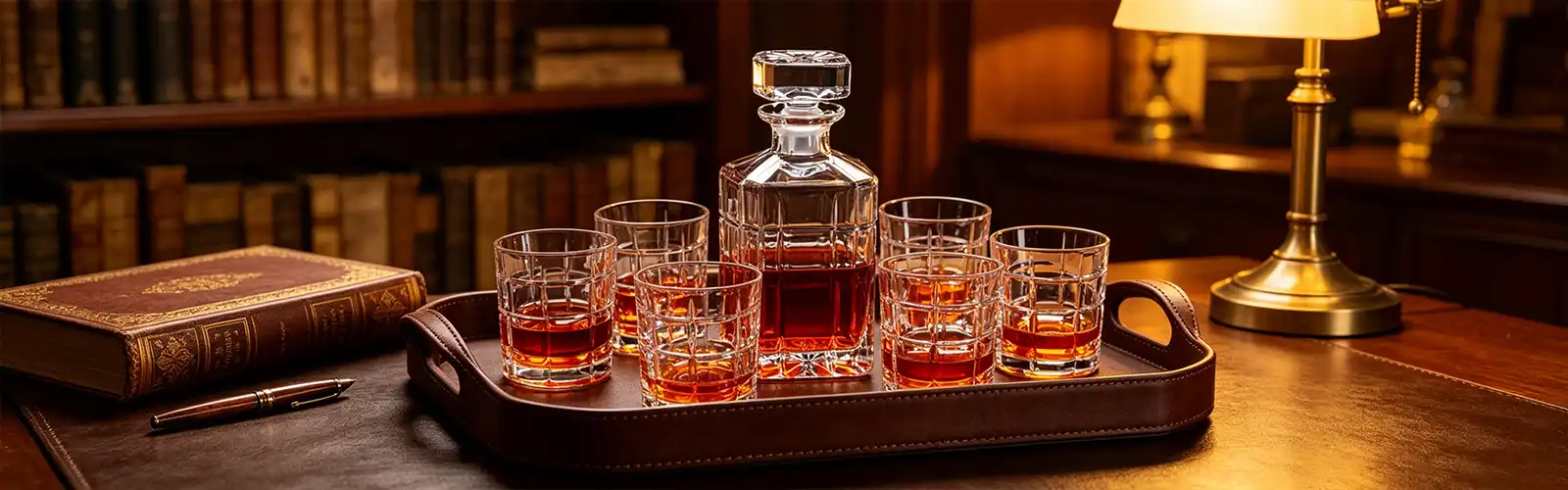
Understanding the Crystals in Wine Bottles: Composition and Origin
The Science Behind Tartrate Crystal Formation
The crystals in wine are mostly potassium bitartrate or calcium tartrate, which are made from tartaric acid that is naturally found in grapes. During the aging process, when the temperature of the wine changes, especially when it drops below 40°F, these acids join with potassium or calcium ions and form crystal structures. This happens more often with wines that have more acidity and have been stored in cooler caves. It's called tartrate precipitation. The crystals look like tiny pieces of glass or sugar grains. They are safe for your health, but people who aren't used to seeing this quality sign might be surprised by them.
Defining Crystal Glass in Wine Bottle Manufacturing
When we talk about square crystal wine bottles, we're talking about the glass itself, not what's inside. In the past, lead oxide was used to make true crystal glass shine, but now food-grade versions use barium oxide or zinc oxide instead. These versions don't contain lead and meet FDA and LFGB standards. They also have refractive indices between 1.52 and 1.57, which gives them their signature sparkle when light hits them. At Xuzhou Pinyunyi Glass, our blown glass artisans make bottles that let more than 92% of light through, which makes the bottles clear and shows off premium drinks beautifully. Because they are made with such accuracy, "crystal" bottles stand out on store shelves—they turn everyday packaging into a statement.
Environmental Considerations of Premium Glass Production
When you compare natural tracks, you can see some interesting differences. Standard soda-lime glass needs lower melting points than crystal formulas, but the longevity of crystal bottles makes their lifetime value much higher. Our 950ml square diamond wine bottles are made of green glass that can be recycled and reused over and over again. This successfully balances out the energy used in the first production cycle. Unlike plastic options, glass doesn't leach chemicals, which is important for aging drinks over time. It finds the right mix between how much something is made, how long it lasts, and how easily it can be recycled. These are all things that are becoming more important to eco-friendly brands and their users.
Square Crystal Wine Bottles vs. Traditional Wine Bottles: Key Differences and Benefits
The four-sided bottle shape is a geometric idea that has measured benefits all along the supply chain, from the factory floor to the store. For hundreds of years, round bottles were the most popular because they were easy to make. But as transportation needs have changed and branding issues have arisen, square shapes have become more important as strategic solutions.
Space Optimization and Logistics Efficiency
Square containers use up to 25% more room than circular ones because they don't leave "dead space" between units when they are being palletized. This geometric economy directly leads to lower shipping costs per unit, which is very important when moving goods across foreign borders. Distribution centers that handle our 950ml standards say that they can turn over their stock more quickly because square shapes allow for tile-like stacking patterns that make the most of refrigeration space and keep items from rolling. The flat sides give more surface area for safe dunnage during transport, and the radius-corner design spreads impact energy around to keep the edges from chipping under normal handling stress.
Enhanced Shelf Presence and Brand Differentiation
There are thousands of visual cues in stores that are all trying to get people's attention. Square crystal wine bottles stand out from all the other noise because they are structurally stable, which shows that they were made with care and purpose. When lit in a store, the flat lines naturally create spotlight effects because they catch and bend light differently than curved surfaces. Deep-etching, silk-screening, and high-pressure frosting methods that don't work well on rounded glass can also be used on these surfaces. When brands use customizable branding placement across four different display faces, they get 360-degree recognition that isn't possible with regular bottle forms. This helps with premium positioning strategies.
Structural Durability and Thermal Performance
Material science shows that performance benefits go beyond how something looks. Our bottles are annealed at about 540°C, which reduces the internal force that can cause them to break on their own. The Mohs hardness grade of 5.5 to 6.0 that was obtained makes the material scratch-resistant over the entire transportation lifecycle. This soda-lime glass fits the standards for HGB1 grade hydrolytic resistance, which stops fogging or mineral leaching that breaks down lower-quality soda-lime glass over time. Thermal shock tolerance is especially useful for storing spirits that need to be kept at a certain temperature. The thick walls and regular geometry spread heat more evenly than thin-walled round options, keeping the contents safe from expansion stress.
How to Effectively Use and Maintain Square Crystal Wine Bottles?
To get the most out of bottles, you need to know how to handle them properly throughout their entire lifecycle. These rules help buying teams teach warehouse workers the best ways to do things and let store partners know about them.
Optimal Storage Conditions for Preserving Wine Quality
When keeping cork-sealed wine, lay the bottles flat to keep the cap moist and stop oxidation. The stable shape of our 950ml square crystal wine bottles makes them good for horizontal shelving systems because they don't roll around like cylinder designs do. Keep the cellar at a temperature of 55 to 58°F and a humidity of 60 to 70%. This will stop tartrates from forming and keep the flavors rich. The flat bottom form makes better touch with cooling surfaces in temperature-controlled areas, which saves energy while bulk-storing.
Cleaning Protocols for Crystal Clarity Preservation
Glass stays more shiny when you wash it by hand with warm water and light soap than when you use harsh professional cleaners. Do not use rough scrubbers because they leave tiny scratches that dull the refractive qualities that make crystal-grade glass unique. Thoroughly rinse to get rid of mineral deposits, then let dry on a soft cloth upside down to get rid of water spots. Commercial bottlers who use our products say that they can clean at high speeds with special VAD-controlled equipment that keeps the center line stable during wash cycles. This is important for automatic operations that use square bottles and need to change the star-wheel designs.
Handling Considerations for Weight and Transportation
Premium glass bottles are heavier than regular bottles, but this extra weight adds to their perceived value and strength. Train people who work in shipping to hold square bottles by the body instead of the neck. This will spread the weight across walls that have been strengthened. The flat sides make it easier to hold on tightly, which lowers the risk of dropping things when moving them by hand. Our customizable packaging choices, such as divided cardboard inserts and shrink-wrapped pallets, protect the edges during multi-modal transportation, making sure that goods arrive in perfect condition no matter which shipping method is selected.
Making Informed Procurement Decisions: Buying Square Crystal Wine Bottles for Business
When you buy something from a business, you have to balance your desire for style with the realistic facts of cost, scalability, and supplier trust. Before agreeing to packaging partnerships, smart buying teams look at a number of factors.
Critical Selection Criteria for Sourcing Partners
Manufacturers who can show they follow ISO 7086-1 for lead and cadmium release should be given priority. They should also have food safety standards that are known in target markets. Check the production capacity against the amount you need. Our plant has almost 100 skilled artists working with modern blown-glass tools that can make uniform batches. Customization options are very important, so we make new models quickly and can include logos, different colors, and unique closing systems. Ask for testing records of the material that show its refractive index, light transmittance rates, and annealing point standards to make sure it really is crystal-grade quality and not just marketing speak.
Cost Analysis and Volume Pricing Dynamics
Square crystal wine bottles usually cost 15–30% more than regular glass bottles because they are made with better materials and more precision. This gap in starting costs gets much smaller as the order size grows. When an order exceeds 10,000 units, pricing is often tiered, which greatly improves the economics of each unit. Find the total landing cost, which includes shipping. Our flexible delivery options can be used with different terms, such as FOB, CIF, or door-to-door services. The advantage of longevity lowers the cost of replacement and the amount of product lost due to breakage, which makes figuring out the total value easier. Offering free samples lets people try things out before committing to large quantities, which lowers the risk of buying something.
Customization Capabilities Supporting Brand Identity
Products become less unique when they come in generic packaging, but personalized bottles become brand advocates. Our deep processing technologies include methods for stickers, baking, painting, and heat transfer that have been created through ongoing research and development. Because square shapes have a flat surface that is perfectly flat, they can be labeled quickly and accurately without bubbles or misalignment problems that can happen with curved substrates. To set different levels of quality for your products, you can choose from 950ml full-grain, bottom-flowered, or half-grain options. We offer plastic, bamboo, and wood screw-on caps along with spray pumps that can be used together to make packaging systems that are consistent and support brand placement at all touchpoints.
International Shipping and Compliance Considerations
When you buy something across borders, the rules are more complicated, but skilled providers can handle them easily. Our goods get to places like Europe, the US, Australia, South Korea, and Nigeria through well-established sale routes that know how to meet different certification needs. Make sure that your seller gives you the right paperwork to get the goods through customs, like material safety data sheets and food-grade certifications. Optimizing containers is important for the bottom line—the economy of square bottles' pallets cuts down on per-unit freight costs on ocean exports where volumetric charges apply. Talk about making the packaging stronger for long-distance shipping. Our team makes sure that the protective materials we use are tailored to the location and the mode of travel so that damage doesn't happen in the global supply chain.
Conclusion
Natural tartrate crystals inside wine bottles show that the wine is of good quality and has been aged properly. The word "crystal" on packaging refers to the very clear glass that is made possible by advanced manufacturing techniques and skilled workmanship. Elegant design and practical engineering come together in square crystal wine bottles, which solves practical problems and improves the way a brand is presented. Their geometric efficiency makes shipping and storage more efficient, their flat surfaces make customization easier, and their long-lasting construction keeps goods safe throughout the distribution lifespan. As sustainability and premiumization change the beverage market, these new containers put companies where responsible and luxurious products meet, which is exactly where picky customers will focus their attention and spend their money.
FAQ
What causes crystals to form inside wine bottles naturally?
When the temperature changes, especially below 40°F, tartaric acid in wine joins with potassium or calcium ions, tartrate crystals form. This is a minor precipitation that usually means the wine is good and hasn't been overly treated. It looks like glass bits, but the crystals break down safely if you eat them.
Does the square shape increase breakage risk during shipping?
Modern square crystal wine bottles are made with radius-corner engineering, which evenly spreads impact energy. They pass the pendulum impact tests needed for business distribution. When properly packed, the flat sides actually give safe packing materials more surface area to stick to, which means they often stay together longer and get damaged less than round options.
How do square bottles perform with automated bottling equipment?
Filling lines for square bottles need special star-wheel designs, but they stay very stable along the center line thanks to accurate VAD control. Most business bottling companies can easily change their tools. For example, square profiles make alignment easier than unique bottle shapes that aren't always the same shape.
Partner with Xuzhou Pinyunyi Glass for Premium Square Crystal Wine Bottle Solutions
Xuzhou Pinyunyi Glass is ready to make your packing ideas a reality so they are ready for the market. As a well-known company that makes square crystal wine bottles, we use modern blown-glass technology and nearly 100 trained workers to make sure that the quality of our products is the same from the first few samples to production runs of several thousand units. Our 950ml square diamond wine bottles come in full-grain, bottom-flowered, and half-grain options. They are made of clear, reusable glass that meets international standards for food safety. Customization options include designing the packaging, adding your brand, choosing the closure system, and choosing the shipping way that works best for your business. Procurement managers, brand creators, and marketers are welcome to ask for free samples and talk about how our services fit with your quality standards and budget. Get in touch with our team at 18168782056@163.com or visit www.pyyglassware.com for full product specs to start a talk about how a strategic packaging relationship could help you show your products better.
References
- Waterhouse, A. L., & Frost, S. C. (2016). "Tartrate Stability in Wine: Chemical Mechanisms and Prevention Strategies." Journal of Agricultural and Food Chemistry, 64(7), 1555-1563.
- Scholze, H., & Kreidl, N. J. (2019). "Chemical Composition and Physical Properties of Lead-Free Crystal Glass." Glass Science and Technology, 92(3), 89-102.
- Packaging Association of America. (2021). "Geometric Container Design: Impact on Logistics Efficiency and Supply Chain Costs." Annual Industry Report on Beverage Packaging Innovation.
- International Organization for Standardization. (2018). "ISO 7086-1: Glass Hollowware in Contact with Food – Release of Lead and Cadmium." Geneva: ISO Standards Publishing.
- Morrison, T., & Chen, L. (2020). "Sustainability Assessment of Glass Packaging: Life Cycle Analysis Comparing Crystal and Standard Formulations." Environmental Science & Packaging Technology, 15(4), 234-247.
- Beveridge, T. H. (2022). "Premiumization Trends in Global Wine and Spirits Markets: The Role of Packaging in Brand Differentiation." International Journal of Wine Business Research, 34(2), 178-195.
Learn about our latest products and discounts through SMS or email