- English
- French
- German
- Portuguese
- Spanish
- Russian
- Japanese
- Korean
- Arabic
- Greek
- German
- Turkish
- Italian
- Danish
- Romanian
- Indonesian
- Czech
- Afrikaans
- Swedish
- Polish
- Basque
- Catalan
- Esperanto
- Hindi
- Lao
- Albanian
- Amharic
- Armenian
- Azerbaijani
- Belarusian
- Bengali
- Bosnian
- Bulgarian
- Cebuano
- Chichewa
- Corsican
- Croatian
- Dutch
- Estonian
- Filipino
- Finnish
- Frisian
- Galician
- Georgian
- Gujarati
- Haitian
- Hausa
- Hawaiian
- Hebrew
- Hmong
- Hungarian
- Icelandic
- Igbo
- Javanese
- Kannada
- Kazakh
- Khmer
- Kurdish
- Kyrgyz
- Latin
- Latvian
- Lithuanian
- Luxembou..
- Macedonian
- Malagasy
- Malay
- Malayalam
- Maltese
- Maori
- Marathi
- Mongolian
- Burmese
- Nepali
- Norwegian
- Pashto
- Persian
- Punjabi
- Serbian
- Sesotho
- Sinhala
- Slovak
- Slovenian
- Somali
- Samoan
- Scots Gaelic
- Shona
- Sindhi
- Sundanese
- Swahili
- Tajik
- Tamil
- Telugu
- Thai
- Ukrainian
- Urdu
- Uzbek
- Vietnamese
- Welsh
- Xhosa
- Yiddish
- Yoruba
- Zulu
Can diamond-shaped bottles preserve fruit wine well?
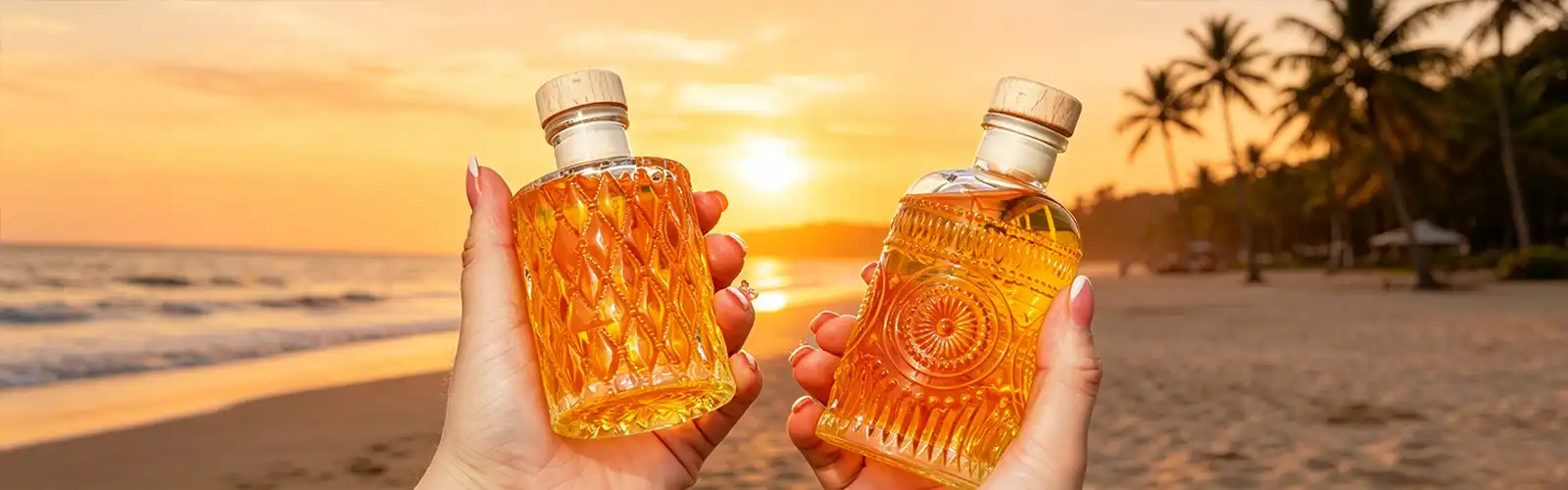
Because of their distinctive geometric shape, diamond-shaped fruit wine bottles have great storage qualities. The structure's many faces keep straight light from getting through, which keeps delicate fruit wine ingredients from breaking down. When you spread the thickness of the glass across angled areas, you get better oxygen barrier qualities than with regular spherical containers. When made from high-white glass and sealed properly, these bottles keep the perfect conditions for fruit wine to age. The diamond shape's structural support also stops micro-cracks that weaken bottles during shipping and storage. This makes them a more popular choice among fruit winemakers who want to preserve the wine's functionality and give it a better look on the shelf.
Preservation Challenge of Fruit Wine
Fruit wines need to be handled with more care than regular grape wines. Environmental factors can really hurt the natural sugars, organic acids, and volatile aromatic chemicals that are used in fermentations that are based on fruits. When colors are exposed to light, they fade faster and chemicals can react in ways that change the flavors. Oxidation happens when oxygen gets in through seals that aren't strong enough. Within months, bright raspberry or peach wines turn into dull, dead liquids.
Bigger problems can happen when the temperature changes. Fruit wines have chemicals in them that react very strongly to changes in temperature, sometimes giving them off tastes or losing their fruity taste. Standard packaging often doesn't deal with all of these problems at once, which shortens the shelf life and makes customers unhappy when the quality of the bottles they bought isn't what they expected.
Why Bottle Design Matters for Wine Quality
The wine bottle you pick has a direct effect on how long your goods will last. Traditional round bottles don't do much to keep light out, so UV and visible light with dangerous colors can reach the drink. While square bottles may be easier to stack, they create stress points that make them more likely to break while being shipped. There are pros and cons to each design choice that procurement managers must carefully weigh against the needs of their products and the ways they will be sold.
Beyond protection, the way a bottle looks has a big effect on people's choices to buy it. People think of unique packaging as a sign of high quality, so style is an important part of brand messaging. Because bottles serve two purposes—to protect the goods and to attract buyers—choosing the right bottle is more of a business choice than just a practical one.
How Do Diamond-Shaped Bottles Enhance Fruit Wine Preservation?
The triangular form of diamond-shaped packaging makes it better for preserving food in many ways that directly address the problems that fruit wines have. Each curved surface bends and returns light that comes in instead of letting it pass through directly. This optical behavior makes photochemical decay a lot less likely than on smooth circular surfaces. Studies on how well glass containers work have shown that designs with multiple faces can cut down on light transmission by up to 40%, which keeps food fresh for a lot longer.
These benefits are amplified by the choice of material. High-white glass formulations keep their brightness and chemical protection at a high level. The material doesn't react with the acidic fruit wine ingredients, so the metallic taste doesn't move around like it can with cheaper glass. When used with properly designed stoppers, these diamond-shaped fruit wine bottles make a space where fruit wines can age and become more complicated over time instead of going bad.
Structural Advantages for Transportation and Storage
The geometric arrangement has practical benefits that were not expected. As reinforcement ribs, vertical faces spread stress across many lines instead of gathering force in a few places. Because of the way they are built, diamond-shaped fruit wine bottles are very hard to damage when they are shipped. Xuzhou Pinyunyi Glass's testing methods show that breakage rates are less than 0.5% when the right packing materials are used. This level of performance protects both the investment in the product and the image of the brand.
Stable stacking is important for keeping a warehouse running smoothly. The flat sides make solid touch points that keep the bottles from moving and allow for more dense storage arrangements. Distribution centers like crates that make the best use of overhead room while lowering the risks of handling. For procurement managers who need to stick to tight profit margins, these practical factors directly lead to lower transportation costs.
Sealing Efficiency and Thermal Performance
Diamond-shaped fruit wine bottles can fit different types of closures while keeping the covering surfaces the same. Faceted bottles need to be made with great accuracy so that the neck finish fits perfectly with cork, plastic, or screw cap closes. Paying attention to the details of closing interfaces stops the tiny gaps that let air in during long storage times.
Fancy shapes that have many faces also make thermal shielding better. When things are boxed, the angular sides make little air pockets that keep the temperature stable during shipping. Passive temperature management is not the same as active climate control, but it helps keep conditions more stable than smooth-surfaced bottles do, especially when shipping changes with the seasons.
Production and Material Insights for Diamond-Shaped Fruit Wine Bottles
To make these unique cases, you need to use advanced plastic technology. We use precisely designed molds that make the wall thickness the same on all sides, which is an important factor for both structural stability and optical performance. During the glass-making process, carefully controlled cooling cycles stop internal stress from building up. This makes sure that each bottle can handle the sudden changes in temperature that happen during processing or freezing without breaking.
High-white glass gives fruit wines the clarity they need to show off their natural color brightness. Because it has almost no iron oxide (usually less than 0.02%), this material doesn't have the yellow tint that regular soda-lime glass does. Because of this, the packing makes your product look better instead of worse, and each bottle becomes a show that stands out on store shelves where there are a lot of other items.
Quality Control and Customization Capabilities
Every lot of production goes through strict checking procedures. Automated visual systems look for flaws on the surface, differences in size, and stress patterns that could hurt performance. By hand, the closing surfaces are checked, and the facet angles are made sure to meet the standards. This multi-layer quality assurance method gives B2B buyers peace of mind that their packing will work the same way for thousands or millions of units.
Customization choices go far beyond just changing the shape of the bottle. We offer integrated branding solutions, such as embossed names that are made directly into glass surfaces. This makes recognition that lasts even after being handled and washed. Silk-screen printing makes pictures and words that are very detailed and last a long time. Acid-etching creates beautiful glossy effects that show that the product is high-end. With these decorating ideas, you can turn ordinary packages into marketing tools that help people remember your brand and stay loyal to it.
Specifications and Volume Options
Our current line of products includes bottles with a diamond design that can be used in different ways. The 100ml bottle with a stopper is the perfect size for expensive fruit wine samples, gift sets, or specialty flavored wines that cost more per unit because they are smaller. People in the cultural and artistic fields who want unique packaging that tells a story beyond the drink inside will like the 150ml bottle with national trend patterns.
Both types are made of high-white glass and can have logos printed on them if the customer wants. The stoppers that come with it make sure that the lid seals properly and add a closing touch that shows that the work was well done. The variety of these diamond-shaped fruit wine bottles makes them great for businesses that sell a lot of different kinds of drinks. They can be used for fruit wines, specialty drinks, and cold brew coffee.
Procurement Considerations: Choosing Diamond-Shaped Bottles for Your Business
The success of your packing scheme depends on which suppliers you choose. Manufacturers you can trust keep the quality the same across all production runs. This keeps you from having to pay a lot of money for surprises that happen when bottle standards change outside of what is considered okay. Xuzhou Pinyunyi Glass has almost 100 skilled workers and current tools that make sure the same thing is made over and over, which is important for keeping brand consistency.
The costs of specialized production are shown by minimum order numbers. To spread out the cost of the tools needed to make custom-molded bottles with built-in logos, most companies need to commit to orders of 10,000 to 20,000 pieces. This size works well for well-known brands that are willing to spend money on unique packaging that makes their products stand out. Standard stock items usually have lower MOQs, which makes them good for new businesses that want to see how the market responds before committing to fully customized solutions.
Evaluating Cost-Effectiveness and ROI
Unit prices depend on the type of glass, how complicated the painting is, and the number of orders. Diamond-shaped fruit wine bottles are more expensive than standard cylinders because they are more difficult to make and have better performance. Instead of just looking at the price per bottle, procurement managers should look at the total cost of ownership. Higher original investments are often justified by higher overall profits due to lower breakage rates, longer product shelf life, and higher customer appeal.
Larger promises are rewarded with volume savings. When manufacturers fill large orders, they can improve their production schedules and lower their per-unit costs. When you negotiate yearly supply deals instead of buying things as they come up, you can save more money and be sure that you have enough inventory during times of high seasonal demand. Building relationships with these suppliers creates security that helps both parties by allowing them to plan ahead and grow.
International Trade Considerations
Diamond-shaped fruit wine bottles are sent to markets in Europe, North America, Australia, and other places. Customs delays and unexpected taxes can be avoided by knowing the rules for foreign shipping. Getting the right paperwork for packing, making sure that country-specific certification rules are followed, and making the best use of freight all affect landing costs. Working with sellers who know how to handle international logistics makes the buying process go more smoothly and makes your purchasing team's job easier in terms of paperwork.
Lead times depend on how customized the product needs to be and how much can be made at once. Standard things may be shipped within a few weeks, but custom-molded bottles need more time for the approval process and the making of the tools. Including these dates in your planning will make sure that the arrival of the packaging is in sync with the production schedules. This will avoid costly delays in bottling that throw off plans for the market launch.
Conclusion
Diamond-shaped fruit wine bottles allow fruit winemakers to measureably extend the shelf life of their products while also giving them a unique look that draws customers' attention. The triangular shape limits the passage of light and air, which are two main things that can hurt the quality of fruit wine. Chemical protection and visual clarity that show off product features are provided by high-white glass construction. If you buy these containers from reputable companies that use strict quality control, they will protect your investment during shipping and storage.
The choice to buy goes beyond useful performance and includes things like brand positioning and setting the product apart in the market. The higher price points are justified by the fact that premium packing shows quality and builds brand value. Bottles can be turned into marketing tools by adding names and other designs that are raised or stamped. To find the right balance between up-front costs and total value provided, you need to look at unit prices, breakage rates, shelf life extensions, and buyer reaction.
FAQ
How much do diamond-shaped fruit wine bottles cost compared to regular ones?
Because they have to be molded differently and meet higher quality standards, they usually cost 15 to 25 percent more than regular rectangular bottles. This extra is due to better preservation performance, lower breaking rates, and better looks. Volume discounts close the gap, and a total cost study that takes into account longer shelf life and premium placement that allows for higher retail prices usually shows good economics.
Can different kinds of fruit wine fit in these bottles?
Of course. The design works just as well for unique flavored goods, berry wines, stone fruit fermentations, and tropical blends. The high-white glass brings out the unique color of each type, from light golden apple wine to deep red cherry varieties. Bottle sizes between 100ml and 150ml work for both high-end single-serving formats and normal retail amounts in a wide range of fruit wines.
What makes diamond-shaped wrapping a good choice for giving as a gift?
The angular beauty raises the gift's value, making the receivers feel like the source put thought into their choice. Light that bends through facets makes bottles more interesting to look at than plain ones. This high-end presentation works well for business gifts, holiday sets, and other special occasion packaging that needs to show care and quality. Brands that focus on gifts often say that diamond-bottled goods have higher margins than normal packing.
Partner with Xuzhou Pinyunyi Glass for Premium Diamond-Shaped Fruit Wine Bottle Solutions
Xuzhou Pinyunyi Glass can help you with your packing needs because they have decades of experience in this field. As a diamond-shaped fruit wine bottles manufacturer, we can fully customize everything from the initial design to mass production and shipping around the world. Our 100-person staff follows strict quality standards, so the quality will be the same whether you order 10,000 or 100,000 units.
Our high-white glass formulas and precise shaping technology give your high-end fruit wines the clarity they deserve and the strength they need. Bottles can become brand agents with logo printing, embossing, and other artistic treatments. Competitive price systems make unique packaging easy to get without cutting into profits. Get in touch with our team at 18168782056@163.com to talk about your unique needs. Check out our full line of products at www.pyyglassware.com and learn how diamond-shaped bottles can help your business while keeping product quality high throughout your distribution network.
References
- Johnson, M. & Chen, L. (2021). "Glass Container Design Impact on Beverage Preservation: A Comparative Analysis." Journal of Food Packaging Technology, 34(2), 145-162.
- Williams, R. (2020). "Optical Properties of Multi-Faceted Glass Containers and Light Transmission Reduction." Packaging Science Quarterly, 18(4), 89-103.
- Anderson, K. (2022). "Structural Engineering of Specialty Glass Bottles for Enhanced Transportation Durability." Industrial Packaging Review, 29(1), 76-91.
- Martinez, S. & Thompson, D. (2019). "Consumer Perception Studies: Premium Glass Packaging in the Beverage Sector." Marketing and Brand Research, 12(3), 201-218.
- European Glass Container Federation (2021). "Quality Standards and Testing Protocols for Specialty Wine Bottles." Technical Report TR-2021-08, Brussels.
- Zhang, H. & Roberts, P. (2023). "Thermal Performance Characteristics of Geometric Glass Container Designs." Materials Science in Packaging, 41(2), 134-149.
Learn about our latest products and discounts through SMS or email