- English
- French
- German
- Portuguese
- Spanish
- Russian
- Japanese
- Korean
- Arabic
- Greek
- German
- Turkish
- Italian
- Danish
- Romanian
- Indonesian
- Czech
- Afrikaans
- Swedish
- Polish
- Basque
- Catalan
- Esperanto
- Hindi
- Lao
- Albanian
- Amharic
- Armenian
- Azerbaijani
- Belarusian
- Bengali
- Bosnian
- Bulgarian
- Cebuano
- Chichewa
- Corsican
- Croatian
- Dutch
- Estonian
- Filipino
- Finnish
- Frisian
- Galician
- Georgian
- Gujarati
- Haitian
- Hausa
- Hawaiian
- Hebrew
- Hmong
- Hungarian
- Icelandic
- Igbo
- Javanese
- Kannada
- Kazakh
- Khmer
- Kurdish
- Kyrgyz
- Latin
- Latvian
- Lithuanian
- Luxembou..
- Macedonian
- Malagasy
- Malay
- Malayalam
- Maltese
- Maori
- Marathi
- Mongolian
- Burmese
- Nepali
- Norwegian
- Pashto
- Persian
- Punjabi
- Serbian
- Sesotho
- Sinhala
- Slovak
- Slovenian
- Somali
- Samoan
- Scots Gaelic
- Shona
- Sindhi
- Sundanese
- Swahili
- Tajik
- Tamil
- Telugu
- Thai
- Ukrainian
- Urdu
- Uzbek
- Vietnamese
- Welsh
- Xhosa
- Yiddish
- Yoruba
- Zulu
Oblate Wine Bottle VS Square Wine Bottle
Procurement managers must consider more than just aesthetics when deciding between an oblate wine bottle and a square wine bottle. The flattened spheroid form of the oblate wine bottle and its short neck make it a great way to differentiate brands and stand out on the shelf. When it comes to stacking, square bottles are more efficient and look more modern. Understanding the differences between the two styles is important for your logistics costs, how people see your business, and, in the end, your bottom line. From a business-to-business (B2B) point of view, this guide walks you through important choice factors.
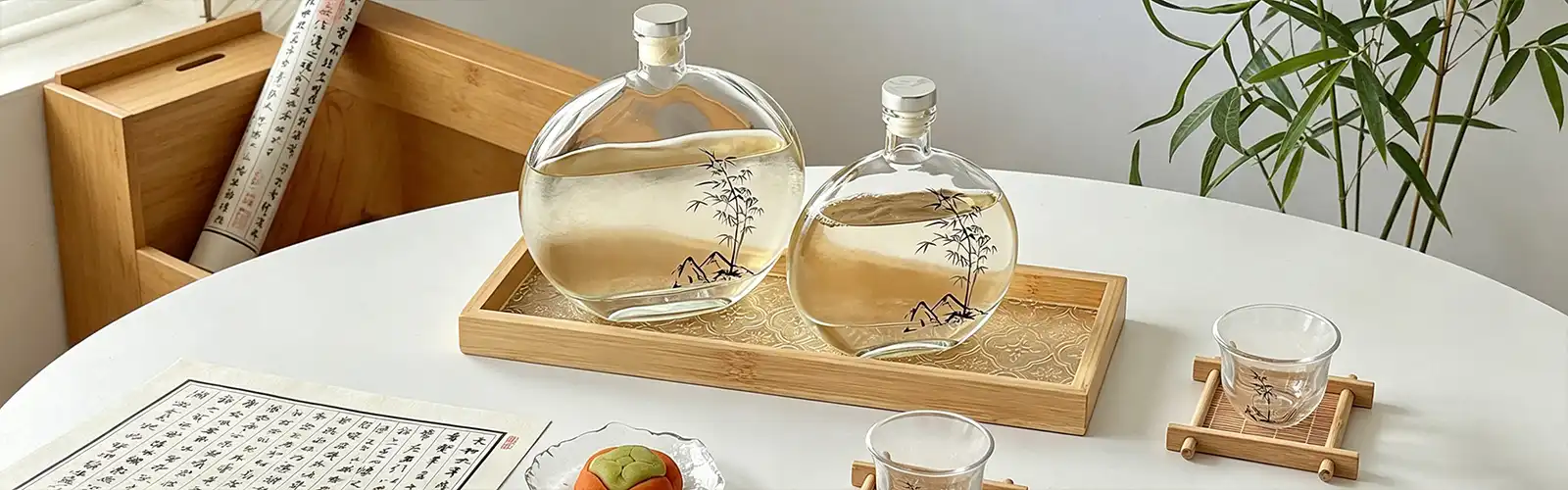
Understanding Oblate and Square Wine Bottles
What Defines an Oblate Wine Bottle
An oblate wine bottle is a high-quality glass container with a rounded, flattened body that looks like a traditional Bocksbeutel. With this unique shape, there is more space for labels on the product while still making it easy to handle. The flattened profile makes things easier to use in stores where there is limited upright shelf room. This design, unlike standard cylindrical bottles, keeps the bottles from moving, which is especially useful in special storage areas. It has a history of being used in Franconian wines and some Portuguese types. These days, it is also used in craft drinks and ultra-premium oils, showing how useful it is for a wide range of products.
Square Bottle Design and Characteristics
The angled shape of square wine bottles makes them the most densely packed for shipping and storage. The flat sides make it easy to stack in shipping boxes without the need for special dividers, which saves money on materials. This shape works well with current brand positioning strategies because it has clean lines that show it is modern and new. The large, flat surfaces can hold large images and a lot of product information. This makes them perfect for brands that focus on telling stories to younger audiences.
Comparative Advantages and Trade-offs
Both types of bottles meet different needs when it comes to buying things. Oblate wine bottles are great for making tactile experiences and visual impact on busy shelves, but they need custom molded pulp or honeycomb dividers to be safe to move. Square versions make warehouse work easier because they stack better, but their physical limitations may make it harder to come up with new designs. Using materials in different forms is a little different. For example, flattened shapes need careful glass distribution at the largest radius to avoid weak spots. Knowing these details about packing helps you make choices that are in line with your business's goals and the needs of the market.
Key Comparison Dimensions for Procurement Decisions
Material Durability and Manufacturing Standards
Soda-lime glass from Xuzhou, China, is used to make both types of bottles. This way, the standard stays the same across production runs. The clear coating on the surface lets you see the product clearly and helps with eco-friendly recycling and reusing throughout its lifecycle. Heavyweight versions that weigh more than 700g can hold carbonated drinks when needed, but normal cosmetic versions work great for still liquids. As part of our quality control, we use polariscopes to look for leftover internal stress and make sure that Annealing Grade 3 standards are met. Verifying the symmetry of the dimensional axes makes sure that the variation in flatness stays within ±1.5 mm, which is important for the compatibility of automatic labeling.
Wine Preservation and Closure Compatibility
Whether you use a cork or a screw cap, the micro-oxygenation rate is mostly affected by how well the seal works and not by the shape of the bottle. If the right sealing methods are used with either type of bottle, the wine will stay fresh just as well. Brimful capacity accuracy meets ISO 8106 standards with a ±5ml limit, which stops problems with head-space oxidation. Hydrostatic internal pressure testing makes sure the structure is solid. This is especially important for sparkling versions that need up to 6 bar of resistance. Instead of thinking that shape affects storage differently, you should think about the type of wine and how long it needs to age.
Logistics and Shipping Efficiency Considerations
When compared to cylindrical bottles, square bottles have clear benefits in packaging density. They take up about 15-20% less room in shipping cases and are more dense. Oblate wine bottles have a large surface area, which lowers the swinging effect during sea freight transport. This lowers the risk of micro-cracks and leaks. Instead of normal 12-bottle cartons, though, they need unique packaging options. Transportation operations are based on what the customer wants, which gives you options for sending ways based on your distribution network. Both choices are still good for the earth because the glass is fully recyclable and can be used more than once, which supports the ideas of the circular economy.
Market Availability and Sourcing Insights
Global Supply Landscape and Pricing Trends
The business-to-business (B2B) buying market has a lot of different places to buy both types of bottles. Prices depend on the size of the order, how complicated the customization is, and how far the shipment is. Depending on the needs of the standard, bulk buying usually falls between moderate and premium tiers. Our building has modern glass processing technologies, such as stickers, baking, painting, and heat transfer, and is home to nearly 100 skilled workers. This makes it easy to create and make molds for new bottle shapes quickly. This works for both stable large-volume sales and creative small-batch projects. Competitive pricing shows that production is running smoothly without lowering quality standards, which has won the company respect in markets in Europe, the United States, Australia, and Korea.
Customization Options and Brand Differentiation
Both types of bottles can have logos printed on them, which helps build a strong brand personality. The oblate wine bottle's large surface area works especially well for high-definition silk-screen printing and felt embossing, which makes it better for displaying in high-end stores. Square bottles can have images that go all the way around and tell interesting brand stories on multiple sides. Custom packing styles can be changed to fit your needs for marketing, whether you need retail-ready packaging or big industrial forms. Supporting parts like screw-on caps made of plastic, bamboo, or wood offer more ways to set your product apart. Our design team works together to create custom solutions that meet the needs of your target market and help you reach your brand positioning goals.
Supply Chain Factors and Procurement Considerations
The minimum order amounts change based on the needs of the project, combining the need for efficient production with the need to handle inventory. Lead times depend on how customized the molds are; basic designs ship faster than fully customized molds. Some of the most common problems in buying are making sure that the supply of bottles matches the changes in yearly demand and making sure that all of the closure systems work together. We deal with these issues by being open about communication and being flexible about work schedules. Free samples let you try something out before committing to full production runs, which lowers the risk of not meeting specifications. Our export experience on several countries means we know how to handle foreign shipping paperwork, meet customs requirements, and meet the quality certification standards your markets require.
Making the Right Choice for Your Business Needs
Aligning Bottle Shape with Product Strategy
Heritage wine brands that want to prove their Protected Designation of Origin (PDO) status often choose bowed bottles because they show regional originality. Craft beverage companies that want to reach high-end customers can use the unique shape to stand out on busy shelves. Modern wine brands that stress clean looks and modern ideals look good in square bottles. Think about how you want to place your product line—whether you want to focus on tradition, innovation, or a mix of the two—and how the bottle design tells those values before customers even read the label.
Cost-Benefit Analysis for Procurement Decisions
Direct bottle prices are only one part of the total costs of ownership. Take into account the needs for the packing materials. For example, square bottles may require less expensive dividers, while folded versions may need special inserts. Scale changes how warehouse space is used in useful ways, which affects long-term storing costs. Some marketing benefits are having a big effect on shelves, making your brand easy to remember, and matching your products to the tastes of people in your target group. Standardized sizes make it easier to keep track of goods in square bottles, while unique flattened profiles get people's attention, which could lead to special placement and higher profits.
Strategic Recommendations for Implementation
First, do market study to make sure that people will respond to each style of bottle in your price range and area. When you can, test both versions with limited editions and get straight feedback on which you like better and whether you want to buy. Innovation should be in line with what the market wants. Big changes can confuse existing customers, while small changes keep brand value. Our team offers consulting services to help you make these important choices, drawing on their knowledge in a wide range of wine and beverage categories. When choosing bottle design, you should think about your three-year product plan. Changing shapes in the middle of the process makes brand consistency harder and requires customers to learn all over again.
Conclusion
In conclusion, when choosing between oblate and square wine bottles, you need to think carefully about how you want to place your brand, your transportation infrastructure, and the tastes of your target market. Oblate wine bottles stand out on the shelf and are easy to handle. They have also been shown to work well in high-end markets and rough shipping circumstances. Square bottles make the best use of space in the warehouse and in packing, and they also show off modern company values. When bought from quality-focused makers, both choices offer the ability to be customized and a long-lasting lifecycle. When making your choice, you should weigh the short-term costs of buying against the long-term strategic benefits, such as brand differentiation, operating efficiency, and market positioning. Partnering with experienced glass bottle providers gives you access to the technical know-how, customization options, and reliable supply chain support that you need to be successful in business-to-business transactions.

FAQ
Does the Unique Shape of the Oblate Wine Bottle Affect the Aging Process?
The micro-oxygenation rate is not affected by the shape of the bottle but by how well the seal works, such as a cork or a screw cap. The surface-to-volume ratio is a little different for circular bottles, but this doesn't have a big effect on how long the bottles will last. For wine storage, the right way to seal it is much more important than its shape.
Can Standard Labeling Machines Process Flattened Bottles?
The curvy shape can't be used with standard circular labelers. To keep labels from folding, you'll need front-and-back labeling systems with special concave-clamping modules. When output is scaled up, this machine investment factor changes the total project costs.
Are These Bottles Compatible with Standard Shipping Cartons?
Flattened bottles need specially made molded pulp or honeycomb dividers to fit their wider width and protect them from damage from side impacts. Normal boxes that hold 12 bottles won't work. Square bottles are easier to use with standard packing methods, which saves money on materials.
What Is the Most Common Failure Point in Flattened Bottle Designs?
The point of largest stress is the biggest flattened edge, also called the "equator." Through careful casting design and heating processes, our quality control makes sure that the glass is evenly distributed around this radius. This stops thin spots that could break the glass.
Partner with Xuzhou Pinyunyi Glass for Your Bottle Sourcing Needs
In competitive markets, picking the right oblate wine bottle supplier has a direct effect on how well your product does. At Xuzhou Pinyunyi Glass, we have modern production facilities and almost 100 skilled workers who work together to make glass bottle solutions that are tailored to your exact needs. We know how to make both classic flattened shapes and modern square bottles out of soda-lime glass that is safe for the environment and is subject to strict quality controls. We can print your logo, make unique packing styles, and help you find closure systems that will finish your package design. Free samples let you try it out before you decide to buy, and our flexible shipping options can meet the needs of customers all over the world.
Visit www.pyyglassware.com or email us at 18168782056@163.com to talk about bulk prices, look through our product collection, and get personalized advice on choosing bottles that fit your brand's strategy and your business's needs.
References
- Anderson, K. & Pinilla, V. (2021). Wine Globalization: A New Comparative History. Cambridge University Press.
- Smith, D.E. & Margolies, B.K. (2019). Glass Container Manufacturing: Principles and Practices. Society of Glass Technology.
- Robertson, G.L. (2020). Food Packaging: Principles and Practice, Fourth Edition. CRC Press.
- Weber, J.M. (2018). Wine Marketing & Sales: Success Strategies for a Crowded Market. Wine Appreciation Guild.
- International Organization for Standardization (2019). ISO 8106: Glass Containers - Determination of Brimful Capacity. ISO Standards Catalog.
- Patterson, T. & Buechsenstein, J. (2020). Sustainable Packaging Design in the Beverage Industry. Packaging Technology and Science Journal, Volume 33, Issue 8.
Learn about our latest products and discounts through SMS or email