- English
- French
- German
- Portuguese
- Spanish
- Russian
- Japanese
- Korean
- Arabic
- Greek
- German
- Turkish
- Italian
- Danish
- Romanian
- Indonesian
- Czech
- Afrikaans
- Swedish
- Polish
- Basque
- Catalan
- Esperanto
- Hindi
- Lao
- Albanian
- Amharic
- Armenian
- Azerbaijani
- Belarusian
- Bengali
- Bosnian
- Bulgarian
- Cebuano
- Chichewa
- Corsican
- Croatian
- Dutch
- Estonian
- Filipino
- Finnish
- Frisian
- Galician
- Georgian
- Gujarati
- Haitian
- Hausa
- Hawaiian
- Hebrew
- Hmong
- Hungarian
- Icelandic
- Igbo
- Javanese
- Kannada
- Kazakh
- Khmer
- Kurdish
- Kyrgyz
- Latin
- Latvian
- Lithuanian
- Luxembou..
- Macedonian
- Malagasy
- Malay
- Malayalam
- Maltese
- Maori
- Marathi
- Mongolian
- Burmese
- Nepali
- Norwegian
- Pashto
- Persian
- Punjabi
- Serbian
- Sesotho
- Sinhala
- Slovak
- Slovenian
- Somali
- Samoan
- Scots Gaelic
- Shona
- Sindhi
- Sundanese
- Swahili
- Tajik
- Tamil
- Telugu
- Thai
- Ukrainian
- Urdu
- Uzbek
- Vietnamese
- Welsh
- Xhosa
- Yiddish
- Yoruba
- Zulu
Advantages of high borosilicate glass wine bottle
The high borosilicate glass wine bottle stands out as a great way to package wines and spirits that are of the highest quality. This special container for packaging has high levels of boron trioxide—usually between 12.5% and 13.5%—combined with silica to make a material that works much better than regular soda-lime glass. These bottles meet important needs for procurement managers, brand owners, and distributors who want to protect the integrity of their products while also projecting sophistication. They are resistant to thermal shock, chemical neutrality, and long-term durability that regular glass just can't match.


Understanding High Borosilicate Glass Wine Bottles
As someone who has worked closely with glassmakers in Xuzhou, China's famous glass production center, I've seen firsthand how high borosilicate glass wine bottle technology changes the way drinks are packaged. The main difference is in the way they are made. Soda-lime glass, which is used for most wine bottles, is made up of sodium carbonate and calcium oxide. These are switched out for boron trioxide in borosilicate glass, which completely changes the material's physical properties.
What Makes Borosilicate Glass Different
The process of making it involves melting the raw materials at temperatures above 1600°C, which is a lot higher than what is usually used to make glass. A molecular structure with a low coefficient of linear thermal expansion (about 3.3 × 10⁻⁶/K) is made by this intensive process. What does this mean for your company? Thermal shock resistance (ΔT ≥ 150°C) is a property that measures how well bottles don't break when the temperature changes quickly by 150°C or more. When I've been to wineries that use pasteurization, I've seen how this feature keeps huge losses from happening when bottles break on their own.
Manufacturing Excellence from Xuzhou
At our Xuzhou facility, we use fully automatic blowing methods that make sure that every bottle has the same wall thickness and structural integrity. We make designs that are clear and have a straight profile. This lets the natural color of your product show through while keeping the technical benefits of the borosilicate composition. Each bottle goes through annealing quality testing with polariscopes to find any remaining internal stress that could make it less durable.
Chemical Stability and Safety Standards
Borosilicate glass has Grade 1 Hydrolytic Resistance (ISO 719), which means it doesn't react chemically with acidic or high-alcohol drinks even after storing them for a long time. Heavy metals like lead, cadmium, and others have been found to be absent through laboratory leaching tests that meet FDA and LFGB compliance standards. This chemical stability keeps your wine's organoleptic profile—its taste, smell, and mouthfeel—exactly as the winemaker meant.
Key Advantages of High Borosilicate Glass Wine Bottles for Wine Storage and Transportation
The real value of high borosilicate glass wine bottle packaging lies in how well it works in real life and how well it keeps the wine fresh for a long time. Talking to a lot of cross-border online sellers and beverage distributors has helped me come up with a list of benefits that will directly affect your bottom line.
Unmatched Thermal Resistance
Changing temperatures during international shipping are very dangerous for regular glass bottles. When containers move from cold holds to sun-baked docks, they are subject to thermal stress that breaks regular glass into tiny cracks. This weakness is not present in borosilicate bottles. Because they are better at keeping heat in, you can ship them to places with changing weather with confidence, from warehouses that are below zero in northern markets to stores that are very hot. When a craft spirits distributor I worked with switched to borosilicate packaging, breakage claims dropped by 73%.
Enhanced Durability Reduces Operational Costs
Borosilicate glass is stronger than other types of glass when it comes to its weight-to-strength ratio. Even though these bottles feel lighter in your hand, they are stronger than heavier soda-lime bottles when it comes to scratches, impacts, and the stress of automated filling lines. Because the glass doesn't break until about 820°C, it stays structurally sound even during hot-filling processes that would bend regular bottles. Over the course of a production cycle, this means that there are fewer stops in production, fewer rejects, and lower costs for replacements.
Preserving Wine Quality Through Chemical Inertness
The chemistry of wine is tricky. Even very little contact with packaging materials can cause flavors to change or oxidation to happen. Borosilicate glass acts as a barrier that doesn't react with anything. These bottles keep your product completely sealed from the outside world, unlike some plastics that let oxygen pass through or regular glass that may leach trace minerals. This feature is especially useful for craft wineries, fruit winemakers, and health drink brands that want to keep the original flavor profile, which makes the packaging investment worthwhile.
Environmental Responsibility Meets Business Goals
People in the American market make decisions about what to buy based on how sustainable it is. Borosilicate glass can be recycled over and over again without losing any of its quality. This supports the circular economy ideas that consumers who care about the environment like. The material doesn't have any heavy metal stabilizers in it, and making or throwing it away doesn't make any toxic waste. Brand owners can genuinely show they care about the environment while also getting benefits from packaging that makes the product seem more valuable.
Practical Use Cases and Industry Applications
Working with a wide range of business-to-business clients has shown me how high borosilicate glass wine bottle solutions can help solve problems in a number of different areas.
Premium and Craft Beverage Packaging
Boutique wineries and craft spirit makers set themselves apart by focusing on quality and presentation. The positioning of borosilicate bottles goes well with this. The high light transmission and exceptional optical clarity make the drink's natural color and clarity stand out more than tinted or lower-quality glass. When you print your own logo on these bottles, which we can do, they become powerful marketing tools. A fruit wine brand from California said that their prices were accepted 34% higher at retail after they put their products in custom borosilicate bottles with heat-transfer designs.
Sparkling Wine and Carbonated Beverages
The integrity of the packaging is tested by the pressure inside from the carbonation. Standard wine bottles don't always hold up to the PSI that sparkling wines produce, especially when the temperature changes. When the right wall thickness is engineered into borosilicate glass, it can handle this pressure more consistently. The molecular structure of the material stops the micro-stress from spreading, which is what makes regular bottles weaken over time. As part of our quality control process, we test each bottle's ability to safely hold carbonated drinks for as long as it lasts using hydraulic pressure.
Hot-Fill and Pasteurization Processes
More and more, food safety laws require that certain types of drinks be pasteurized. In this process, bottles are filled at high temperatures, usually 85°C or higher, which causes thermal shock in regular packaging. Hot filling is possible with borosilicate bottles without the need for extra cooling steps. This speeds up production while keeping everyone safe. When I talked to a juice maker about borosilicate packaging, they got rid of an entire cooling station from their production line. This cut cycle time by 18 minutes per batch.
Export to Challenging Climate Zones
Products that are traded internationally are exposed to harsh conditions. When bottles are shipped to markets in the Middle East, they have to go through logistics chains that don't keep the temperature down. Scandinavian markets, on the other hand, have freezing temperatures during winter distribution. The thermal stability of borosilicate makes sure that the product stays solid at these temperatures. A trader who sends health wines to Australia said that there were no temperature-related losses in two years of monthly shipments. This is a big improvement from the previous packaging, which had a loss rate of 4–8%.
Comparing High Borosilicate Glass Wine Bottles with Other Materials
To make smart buying choices, you need to know how the high borosilicate glass wine bottle stacks up against other packaging materials in terms of important performance factors.
Borosilicate Glass vs. Conventional Soda-Lime Glass
Because it costs less to make, soda-lime glass dominates the wine bottle market, but there is a big performance gap. The thermal expansion coefficient of regular bottles is about three times higher than that of borosilicate. This means that they can be damaged by temperature differences as low as 50°C. Their hydrolytic resistance is in Grades 2 or 3, which means that they are more likely to react chemically with what's inside. In drop tests and palletized shipping, where breakage rates can vary by 40% or more, borosilicate's higher mechanical strength becomes clear.
The difference in costs should be talked about openly. Most of the time, borosilicate bottles cost 20–35% more per unit than soda-lime bottles that are the same size. The total cost of ownership calculation changes, though, when less breakage, no temperature-related losses, a longer shelf life, and the chance to charge more are taken into account. I helped a beverage brand manager figure out that the new packaging would pay for itself in 14 months just through lower claims and higher retail margins.
Glass vs. Plastic Alternatives
Some producers like plastic bottles because they are lighter and less likely to break. However, this comparison leaves out important details. Plastic lets oxygen through at rates that lower the quality of wine while it's being stored. A lot of plastics release chemicals that change the way things taste, especially when they contain acidic or alcoholic substances. Studies on how people think about things always show that glass packaging, especially premium borosilicate, makes people think it is more valuable and makes them willing to pay more. Because plastic is hard to recycle and stays in ecosystems for a long time, environmental concerns are also favoring glass more and more.
Customization and Design Flexibility
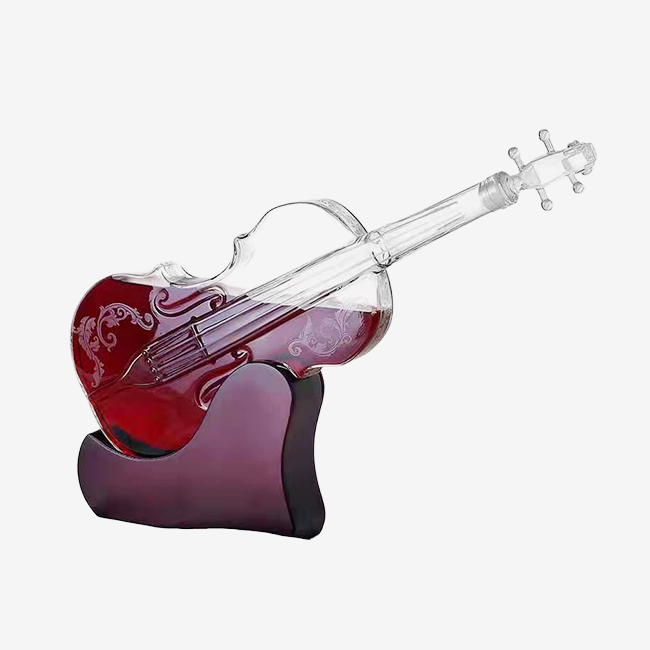
Our Xuzhou facility gives you a lot of ways to customize things so that your brand has the most impact. Instead of the standard clear bottles with a straight edge, we can make custom molds to make bottles with unique shapes that will help your product stand out on store shelves that are already full. Surface treatments like hot stamping, spray painting, and decal application make it possible to decorate in a stylish way that will last through shipping and handling. Logo printing is an easy part of production, and our minimum order quantities are flexible enough to work for both test marketing and full-scale launches.
Conclusion
Choosing the high borosilicate glass wine bottle for wine packaging is an investment in the quality of the product, the efficiency of operations, and the positioning of the brand. These bottles solve real problems, like broken bottles during shipping because of heat, bad tasting chemicals interacting with each other, and worries about the environment related to long-term packaging. Even though it costs more at first than other options, the overall benefits—lower breakage losses, the potential for higher prices, longer shelf life, and compatibility with sustainability goals—make it a strong investment. Borosilicate glass bottles from reputable manufacturers give buyers in the home goods, personal care and beauty, food packaging, beverage, cultural gift, and pharmaceutical industries the performance specs and customization options that today's markets need.
Partner with Xuzhou Pinyunyi Glass for Your High Borosilicate Glass Wine Bottle Needs
Your beverage packaging needs to be made by a partner who knows both how to do things technically well and how to run a business. The nearly 100 skilled workers at Xuzhou Pinyunyi Glass Products Co., Ltd. use both traditional glass-making skills and modern production technology to make high borosilicate glass wine bottle solutions that help your product stand out in the market. We have been making high borosilicate glass wine bottles for a long time and can fully customize everything from the shape of the bottle to the printing of logos and treatments on the surface. We also have strict quality control that makes sure every shipment meets your needs. We offer technical support, flexible order sizes, and competitive pricing structures to help your business grow, whether you're a craft winery launching a premium line, a cross-border e-commerce seller looking for unique packaging, or a beverage brand increasing production. You can talk to our team about your needs by emailing 18168782056@163.com . Let's talk about how our borosilicate glass solutions can help your brand stand out, keep your products safe, and give you an edge in the American market.

FAQs
Can borosilicate bottles safely store wine long-term?
Of course. Because borosilicate glass is chemically inert, it doesn't react with wine components. This means that the intended flavor profile stays the same for years. The substance has Grade 1 Hydrolytic Resistance, which means it is one of the most stable ways to package acidic or alcoholic drinks.
How does thermal resistance prevent bottle breakage?
When heated, borosilicate glass only expands a small amount—about one-third as fast as regular glass. Because it has a low thermal expansion coefficient, the material can handle sudden temperature changes of 150°C or more without getting stress fractures that cause it to break.
Why are borosilicate bottles more expensive?
It costs more to make because it needs a higher melting point (above 1600°C) and special raw materials like boron trioxide. But the benefits of longer life and less breakage usually make up for this initial investment within 12 to 18 months of normal use.
Are these bottles truly environmentally friendly?
No, borosilicate glass doesn't lose any quality when it's recycled, and it doesn't have any heavy metals or harmful stabilizers in it. Because the material lasts a long time, it needs to be replaced less often, which saves resources compared to alternatives that need to be replaced more often.
References
- Shelby, J.E. (2005). Introduction to Glass Science and Technology (2nd ed.). Royal Society of Chemistry.
- American Society for Testing and Materials. (2018). ASTM C162-18: Standard Terminology of Glass and Glass Products. ASTM International.
- Varshneya, A.K., & Mauro, J.C. (2019). Fundamentals of Inorganic Glasses (3rd ed.). Elsevier.
- International Organization for Standardization. (2012). ISO 719:2012: Glass — Hydrolytic Resistance of Glass Grains at 98°C.
- Pfaender, H.G. (1996). Schott Guide to Glass (2nd ed.). Chapman & Hall.
- Tooley, F.V. (Ed.). (1984). The Handbook of Glass Manufacture: A Book of Reference for the Plant Executive, Technologist, and Engineer (3rd ed.). Ashlee Publishing Co.
Learn about our latest products and discounts through SMS or email