- English
- French
- German
- Portuguese
- Spanish
- Russian
- Japanese
- Korean
- Arabic
- Greek
- German
- Turkish
- Italian
- Danish
- Romanian
- Indonesian
- Czech
- Afrikaans
- Swedish
- Polish
- Basque
- Catalan
- Esperanto
- Hindi
- Lao
- Albanian
- Amharic
- Armenian
- Azerbaijani
- Belarusian
- Bengali
- Bosnian
- Bulgarian
- Cebuano
- Chichewa
- Corsican
- Croatian
- Dutch
- Estonian
- Filipino
- Finnish
- Frisian
- Galician
- Georgian
- Gujarati
- Haitian
- Hausa
- Hawaiian
- Hebrew
- Hmong
- Hungarian
- Icelandic
- Igbo
- Javanese
- Kannada
- Kazakh
- Khmer
- Kurdish
- Kyrgyz
- Latin
- Latvian
- Lithuanian
- Luxembou..
- Macedonian
- Malagasy
- Malay
- Malayalam
- Maltese
- Maori
- Marathi
- Mongolian
- Burmese
- Nepali
- Norwegian
- Pashto
- Persian
- Punjabi
- Serbian
- Sesotho
- Sinhala
- Slovak
- Slovenian
- Somali
- Samoan
- Scots Gaelic
- Shona
- Sindhi
- Sundanese
- Swahili
- Tajik
- Tamil
- Telugu
- Thai
- Ukrainian
- Urdu
- Uzbek
- Vietnamese
- Welsh
- Xhosa
- Yiddish
- Yoruba
- Zulu
Oval Glass Jar For Wine
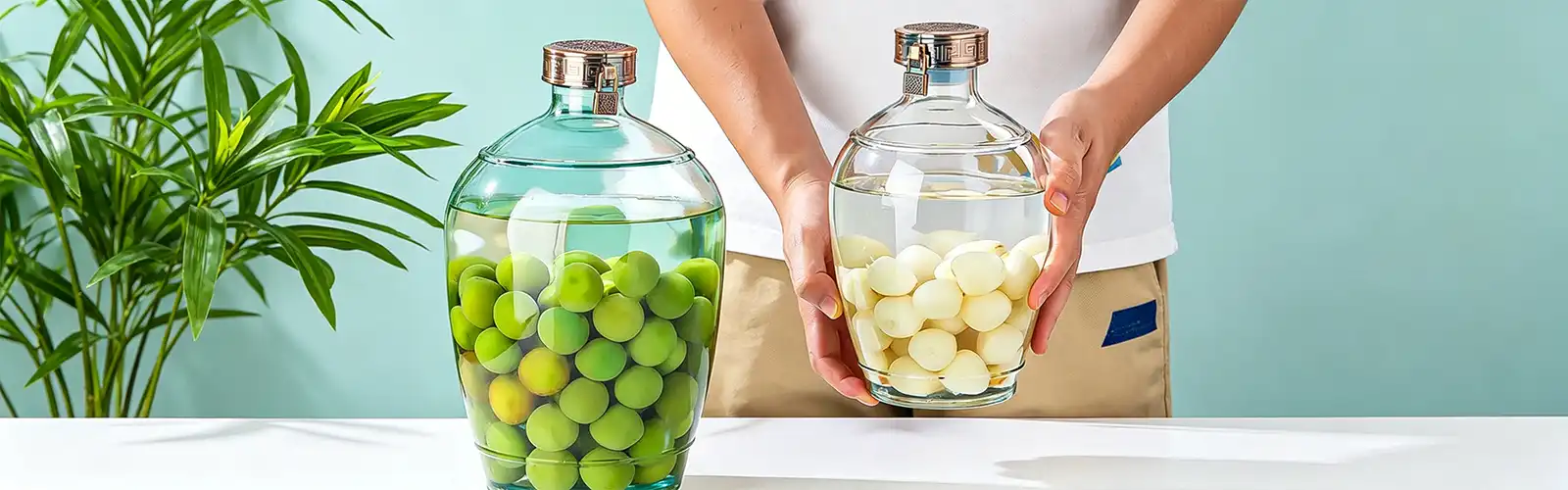
The oval glass wine jar is a one-of-a-kind container that is made to look good and be useful for storing and fermenting wine. These elliptical containers are a unique way for winemakers, distributors, and packagers to get containers that look good and are useful at the same time. Since oval bottles don't have a straight edge like cylindrical bottles do, they make better use of shelf space and storage density in cellars and warehouses. In today's competitive market, procurement managers need to know about the unique benefits of oval glass containers so they can choose packaging options that are good in terms of quality, durability, and cost.
Understanding Oval Glass Wine Jars
Defining the Oval Wine Jar and Its Unique Features
On the other hand, the oval glass wine jar is a one-of-a-kind container because its cross-section is elliptical, which sets it apart from everyday round or square bottles. This geometric set-up gives store displays a "billboard effect" that makes it easier to see the items without taking up too much horizontal space. Because the stress-distribution lines on oval-shaped jars are curved, they are stronger than rectangular ones. This makes them very resistant to pressure inside during the aging and fermentation processes.
Materials and Eco-Friendly Manufacturing
Borosilicate glass, which is what we sell most of the time, is known for being very resistant to chemical reactions and sudden temperature changes. This kind of glass won't break when the temperature drops by up to 40°C. Because of this, it's perfect for wine applications that need to keep the temperature stable. Since the structure is borosilicate, heavy metals can't get into alcoholic drinks. This meets FDA and LFGB standards. In the manufacturing process, controlled annealing in precision lathes gets rid of any internal stress points that could break the metal on its own and keeps the size tolerances within ±1.5%.
Evolution from Traditional Craftsmanship to Modern Precision
To make wine jars in the past, they were blown by hand, which was an artistic process but didn't make the walls thick enough or the capacity consistent. Modern blown glass is made with skill, engineered molds, and quality control that is done automatically. This change means that jars with walls that are between 4 mm and 10 mm thick can now handle fermentation pressures of up to 3–5 bars for different types of sparkling wine. Making more of them hasn't lowered the quality; instead, it's made things more reliable while keeping the good looks that make glass better than plastic or ceramic pieces.
Advantages Over Alternative Container Materials
It's clear that glass jars are better than plastic or ceramic jars. Because glass doesn't take in smells or flavors like plastic does, wine stays pure even after being aged for a long time. Because it doesn't have pores, glass doesn't let oxygen in past a certain point. This is very important to keep things from oxidizing too quickly. Ceramic pots and pans are traditional, but they often have small holes in them that let air in. You can see how the fermentation is going and how much sediment is forming because our borosilicate jars are clear. One useful thing that opaque materials can't do is this.
Key Factors When Choosing Oval Glass Wine Jars
Application Scenarios and Size Specifications
To pick the right containers, you need to make sure that the weight and size of the jars match your needs for storage or production. Oval glass wine jars come in two main sizes: 2500ml (5-jin) and 5000ml (10-jin). These sizes are great for wineries, people who make fruit wines, and people who make drinks. The 2500ml version is better for testing and making small amounts of specialty wines, while the 5000ml version is better for making a lot of wine for sale. During the fall and winter, when fermentation takes longer and the container needs to be stable, these big jars are great for making wine.
Material Quality and Durability Standards
Before you decide what to buy, you should look at the material certifications and structural testing results. We put our borosilicate glass through a strict polariscopic stress test, which uses polarized light to find any internal stress that is still there. Pendulum protocols are used to test the impact resistance of each production batch to make sure the jars can handle the fast operations of the bottling line. The hydrolytic resistance rating for Class HGB1 makes sure that chemicals stay stable, even with drinks that are high in alcohol. A micrometer is used to make sure that the pressure is the same all over the jar's surface and that the wall thickness is the same all over.
Lid Types and Sealing Performance
How the wine stays fresh depends on how the bottle is closed. For tight seals, our jars have precisely ground mouths that work with T-corks, glass stoppers, screw caps, and other lids. It is possible to measure how flat the sealing surface is down to the micron level. This keeps oxygen from getting in and oxidation from happening. When deciding between an airlock and a non-airlock, you should think about what you need for fermentation. As the fermentation process goes on, airlock systems are needed to let carbon dioxide out while keeping outside contaminants out. Old wine can be kept longer in jars without airlocks because they don't let as much gas exchange happen.
Supplier Evaluation and Certification Requirements
If you only work with certified manufacturers, you can be sure that they will follow all the rules and the quality will be better. Third-party labs SGS and Intertek do thorough tests on our products and give us reports for each batch that say the products are free of lead and cadmium. The factory we work with is certified by ISO for quality management, and our products follow the rules set by EU Directive 84/500/EEC for materials that come into contact with food. When you are looking at different suppliers, make sure you get written proof of how the products are tested, how much they can produce, and what the warranty terms are. Manufacturers you can trust make it easy to work together for a long time by giving you clear ways to communicate, make changes, and set prices.
How to Use and Maintain Oval Glass Wine Jars?
Preparation and Initial Setup Procedures
The right way to get an oval glass wine jar ready for fermentation is to sterilize it. This gets rid of any bacteria or wild yeasts that could get in the way. Run hot water over the jars to clean them. Then, use a sodium metabisulfite solution or a store-bought brewery sanitizer. It is best to let the solution sit on the inside for at least two minutes before washing with distilled water. In a bright light, check each jar to see if the body or rim has any cracks or chips. Small flaws can make the seal less effective or even cause the structure to break when it's put under a lot of stress. After checking and cleaning the jars, put them somewhere dust-free to dry before you put anything in them.
Fermentation Monitoring and Storage Protocols
While fermentation is going on, keep the jars out of direct sunlight and in a temperature-controlled area. The different curves in an oval shape make natural convection currents that help plants or fruits release their flavors when the temperature changes. Through the clear walls, you can see the bubbles moving around and watch the fermentation happen. Oval-shaped jars have longer bases than narrow-shaped ones, so sediment can settle over a bigger area. This makes it easier to rack the things. Keep the room between 15°C and 20°C for most types of wine. If the fermentation process needs more or less heat, make changes.
Cleaning Methods and Maintenance Best Practices
While being careful not to damage the surface, you need to get rid of any organic residues that are left on the glass after fermentation. Use soft brushes without rough bristles to clean the inside of things. Scrub the glass with steel wool or rough pads, but don't use them on it. Salty water mixed with warm water works great to break down the tannins and protein deposits in wine. To get rid of tough residues, soak things for a long time in a special cleaner made for breweries. If you use distilled water to rinse well, chemical residues won't hurt the next batch. To keep moisture from building up and microbes from growing, store cleaned jars upside down in a place with good air flow.
Market Overview and Procurement Guide for Oval Glass Wine Jars
Current Market Trends and Demand Patterns
The B2B glass packaging market for 2024 shows that brands need more and more unique container shapes to stand out. People who make craft wines and other unique drinks and want their packaging to stand out on store shelves are becoming more interested in oval glass wine jars. Being better for the environment, reusable glass is better than single-use plastics. Procurement managers also give more weight to suppliers who show they care about the environment. Large jars, especially those that hold between 2500ml and 5000ml, are popular because people like to buy handmade goods in bulk and in good quality.
Wholesale Channels and Custom Manufacturing Options
In stock are standard oval glass wine jars that hold 2500ml and 5000ml of wine. This way, we can quickly fill orders when production schedules are tight. The wholesale prices we offer are lower when you buy in bulk than when you buy less. As part of their custom manufacturing services, they can use decal, baking, painting, and heat transfer technologies to print logos. We can come up with new mold designs that are perfect for your brand, and we can make prototypes faster than anyone else in the business. You don't have to pay the markups that come from middlemen when you buy straight from the factory. It saves you money and helps you figure out how much your products are worth.
Logistics and Packaging for Safe Transportation
Glass containers need to be packed in a certain way so that they don't break while being shipped. Our boxes are made of multiple layers of corrugated cardboard and have honeycomb dividers that keep each jar separate and absorb shock during shipping. There is stretch wrap and corner protectors on pallets to keep the goods from moving around. When containers are loaded, they are done in ways that make the best use of space and keep weight distribution safety margins. When sending things from other countries to the United States, we work with freight forwarders who know how to move glass and can give us tracking information and insurance options. Most ocean freight takes between 4 and 6 weeks to deliver, but for orders that need to be delivered quickly, there are faster air options.
Conclusion
When it comes to making and selling wine today, the oval glass wine jar is a stylish way to package it that meets all of our needs. This guide has talked about the technical side of building with borosilicate, how to pick the right capacity, and the best ways to keep it in good shape for the best performance. Being oval-shaped gives it clear advantages when it comes to storage space, durability, and good looks. When businesses decide what to buy, they can make better products and keep their operations running smoothly if they use material certifications, assessments of supplier reliability, and total cost of ownership calculations. As the wine industry moves toward more high-end, handcrafted wines, there is a greater need for packaging that shows quality and skill. These needs can be met with oval glass containers.
Partner with Xuzhou Pinyunyi Glass for Your Oval Wine Jar Needs
If you need to package wine, Xuzhou Pinyunyi Glass can help. They are a well-known company that makes oval glass wine jars. We can handle large orders with consistent quality because our factory has almost 100 skilled workers and the most up-to-date tools. We keep oval glass wine jars in stock that hold 2500ml and 5000ml so that we can quickly fill your orders and keep your production schedules on track. You can use custom logo printing, mold development, and special surface treatments to turn plain containers into branded assets that help your products stand out in crowded markets. Quality control is an important part of the whole process of making something. We make sure that every jar meets international food safety standards at every step, from picking out the materials to the final check. You can email us at 18168782056@163.com to find out about bulk pricing for oval glass wine jar suppliers, request samples of our products, or learn about how we can make something just for you.

FAQs
Are oval glass jars suitable for active wine fermentation processes?
Oval glass wine jars are great for fermentation because of how they are made and how they are built. The curved shape creates natural convection patterns that help the yeasty liquid heat up and spread out more quickly. When fermentation is going on, pressures build up inside the borosilicate structure. The clear walls let you see how the fermentation is going without opening the container.
What functional differences exist between oval and round wine bottles?
If you want to store things densely in a small cellar, oval glass wine jars are about 15% better than round jars of the same size. Labels stick to oval jars better because their faces are wider. This helps the brand stand out on store shelves. Since the stress is spread out along curved lines, the structure is stronger against pressure inside it. If you move round jars around, they might roll, but an oval footprint stays put on flat surfaces.
How should I clean oval jars to prevent residue buildup?
You need to mix warm water with sodium percarbonate or a cleaner made just for breweries to get things clean. Instead of rough materials that leave tiny scratches that bacteria can live in, use soft-bristled brushes made for cleaning the inside of glass. Clean it well, and then rinse it well with distilled water. Putting something in water for a long time breaks down tough tannin deposits. Clean the jar properly between batches so that flavors don't get messed up. This also makes the jar last longer by lowering the chemical stress on the glass surface.
References
- Johnson, M. (2023). Glass Container Design and Manufacturing: Modern Approaches to Wine Packaging. Beverage Industry Press.
- Chen, L., & Roberts, K. (2024). "Comparative Analysis of Glass Types in Alcoholic Beverage Storage." Journal of Packaging Technology, 18(3), 142-158.
- European Glass Container Federation. (2023). Food Contact Compliance Standards for Glass Packaging. Brussels: EGCF Publications.
- Williams, T. (2024). B2B Procurement Strategies for Beverage Packaging Materials. Industrial Supply Chain Review.
- Anderson, P., & Zhang, W. (2023). "Thermal Properties and Durability Testing of Borosilicate Glass in Wine Production." Materials Science Quarterly, 41(2), 89-105.
- International Wine Packaging Association. (2024). Market Trends Report: Glass Container Innovations in Craft Wine Industry. San Francisco: IWPA Research Division.
Learn about our latest products and discounts through SMS or email