- English
- French
- German
- Portuguese
- Spanish
- Russian
- Japanese
- Korean
- Arabic
- Greek
- German
- Turkish
- Italian
- Danish
- Romanian
- Indonesian
- Czech
- Afrikaans
- Swedish
- Polish
- Basque
- Catalan
- Esperanto
- Hindi
- Lao
- Albanian
- Amharic
- Armenian
- Azerbaijani
- Belarusian
- Bengali
- Bosnian
- Bulgarian
- Cebuano
- Chichewa
- Corsican
- Croatian
- Dutch
- Estonian
- Filipino
- Finnish
- Frisian
- Galician
- Georgian
- Gujarati
- Haitian
- Hausa
- Hawaiian
- Hebrew
- Hmong
- Hungarian
- Icelandic
- Igbo
- Javanese
- Kannada
- Kazakh
- Khmer
- Kurdish
- Kyrgyz
- Latin
- Latvian
- Lithuanian
- Luxembou..
- Macedonian
- Malagasy
- Malay
- Malayalam
- Maltese
- Maori
- Marathi
- Mongolian
- Burmese
- Nepali
- Norwegian
- Pashto
- Persian
- Punjabi
- Serbian
- Sesotho
- Sinhala
- Slovak
- Slovenian
- Somali
- Samoan
- Scots Gaelic
- Shona
- Sindhi
- Sundanese
- Swahili
- Tajik
- Tamil
- Telugu
- Thai
- Ukrainian
- Urdu
- Uzbek
- Vietnamese
- Welsh
- Xhosa
- Yiddish
- Yoruba
- Zulu
Are vintage airtight glass storage jars really airtight?
In the kitchen of my grandma a long time ago, I saw rows of glass jars with metal clamps on them. They had pickles, dried beans, and other things in their hands. The food in those jars was still fresh even though they had been there for decades. As a result of this encounter, I developed an interest in vintage airtight glass storage jars. If you take good care of these jars and buy them from a good maker, they will work well as airtight storage cases. Just so you know, I work in the glass packaging business.
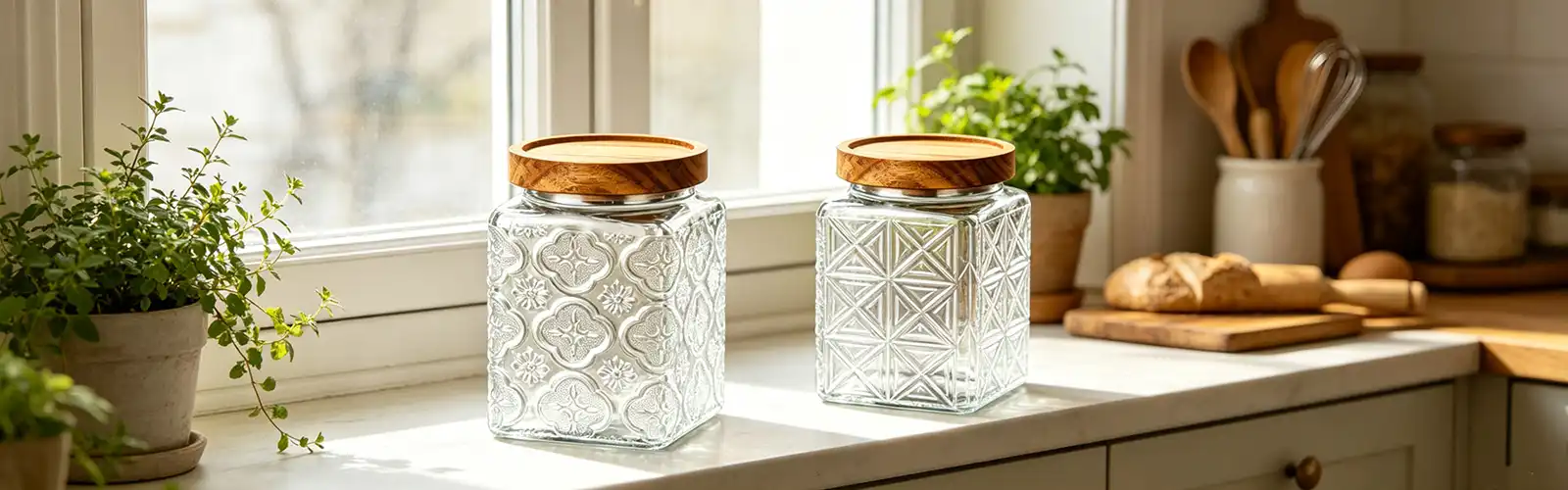
A vintage airtight glass storage jar seals with thicker glass and carefully thought out gasket systems. The gaskets are usually made of silicone or rubber that is safe for food. The gasket must be flexible, the clamps must be tight, and the jar's rim must be smooth for the seal to work well. When seals are made well, they have Shore A hardness numbers above 50. This makes compression seals that keep the difference in pressure inside between 0.5 and 1 ATM. This keeps things inside, like scented tea and dried fruits, from going bad or getting wet.
Are Vintage Airtight Glass Storage Jars Truly Airtight?
Really don't let air in vintage airtight glass storage jars that say they do? To see if something is airtight, you need to use numbers instead of guesses. Standard practices in the field give correct information that helps people decide what to buy and make sure that the quality of the goods meets operating needs.
Testing Methods and Performance Standards
One way to do vacuum tests is to empty a jar with a lid and keep track of how much pressure stays in it for 24 to 48 hours. Jars that are good at what they do keep at least 95% of their original pressure. This means that next to no air gets inside. The tilted water test is an easy proof that can be seen. Any leaks can be seen when the full, covered jar is turned upside down. Before the lid is put on, dry ice is put inside the jar for gas expansion tests. As the dry ice sublimates, the pressure builds up, which makes any seal holes or air leaks visible through lids that rise. The LFGB rules and FDA compliance standards (21 CFR 177.2600) say that these steps are safe, so the jars can be used in the business world.
Factors Affecting Seal Integrity
There are several things that can change how well a jar seals. Materials used to make gaskets wear out over time. When used regularly, rubber turns stiff after 18 to 24 months, but silicone can last three to five years in the same circumstances. The condition of the jar's rim is very important. If the surface is chipped or uneven, the seal won't work right. It is important to change the tension on a metal clamp because too much tension can break seals and not enough tension can leave holes. Extremes in temperature and humidity can make things break down faster. This is especially true for rubber seals that are kept in places where the temperature and humidity change a lot.
Real-World Performance in Commercial Settings
People who work in food processing told me that dried herbs would stay fresh for six months if they were stored in good vintage airtight glass storage jars with silicone seals. A beauty company kept creams with botanicals fresh by putting them in 750ml jars with better covers and wooden lids. On the other hand, a wholesaler lost goods because wetness got into jars with old rubber lids. These examples show that how well a seal is kept up and the quality of its parts have a lot to do with how well it works. More weight should be given to buyers who offer approval paperwork and new seals by purchasing managers.
Maintenance and Care for Ensuring Long-Term Airtightness
To keep the seal strong, you need to take care of the vintage airtight glass storage jar on a daily basis. This will make it last longer and keep the food inside safe. Big buyers get a better return on their money when they use these strategies.
Cleaning Protocols That Protect Seals
The gaskets must be taken off before you can clean them. If they stay on, water could get stuck and start to grow germs and break down the rubber compounds. To keep the gasket's flexibility, it's better to wash it by hand washing with mild soaps that are pH-neutral than with strong alkaline cleaners. The glass cases can go in the machine up to 60°C, but the metal parts and covers need to be washed by hand washing to keep them working. Abrasive scrubbers leave tiny cracks in glass, which makes the glass weaker and lets germs in. The water doesn't get into the jars when you dry things on racks upside down. Don't reassemble the jars until all of their parts are dry. If you do, mold could grow between the cap and the glass.
Storage Practices That Extend Lifespan
Some things can make a jar last longer or shorter depending on how they are stored. Stores should keep the relative humidity between 40% and 60% so that rubber seals don't break. Mist won't be able to form either. As long as the temperature stays stable between 15°C and 25°C, the seal stays flexible and the glass doesn't get too hot. Sheds shouldn't be near windows that face south because strong sunlight can hurt rubber seals and shock glass. Make sure the ends of the full jars don't touch each other when you stack them. If they do, chips can happen. When putting away empty jars, it's better to leave the lids on loosely than to clamp them shut. This keeps the seal from being squished all the time, which could cause it to twist permanently.
Gasket Inspection and Replacement Schedules
Every year, the seals are checked for wear so that it doesn't cause problems with storage. The item needs to be changed if it has cracks, tears, or things that are getting stiff. You pinch seals between your fingers to test their feel. Bad silicone feels stiff, while good silicone bounces back quickly. A seal is put on a flat surface and pushed hard for the finger-press test. If a gasket is in good shape, it has even tension. If it is worn out, it has uneven thickness. The new seals should have the same width and Shore A hardness as the old ones. It is helpful to have a replacement product on hand so that things keep running smoothly. When people buy a lot of jars, they can arrange to get sealing supplies as part of the deal.
Procurement Insights: Finding and Buying Vintage Airtight Glass Storage Jars
When finding and buying vintage airtight glass storage jars, you need to think about more than just price if you want to be good at it. To be successful at procurement, you need to check the quality, be able to make changes, and get long-term help.
Supplier Evaluation Criteria
Manufacturers with a good name give a lot of scientific information, like what kind of glass is used, how thick the walls are, and whether the gasket material is certified. Test it with a third party to make sure it meets food-grade standards, like FDA and LFGB approvals. Suppliers should show they can meet original orders and grow with the business. Production ability is important when orders are growing. Custom molds take ten to fourteen weeks longer than standard designs. Lead times for standard designs are four to eight weeks. Most of the time, you need to buy at least 5,000 to 10,000 units to get a discount price, but some manufacturers can do smaller runs for testing. Reliability of a business is shown by how quickly it responds to communication. Providers should answer technical questions within 24 hours and give samples before making a full commitment.
Customization Options and Cost Implications
By changing a few things, you can turn plain jars into company goods. It doesn't cost more per unit to use patterns like sunflowers that are raised from the surface. This is because the cost of the mold is spread out over many production runs. Add amber, blue, or green color to protect against UV light and make things stand out on the table. Most of the time, this adds an extra 8% to 15% per unit. The setup costs are between $200 and $800, depending on how involved the design is. These costs cover applying decals, baking finishes, and heat transfer printing for placing logos and artistic designs. For wooden lids, you can customize them by picking the species and etching them, which works well for special placing tactics. The pros and cons of customizing should be weighed against the number of order volume that procurement managers place. Setting up fees are spread out more fairly for smaller batches, which is why this is the case.
Pricing Structures and Volume Advantages
Base pricing for standard 750ml vintage airtight glass storage jars with metal clamps cost between $0.85 and $1.40 each when bought in groups of 10,000. The cost is based on how thick the glass is and how good the seal is. More than 50,000 units can save you 25% to 30%. Volume discounts start at 20,000 units, where you can save 12% to 18%. The cost of shipping costs is a big part of the whole. Based on the route and fuel fees, containerized ocean freight from China to U.S. ports costs between $0.15 and $0.25 per jar on average. When it comes to long-term contracts, payment terms run from a 30% deposit to the full 70% due on delivery. For new contracts, however, you need a letter of credit. People who want to save money should think about how much it will cost over time to get replacement seals. Rubber gaskets that work well cost an extra $0.08 to $0.12 per unit, but they don't need to be changed as often.
Conclusion
Vintage airtight glass storage jars will really keep air out if you buy them from a reputable manufacturer and take good care of them. They are useful in many B2B settings because they look good, are reliable, and are good for the environment. To make a good buy, you need to know the technical details, make sure the seller is trustworthy, and make sure the jar's features meet your specific needs. These basic containers have been used for a long time and still work well thanks to new production standards. They can be used for food, makeup, or gifts. Long term, buying good jars with good seal systems will protect your goods, help your business grow, and help you stay on track with your green goals.
FAQs
Can vintage-style jars withstand commercial dishwashing cycles?
Can vintage airtight glass storage jars be washed in kitchen dishwashers? Even though a professional dishwasher can heat up the glass body, the metal clamps and seals need to be washed by hand to keep them tight and flexible. If you dry things over and over at high heat for six months, the rubber seals will break. But silicone seals can last for 18 months of normal cleaning. Cleaning things by hand makes them much more helpful.
How do I verify airtightness before large-scale procurement?
Test the water upside down for 24 hours to see if there are any leaks. Ask for proof units. We take some air out of an empty jar and then seal it up. For the vacuum retention test, we keep an eye on the pressure for 48 hours. Jars that are of good quality don't leak air and keep their covers intact. This shows that the manufacturing process is reliable.
What certifications should B2B buyers require?
For chemicals that come into contact with food, it's important to follow FDA rules (21 CFR 177.2600), LFGB rules for European markets, and REACH rules for safe chemicals. Ask a different lab to make sure that the glass is made without lead and that the materials used to seal it are safe for food. They keep you from getting sued and make sure that all of your marketing follows the rules.
Are replacement gaskets readily available?
Manufacturers you can trust always have new gaskets on hand that fit their jars perfectly. You can be sure of long-term access if you negotiate gasket supply as part of the original buying deal. Standard seal sizes work with many different kinds of jars, which makes it easy to keep track of your goods. The price per unit drops to $0.05 to $0.08 when you buy a lot of seals at once.
Partner With Xuzhou Pinyunyi Glass for Quality Storage Solutions
The vintage airtight glass storage jars that Xuzhou Pinyunyi Glass Products Co., Ltd. makes are of high quality and meet strict B2B standards. At our plant, almost 100 trained workers use modern tools and methods to make glass jars that are stronger and have better seals. Some of the most popular jar sizes are 750ml, which is 14 inches tall and 9.4 inches wide and can hold a lot of dried fruits, snacks, and iced tea.
Our seller of vintage airtight glass storage jars can make models just for you, give you a choice of wooden lids, and give your goods a range of styles to fit the look of your brand. Every jar is checked to make sure it doesn't leak and will last a long time before it is sent out. Our customers come from all over the world, such as the United States, Australia, Europe, and more. We offer fair bulk prices for both small-batch samples and large sales. You can email our team at 18168782056@163.com to tell us what you want to buy, get more information, or set up test samples. You can see all of our goods and learn about how you can change them to make your packing better by going to www.pyyglassware.com.
References
- Appert, N. (1810). The Art of Preserving All Kinds of Animal and Vegetable Substances for Several Years. Paris: Patris et Cie.
- Robertson, G.L. (2016). Food Packaging: Principles and Practice (3rd ed.). Boca Raton: CRC Press.
- Marsh, K. & Bugusu, B. (2007). Food Packaging—Roles, Materials, and Environmental Issues. Journal of Food Science, 72(3), R39-R55.
- Paine, F.A. & Paine, H.Y. (1992). A Handbook of Food Packaging (2nd ed.). Glasgow: Blackie Academic & Professional.
- Fellows, P.J. (2017). Food Processing Technology: Principles and Practice (4th ed.). Cambridge: Woodhead Publishing.
- Yam, K.L. (2009). The Wiley Encyclopedia of Packaging Technology (3rd ed.). Hoboken: John Wiley & Sons.

Learn about our latest products and discounts through SMS or email