- English
- French
- German
- Portuguese
- Spanish
- Russian
- Japanese
- Korean
- Arabic
- Greek
- German
- Turkish
- Italian
- Danish
- Romanian
- Indonesian
- Czech
- Afrikaans
- Swedish
- Polish
- Basque
- Catalan
- Esperanto
- Hindi
- Lao
- Albanian
- Amharic
- Armenian
- Azerbaijani
- Belarusian
- Bengali
- Bosnian
- Bulgarian
- Cebuano
- Chichewa
- Corsican
- Croatian
- Dutch
- Estonian
- Filipino
- Finnish
- Frisian
- Galician
- Georgian
- Gujarati
- Haitian
- Hausa
- Hawaiian
- Hebrew
- Hmong
- Hungarian
- Icelandic
- Igbo
- Javanese
- Kannada
- Kazakh
- Khmer
- Kurdish
- Kyrgyz
- Latin
- Latvian
- Lithuanian
- Luxembou..
- Macedonian
- Malagasy
- Malay
- Malayalam
- Maltese
- Maori
- Marathi
- Mongolian
- Burmese
- Nepali
- Norwegian
- Pashto
- Persian
- Punjabi
- Serbian
- Sesotho
- Sinhala
- Slovak
- Slovenian
- Somali
- Samoan
- Scots Gaelic
- Shona
- Sindhi
- Sundanese
- Swahili
- Tajik
- Tamil
- Telugu
- Thai
- Ukrainian
- Urdu
- Uzbek
- Vietnamese
- Welsh
- Xhosa
- Yiddish
- Yoruba
- Zulu
What is the purpose of a honeycomb in glass honey bottle?
The honeycomb shaped glass honey bottle has two uses: it's useful for carrying honey and it looks great. The hexagonal shapes that are etched or formed into the glass surface of this unique package design look like natural beehive structures. The honeycomb design not only looks nice, but it also makes the structure stronger by spreading pressure across many reinforcement spots. This makes it less likely that the structure will break during shipping and handling. The rough surface also makes it easier to hold on to, so you won't slip while pouring or moving the container. Additionally, the honeycomb shape forms patterns of light reflection that show off the golden brightness of honey, instantly letting shoppers know that the product is real and of high quality.
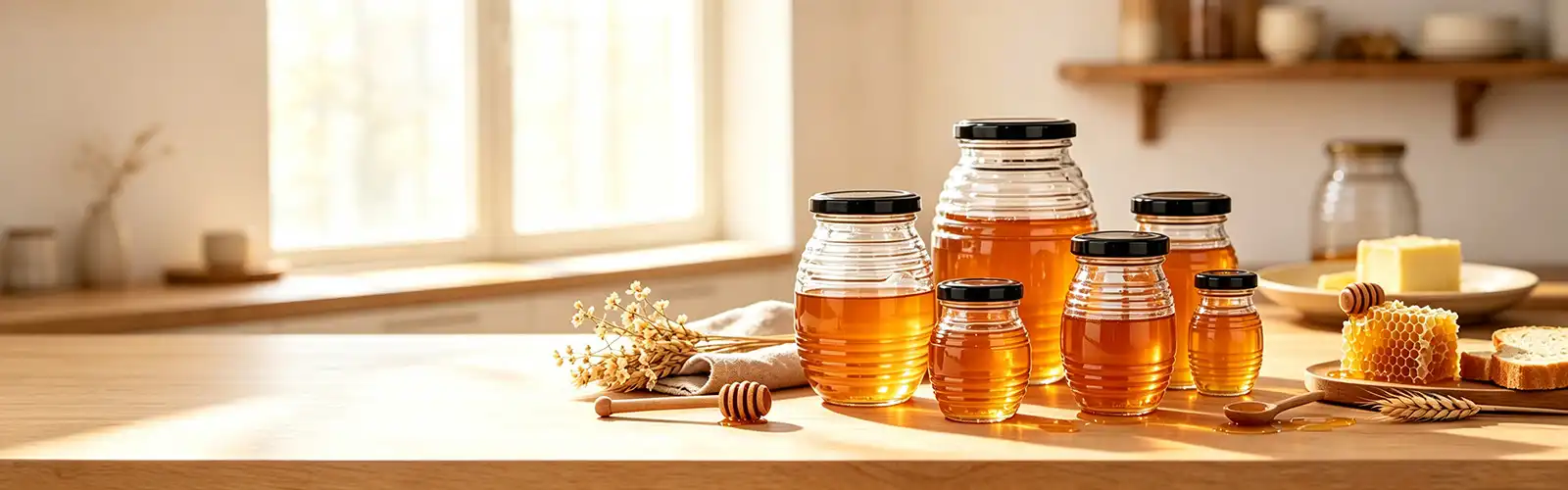
Honeycomb Design in Glass Honey Bottles
The Historical Roots of Nature-Inspired Packaging
Packaging designers have long been influenced by natural shapes, and the beehive is one of nature's most useful examples of efficient architecture. The hexagonal tessellation found in real honeycombs makes the most of storage room while using the least amount of material. This is a great idea that can be used to make glass bottles. When honey pots started to have this pattern around the middle of the 20th century, it was because people strongly associated the honeycomb shape with pure products. This choice of design wasn't just for looks; it made it easy to see the connection between the container and what was inside, which is what marketers call "package-product congruence."
How Geometric Patterns Enhance Brand Storytelling
The triangular design on honeycomb shaped glass honey bottle sends clear brand messages without words. This design is used by artisanal honey makers to show that their honey is made by hand and using traditional farming methods. The pattern's precise geometric shapes make people think of careful attention to detail, which they unknowingly apply to how they feel about the honey. When purchasing managers choose packaging for high-end honey lines, they're not just picking out containers; they're picking out brand champions that communicate value ideas through visual and tactile elements. The honeycomb pattern quickly sets goods apart in crowded markets where dozens of honey brands are competing for customers' attention.
Structural Engineering Behind the Pattern
The honeycomb design is made up of vertical ribs that make the sides of the bottle stronger. Engineers who work with glass know that when things are stored on pallets, horizontal pressure can damage smooth cylinder surfaces. By adding hexagonal depressions, makers make more stress-distribution points that can handle hits better than flat surfaces. This geometric support makes it possible for glass walls to be a little thinner without lowering their strength. This lowers the cost of materials and the weight of transporting them. When tested for quality, bottles with honeycomb patterns regularly show higher vertical load strength than smooth-walled alternatives of the same weight. This makes them perfect for stacking in a warehouse with a lot of items.
Key Benefits of Honeycomb Shaped Glass Honey Bottles for B2B Clients
Premium Brand Positioning Through Distinctive Aesthetics
People who work in procurement for fancy foods know that the way a product is packaged has a direct effect on how valuable people think it is. Due to its layered texture and light-catching qualities, the honeycomb shaped glass honey bottle stands out on store shelves. When light hits high-quality white glass that is 5 mm thick, the hexagonal facets make faint sparkle effects that naturally draw the eye. This high-end look allows for higher prices, which lets small honey makers put their goods in specialty food shops instead of fighting only on price in mass-market channels. Different bottle styles save money on marketing because they make goods more photogenic and shareable on social media sites, which is important to buyers who want to differentiate brands.
Enhanced Handling Safety Across Supply Chains
Because honeycomb etching makes the surface bumpy, it is easier to hold on to during the distribution process. Workers in warehouses that handle large shipments like that the anti-slip qualities make it easier to move individual units, which cuts down on accidents and broken goods. The benefits are the same for retail workers who refill stores, especially when they handle bottles that still have wetness or condensation on them. Because there are fewer insurance claims and product losses during logistics, these real benefits lead to measurable cost saves. When it comes to buying things for large operations, buyers know that small design details like better grip can add up to big practical savings when added up over thousands of units per year.
Sustainability Credentials That Support Corporate Responsibility
Glass packaging naturally helps the earth because it can be recycled over and over again and doesn't react with chemicals. The honeycomb design adds to these environmental benefits by making containers that people will remember and want to use again instead of throwing away. A lot of people use pretty honey bottles for things other than eating or storing honey after the original product has been used up. This longer lifetime cuts down on general packaging waste while keeping the brand in people's homes for longer. Companies with strong ESG (Environmental, Social, and Governance) goals find that choosing high-quality glass bottles with unique patterns helps with their sustainability reporting and appeals to consumers who care about the environment.
Because of these benefits, honeycomb glass bottles should be thought of as smart investments in packing rather than just basic purchases. When buyers look at packaging in terms of its total value, which includes its effect on the brand, its operational efficiency, and its sustainability alignment, they always find that the higher original cost pays off in the form of better product performance and market differentiation.
Design & Material Considerations for Procurement Managers
Material Quality and Food-Grade Compliance
Understanding material specs before buying honeycomb shaped glass honey bottle keeps you from making mistakes that cost a lot of money. High-quality white glass, which is sometimes called flint glass, is clearer than colored glass, so people can see the color and purity of honey clearly. The 5 mm wall thickness gives strong protection while keeping the weight low enough to save money on shipping. The soda-lime glass makeup meets FDA and EU food contact rules. This keeps the material chemically inert and stops it from getting dirty. Professionals in charge of buying things should make sure that the sellers they work with have Type III glass approval, which proves that the glass won't leach chemicals into acidic or alkaline foods while they are being stored for a long time. When looking for organic honey brands, this approval is especially important because keeping the product pure throughout the supply chain is very important.
Customization Options for Brand Differentiation
These days, making glass lets you change a lot of things besides the usual honeycomb design. Buyers can ask for brand names to be etched in certain smooth areas on the surface of the bottle. This gives the bottle a textured grip and makes it easy to see the brand. The round bottle shape works with a number of different closing systems, such as gold-coated tinplate lug caps with plastisol liners that form hermetic seals that keep honey from going bad. In addition to clear white, you can also choose amber tints that protect light-sensitive honey types from UV rays. Xuzhou Pinyunyi Glass has in-house mold design capabilities that allow for fast prototyping of custom bottle forms. This lets brands test how the market responds to their products before committing to large production runs.
Engineering Specifications for High-Volume Operations
Compatibility with automated filling lines is an important requirement that is often missed during the initial talks about buying something. Standardized finish diameters—usually 58mm or 63mm lug sizes—make sure that bottles work perfectly with current capping equipment. The honeycomb design must not get in the way of these. In hot-fill methods, honey is heated to 60–85°C to lower its viscosity before filling. This makes thermal shock protection very important. Good makers make sure that their honeycomb bottles can handle temperature differences of at least 42°C without cracking. This way, the structure stays the same during heat processing. Using polarized light analysis to test the quality of the annealing process shows that there is no thermal stress left in the glass. This is especially true around the hexagonal corners, where stress could build up during cooling.
Conclusion
The honeycomb shaped glass honey bottle is more than just a piece of packaging; it's an example of how useful engineering, brand marketing, and sustainable design can work together. Through geometric strengthening patterns, these bottles improve the strength of their structures while also giving them unique looks that help them stand out in competitive markets. Better handling safety, longer product lifecycles, and packaging that actively adds to brand storytelling are all measured benefits for procurement pros. The high-quality white glass and 5mm thickness of the material make sure that food is safe and that the product looks its best. Customization options let you make sure that the product exactly fits the needs of your brand. If you choose the right supplier, buying packaging goes from being a simple exchange to a long-term relationship that helps your business grow and sets you apart in the market.
FAQ
What makes glass honeycomb bottles better than plastic alternatives for honey packaging?
Glass is a total barrier that stops the exchange of air and moisture. This keeps the taste of the honey and stops fermentation while it is being stored. The honeycomb design makes these benefits even better by giving the product a high-end look that deserves a higher price. Glass doesn't change chemically when the temperature does, but plastic containers can release chemicals that change the taste of food. Attractive glass bottles can be used more than once, which helps sustainability efforts that customers who care about the environment will like.
Can honeycomb patterns accommodate custom branding and labeling?
Professional honeycomb shaped glass honey bottle designs have smooth sides that are made just for putting labels on, so the label will stick perfectly even though the surface is rough. During production, manufacturers can press brand images directly into the glass. This creates lasting branding that can be seen even after labels are taken off. Modern ways of decorating, like screen printing, stickers, and hot pressing, can be used on both smooth and textured panels, giving you a lot of options for personalization.
How should buyers verify manufacturer quality before large orders?
Ask for sample bottles so that you can check the wall thickness consistency, heating quality, and surface finish physically. Make sure that the companies you're working with give you material certifications that show the materials are food-grade and meet FDA or EU rules. Ask for proof of production ability and client examples from groups of people who buy similar things. Good companies are happy to give you scientific information about their products, like data on how well they handle thermal shock and test results for vertical load strength. This shows that the engineers who made the products were very careful when they made them.
Partner with Xuzhou Pinyunyi Glass for Premium Honeycomb Bottle Solutions
A company called Xuzhou Pinyunyi Glass Products Co., Ltd. makes beautiful honeycomb shaped glass honey bottle that are also very reliable. Our factory uses cutting-edge technologies to work with glass and has strict quality control at every stage of the production process, from designing the molds to doing the final review. We offer a wide range of customization choices, such as custom mold creation, name embossing, and decorative finishing methods that will help your brand stand out in crowded markets. Based on the needs of your market, our experienced team can help you choose the right bottles, closing systems, and decorating methods. We guarantee consistent quality and reliable delivery schedules that support your supply chain operations as an established honeycomb shaped glass honey bottle maker with proven export capabilities to foreign markets. Get in touch with us at 18168782056@163.com to get samples, talk about customization options, and find out how our glass packing can help your honey goods stand out. You can see all of our products at www.pyyglassware.com and start working with a source that cares about quality, new ideas, and customer satisfaction.
References
- Robertson, G.L. (2016). Food Packaging: Principles and Practice (3rd ed.). CRC Press, Boca Raton, FL.
- Marsh, K., & Bugusu, B. (2007). Food Packaging—Roles, Materials, and Environmental Issues. Journal of Food Science, 72(3), R39-R55.
- Paine, F.A., & Paine, H.Y. (1992). A Handbook of Food Packaging (2nd ed.). Blackie Academic & Professional, London.
- Emblem, A., & Emblem, H. (2012). Packaging Technology: Fundamentals, Materials and Processes. Woodhead Publishing, Cambridge.
- Soroka, W. (2009). Fundamentals of Packaging Technology (4th ed.). Institute of Packaging Professionals, Naperville, IL.
- Yam, K.L. (2009). The Wiley Encyclopedia of Packaging Technology (3rd ed.). John Wiley & Sons, Hoboken, NJ.
Learn about our latest products and discounts through SMS or email