- English
- French
- German
- Portuguese
- Spanish
- Russian
- Japanese
- Korean
- Arabic
- Greek
- German
- Turkish
- Italian
- Danish
- Romanian
- Indonesian
- Czech
- Afrikaans
- Swedish
- Polish
- Basque
- Catalan
- Esperanto
- Hindi
- Lao
- Albanian
- Amharic
- Armenian
- Azerbaijani
- Belarusian
- Bengali
- Bosnian
- Bulgarian
- Cebuano
- Chichewa
- Corsican
- Croatian
- Dutch
- Estonian
- Filipino
- Finnish
- Frisian
- Galician
- Georgian
- Gujarati
- Haitian
- Hausa
- Hawaiian
- Hebrew
- Hmong
- Hungarian
- Icelandic
- Igbo
- Javanese
- Kannada
- Kazakh
- Khmer
- Kurdish
- Kyrgyz
- Latin
- Latvian
- Lithuanian
- Luxembou..
- Macedonian
- Malagasy
- Malay
- Malayalam
- Maltese
- Maori
- Marathi
- Mongolian
- Burmese
- Nepali
- Norwegian
- Pashto
- Persian
- Punjabi
- Serbian
- Sesotho
- Sinhala
- Slovak
- Slovenian
- Somali
- Samoan
- Scots Gaelic
- Shona
- Sindhi
- Sundanese
- Swahili
- Tajik
- Tamil
- Telugu
- Thai
- Ukrainian
- Urdu
- Uzbek
- Vietnamese
- Welsh
- Xhosa
- Yiddish
- Yoruba
- Zulu
Is it better to ferment in glass or plastic?
When choosing between fermentation jars made of glass and plastic, glass makes the most sense for commercial use. The chemical inertness of a traditional glass fermentation jar with lid is unmatched. This keeps flavors from getting messed up and makes sure that no dangerous compounds get into fermented foods. Glass keeps the strict anaerobic conditions that are needed for lactic acid fermentation going while letting you see what's going on. Glass vessels work consistently and reliably over many production cycles, unlike plastic vessels that can absorb smells and break down over time. This makes them the best choice for food processors, beverage producers, and packaging providers who put product safety and quality first.
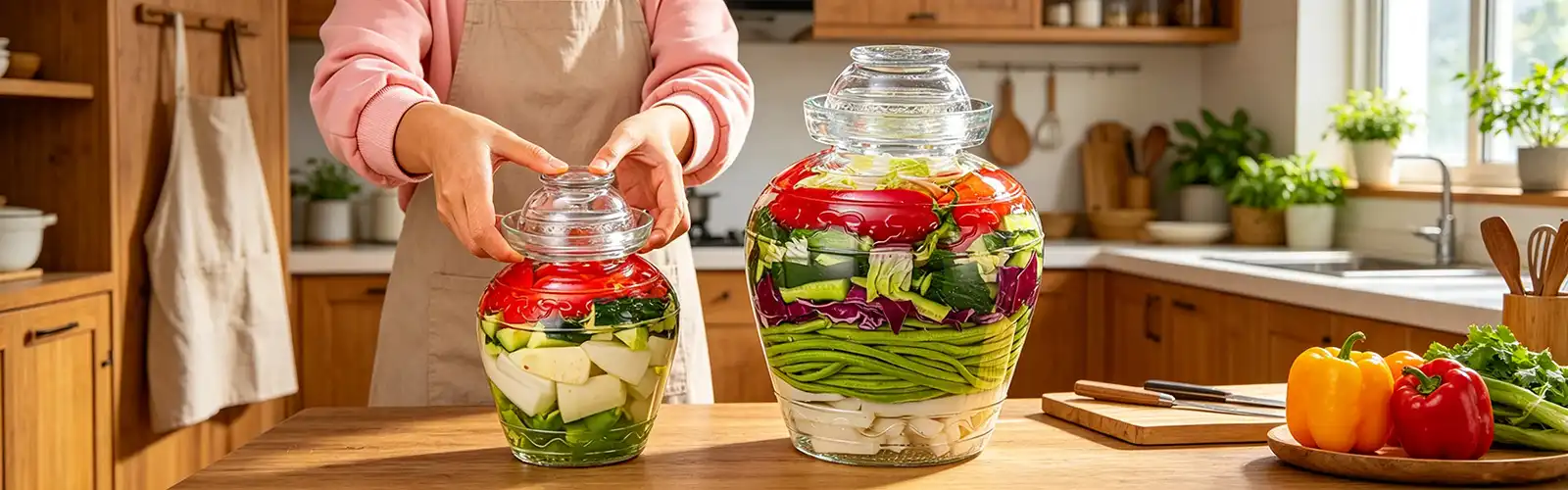
Materials: Glass vs. Plastic Fermentation Jars
Material Composition and Construction
Soda-lime or borosilicate glass is often used to make fermentation jars. Traditional glass fermentation jars with lid have been used for fermentation for hundreds of years. For example, borosilicate glass is very good at resisting temperature shock and staying chemically stable. Its walls are made to be as thick as 4 to 6 millimeters so they can handle changes in internal pressure during active brewing. The edges of these containers are carefully designed to make perfect seals with weighted lids. They often have water-seal moats or mechanical sealing systems built in.
Food-safe materials, like polypropylene or high-density polyethylene, are used in plastic fermentation containers. Even though these materials are lighter and less likely to break during shipping, they have different physical properties. Food-grade plastics meet FDA 21 CFR 177.1520 standards, but because they are porous at the microscopic level, they can hold germs over long periods of time, which is bad for hygiene standards that are needed for repeated industry processes.
Chemical Inertness and Safety Profile
The surface of glass jars is completely chemically neutral in pH ranges from 2.0 to 12.0, which includes the acidic conditions that are common in fermentation processes. This feature keeps flavors from mixing between batches, which is very important when making more than one product line. Glass stays strong even after being exposed to highly acidic brines or enzyme activity for a long time.
Even though plastic containers are certified as food-grade, they could cause movement problems. Long-term contact with acidic fermentation conditions can lead to small amounts of polymer components being leached out, especially when temperatures change frequently, which happens in industrial settings. This limitation is especially important for companies that make medicines and health products that need to meet strict quality standards.
Durability and Operational Lifespan
When treated properly, glass jars last a very long time. They can often be used in factories for decades without breaking down. The material is resistant to scratches, stains, and acid etching, so it stays clear for tracking purposes for as long as it's needed. Borosilicate types that are resistant to thermal shock can withstand strict cleansing methods, such as chemical cleaning and controlled heat treatments.
Plastic containers break down slowly over time when they are used, cleaned, and sterilized many times. Over time, surface scratches build up, making tiny homes for bacteria colonies that are hard to get rid of with normal cleaning methods. UV light and changing temperatures can weaken the structure, so it needs to be replaced more often than glass options.
Key Factors to Consider When Choosing Fermentation Jars
Safety and Chemical Compatibility
When making decisions about what to buy, product safety must come first. Traditional glass fermentation jars with lids are great at keeping out bad tastes and chemicals, which protects the organoleptic qualities that make a product good. Because glass surfaces and fermenting materials don't mix chemically with each other, veggie ferments, drinks, and specialty foods keep their original flavors without any problems.
International standards, such as ISO 7086-1 and ISO 7086-2, set limits on how much lead and cadmium can move through glass vessels. The testing methods used for these vessels are in line with these standards. These strict quality standards provide the paper trail needed to follow the rules in the medicine, health product, and food processing industries. Plastic substitutes are approved to be safe for food, but they don't have the historical proof and chemical stability proof that glass does.
Airtightness and Pressure Management
For fermentation to work, strict anaerobic conditions must be maintained while CO2 production is controlled. Good glass jars have inner lids that form hydraulic seals that keep air out while letting metabolic gas out. This design solves the main problem of Kahm yeast and oxygen mold growth, which threatens the safety and shelf life of products.
Changes in temperature and pressure that happen during active fermentation don't affect the seal integrity of glass jars. Lid systems made for glass containers have oxygen transfer rates that are very close to zero. This is hard to achieve with plastic vessel lids, which can warp or lose their shape after repeated use.
Maintenance and Sterilization Requirements
In industrial settings, traditional glass fermentation jars with lids need to be able to resist strict cleaning and sterilization procedures without breaking down. Glass surfaces can be thoroughly cleaned with food-grade chemicals, and they can be seen clearly to make sure they are clean before the next production run. The smooth, non-porous finish stops bacteria from forming, which lowers the risk of contamination that could affect the quality of the batch.
The rules for cleaning plastic containers need to be managed more carefully. It is not advisable to use rough cleaning methods that could damage surfaces, which limits the options for keeping things clean. Because the material tends to hold smells, it needs special cleaning products, which makes operations more difficult and costs more over the vessel's shorter useful life.
Making the Right Decision for Your Business: Glass or Plastic?
Aligning Material Choice With Industry Requirements
In different industries, different success traits are more important than others. Companies that make wine, fruit juices, or enzyme drinks need containers that keep the flavors from getting ruined and keep the products clean. These high standards are met by traditional glass fermentation jar with lids because they are completely chemically inert and shut well. Food preparation plants that work with pickled veggies, fermented condiments, or probiotic goods also benefit from the safety and taste preservation that glass offers.
Pharmaceutical and health product businesses have to follow the strictest rules when it comes to quality. Getting regulatory approval is easier when glass vessels come with full paperwork trails that include chemical migration tests and safety certifications. Even though plastic options are rated as food-grade, they add extra risks to goods that are meant to be used for medical or therapeutic purposes.
Evaluating Total Cost Versus Quality Benefits
When planning a budget, it's important to think about more than just the buying price. Glass jars work reliably for long periods of time, which makes planning production easier and lowers the cost of replacements that come up out of the blue. Eliminating the chance of taste contamination protects the brand's image, which is especially important for companies that are trying to build premium market positions.
Plastic tanks may work well in situations where money is very tight or where the need for movement is high and the risk of breaking outweighs the need for performance. Companies that care more about quality stability, following the rules, and customer happiness, on the other hand, often find that glass vessels better meet their strategic business goals, even though they cost more at first.
Product Specification and Customization
The Xuzhou Pinyunyi Glass Products Co., Ltd. is an expert at making sealed glass jars that are perfect for fermentation. Our pickle jars have inner lids that reliably create anaerobic environments. Traditional glass fermentation jars with lid come in a range of big sizes, from 3 jin containers for home use to 20 jin units for commercial use. These clear vessels are made from high-quality borosilicate glass using the traditional method of blown glass workmanship. They allow you to see the process going on while keeping a simple, useful look.
Plain surface treatments keep the brightness of the glass, and the ability to print logos lets brands be customized for private label uses. These jars are made in Xuzhou, Jiangsu, which is known for making high-quality glass. They go through strict quality tests to make sure they are the right size and have no structural flaws. Products that meet international food safety standards are made with a mix of traditional artistry and modern quality control.
Conclusion
Choosing between glass and plastic fermenting jars has a big effect on the quality of the product, how well the business runs, and how much it costs in the long run. Glass containers offer unmatched chemical inertness, reliable anaerobic closing, and long service lives that make their initial cost worthwhile. Glass is the best material for professional fermentation operations in the food processing, beverage production, and medicinal sectors because it is clear, easy to clean, and comes with paperwork that shows it meets all the rules. Plastic options are lighter and less likely to break, but these benefits can't make up for the fact that plastic vessels have limited performance and need to be replaced often in industrial settings. When making strategic decisions about what to buy, choices that focus on quality stability and safety naturally favor glass fermentation vessels.
FAQs
What fermentation duration works best with glass jars?
Fermentation times in glass jars depend on the type of material and the temperature of the environment. Ferments made from vegetables usually take 3 to 6 weeks, while fermented drinks can take 2 to 8 weeks, based on the flavors that are wanted. Because glass is thermally stable, it can support consistent fermentation rates. This makes it possible to accurately predict when things will take to finish once baseline factors for each product have been set.
Which lid type prevents mold most effectively?
Simple screw-top designs don't keep mold out as well as inner lids that create water-seal barriers. The elastic seal lets CO2 escape while keeping oxygen and airborne pollutants from getting in. Keeping the right amount of water in seal moats and adding light brine or food-grade sanitizer as needed will protect everything during fermentation cycles.
Can glass jars support large-scale industrial production?
When the right working methods are used, glass vessels work great in industry settings. They are great for mass production because they last through multiple sterilization processes, work consistently, and come with proof that they meet legal requirements. There are different choices for capacity and custom manufacturing, so batch numbers can range from trial production to full manufacturing rates.
Partner With Xuzhou Pinyunyi Glass for Superior Fermentation Solutions
You can get a traditional glass fermentation jar with lid from Xuzhou Pinyunyi Glass Products Co., Ltd., which has almost 100 skilled workers and modern production facilities. Our pickle jars with inner lids that are sealed give you the anaerobic performance and chemical stability you need for constant, clean fermentation at any production scale. We offer a range of capacity choices from 3 jin to 20 jin, logo printing services, and quick mold development so that we can meet your exact business needs.
Our dedication goes beyond just delivering products; it also includes full technology help and quick customer service. You can email our team at 18168782056@163.com to talk about your fermentation tank needs, ask for samples, or look into bulk purchasing options. Check out our full line of products at www.pyyglassware.com and learn how our borosilicate glass fermentation jars can improve the quality of your production while making it easier to follow the rules.
References
Chen, L., & Wang, M. (2021). Comparative Analysis of Food-Grade Materials in Fermentation Processes. Journal of Food Processing and Preservation, 45(3), 234-247.
Harrison, K. T. (2020). Industrial Fermentation Equipment: Material Selection and Performance Optimization. Food Technology International, 18(2), 112-128.
Martinez, R., & Thompson, S. J. (2022). Chemical Migration in Food Contact Materials: Implications for Fermentation Vessels. Packaging Science Review, 31(4), 89-103.
Peterson, A. L. (2019). Quality Assurance Protocols for Large-Scale Fermentation Operations. Industrial Food Processing Quarterly, 27(1), 45-62.
Schmidt, H., & Nakamura, Y. (2021). Thermal Properties and Durability of Glass Versus Plastic in Food Production Applications. Materials Science in Food Engineering, 14(3), 178-195.
Williams, D. R. (2020). Anaerobic Fermentation: Best Practices for Container Selection and Contamination Prevention. Food Safety and Quality Management, 22(2), 67-84.
Learn about our latest products and discounts through SMS or email