- English
- French
- German
- Portuguese
- Spanish
- Russian
- Japanese
- Korean
- Arabic
- Greek
- German
- Turkish
- Italian
- Danish
- Romanian
- Indonesian
- Czech
- Afrikaans
- Swedish
- Polish
- Basque
- Catalan
- Esperanto
- Hindi
- Lao
- Albanian
- Amharic
- Armenian
- Azerbaijani
- Belarusian
- Bengali
- Bosnian
- Bulgarian
- Cebuano
- Chichewa
- Corsican
- Croatian
- Dutch
- Estonian
- Filipino
- Finnish
- Frisian
- Galician
- Georgian
- Gujarati
- Haitian
- Hausa
- Hawaiian
- Hebrew
- Hmong
- Hungarian
- Icelandic
- Igbo
- Javanese
- Kannada
- Kazakh
- Khmer
- Kurdish
- Kyrgyz
- Latin
- Latvian
- Lithuanian
- Luxembou..
- Macedonian
- Malagasy
- Malay
- Malayalam
- Maltese
- Maori
- Marathi
- Mongolian
- Burmese
- Nepali
- Norwegian
- Pashto
- Persian
- Punjabi
- Serbian
- Sesotho
- Sinhala
- Slovak
- Slovenian
- Somali
- Samoan
- Scots Gaelic
- Shona
- Sindhi
- Sundanese
- Swahili
- Tajik
- Tamil
- Telugu
- Thai
- Ukrainian
- Urdu
- Uzbek
- Vietnamese
- Welsh
- Xhosa
- Yiddish
- Yoruba
- Zulu
How tall is a high borosilicate glass wine bottle?
One question that procurement professionals often have is how tall a high borosilicate glass wine bottle is when they are looking for packaging for high-end drinks. Most standard glass wine bottles are about 11.8 to 12.6 inches (300 to 320 mm) tall and hold 750 ml worth of wine. This measurement, on the other hand, changes depending on the style of the bottle. Bordeaux bottles tend to have taller, straighter shoulders, while Burgundy bottles have softer slopes and slightly different sizes. Understanding these differences in size is important for business-to-business buyers who want to get the most out of shipping crates, office storage, and store displays.
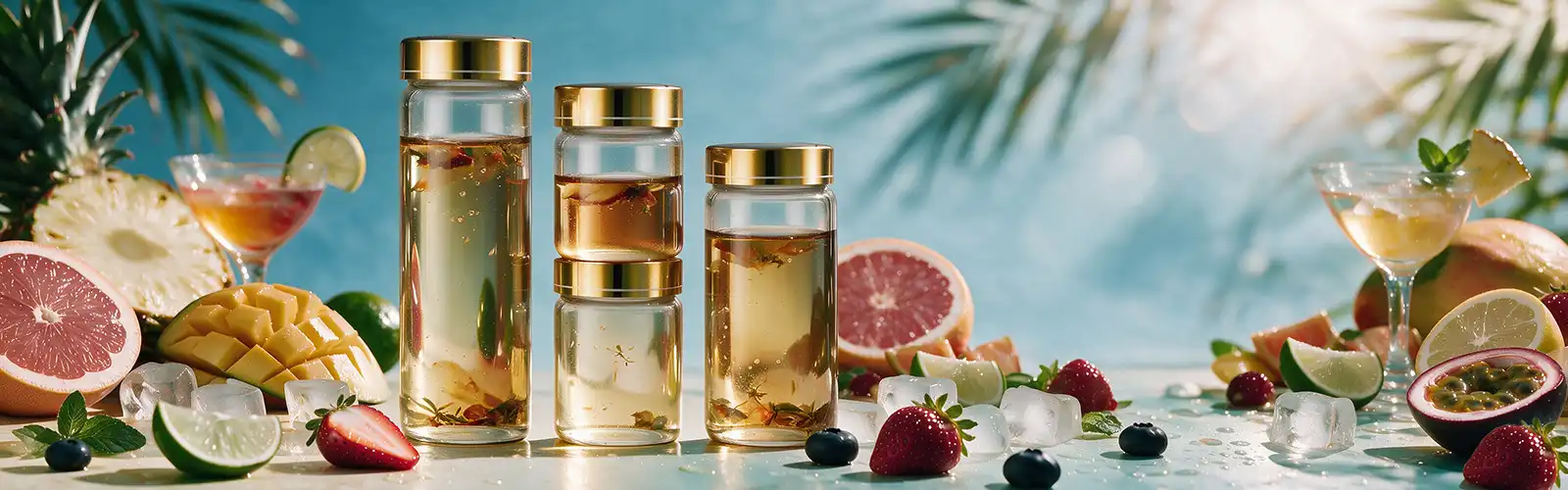
Dimensional Analysis of High Borosilicate Glass Wine Bottles
Having a clear understanding of precise dimensions will save you money and make your supply chain run more smoothly. Here are some real-world effects that these measures can have.
Height Variations Across Bottle Styles
Most Bordeaux-style bottles are between 11.8 and 12.4 inches (300 to 315 mm) tall and have straight sides and shoulders. Burgundy bottles have shoulders that slope and are 11.4 to 12 inches (290 to 305 mm) tall. Because of the need for internal pressure and traditional design standards, champagne and sparkling wine bottles are higher, at 12.2 to 12.8 inches (310 to 325 mm).
These changes may not seem like much, but they make a big difference in how well the package works. A difference of half an inch in bottle height can mean that one less layer can fit on a stack, which wastes 8 to 12 percent of the containers that are used. These dimensions have a direct effect on landed costs when dealing with bulk orders, especially the large amounts of high borosilicate glass wine bottles that wineries and beverage factories often buy.
The Relationship Between Height and Functionality
Bottle height is not a separate thing. Bottles that are taller often have necks that are longer, which changes how they seal and how they pour. A neck that is 3.5 inches long gives you enough room for a standard cork and gives the bottle the elegant proportions that people expect from high-end goods. The neck-to-body ratio affects how the bottle balances when you pour and where the labels go on the shelf to make the most of their visual impact.
We've become very good at managing these dimensional relationships here at Xuzhou Pinyunyi Glass. Our design team can change the height limits while keeping the structure's strength and good looks. We can do everything from rapid mould design to full-scale manufacturing, so you don't have to worry about whether you need custom sizes for specific uses or standard sizes for cost-effective production runs.
Packaging and Transport Considerations
The people who work in procurement have to turn bottle sizes into useful transportation factors. To fit protective packaging materials around a 12-inch bottle, the cartons must have an inside height of at least 12.8 inches. Standard pallet layouts stack boxes five to six layers high, which means that the total height of the pallets can reach 70 to 85 inches before they go over warehouse clearances.
Container optimisation is especially important for international wholesalers and people who sell goods online across borders. A 20-foot container can hold about 1,200 to 1,400 cases of regular wine bottles, and a 40-foot high-cube container can hold 2,800 to 3,200 cases. These numbers change a lot when the height changes even a little, so accurate measurements are needed for international buying that doesn't cost too much.
Comparison and Procurement Considerations for Borosilicate Glass Wine Bottles
Knowing about material differences helps business-to-business buyers make smart decisions about where to buy high borosilicate glass wine bottles that balance performance needs with budget limits.
Borosilicate Versus Traditional Glass Performance
For wine bottles, the walls of traditional soda-lime glass need to be 3 to 4 mm thicker to be as strong. At 2 to 3 mm wall thickness, high borosilicate glass wine bottle has the same or even better mechanical strength. This decrease lets bottle designs be taller and more elegant without adding extra weight that makes shipping more expensive.
High borosilicate glass wine bottle can handle temperature differences of up to 150°C, which makes it ideal for hot-filling tasks that are common in making handmade liqueurs and medicinal wines. When ordinary glass is filled with temperatures above 80°C, it can break on its own, stopping the production line and losing the product. Immersion in cyclic hot and cold water baths is part of our testing procedures at Xuzhou to make sure that every production batch meets these resistance thresholds.
Another very important benefit is chemical stability. Ordinary glass can become cloudy or yellow after being exposed to high-proof drinks for a long time, but high borosilicate glass wine bottle keeps its visual clarity forever. This property is very important for brands that want to position their products in the ultra-premium market, where how they look affects people's decisions to buy.
Size Specifications in Bulk Orders
When making bulk orders, especially the large amounts that drug and beverage companies usually buy, it's very important that the dimensions are always the same. During production, we use ultrasonic thickness measuring to make sure that the walls are all the same thickness across the complicated shapes of the bottles. As part of our quality control procedures, we do high-precision calibre checks to make sure that the limits for dimensions stay within ±0.5 mm during the whole production run.
Custom bottle runs bring up new issues to think about. For fully customised moulds, the lowest number of units that can be ordered at once is usually between 10,000 and 15,000, but smaller batches of 3,000 to 5,000 can be made by making changes to existing designs. The flexibility to change the sizes, add logos, and choose surface treatments like stickers, baking, or painting gives brands opportunities to stand out that generic bottles can't match.
Practical Guidance on Using and Caring for High Borosilicate Glass Wine Bottles
When you handle your premium packaging the right way, you get the most out of your investment and keep the product's integrity throughout the distribution chain.
Cleaning and Maintenance Protocols
Cleaning high borosilicate glass wine bottles in harsh ways that would damage regular glass doesn't hurt them. High borosilicate glass wine bottle that has been properly heated is safe to use in commercial machines that can handle temperatures up to 180°F. When cleaning by hand, the smooth, non-porous surface of the material makes it easy to get rid of residues without having to scrub hard, which could scratch regular glass.
For wine bottles that are taller than 12 inches, you need special bottle brushes with long handles that can reach the inside of the base. To keep the perfect clarity that makes quality packages stand out, we suggest soft-bristle brushes instead of metal or hard plastic ones. Inverted air-drying stops water spots that could ruin the look of clothes after washing.
Storage Optimization Strategies
Warehouse managers should know how the size of the bottles affects the amount of space they take up. When put in cartons, standard wine bottles usually take up 0.65 to 0.75 cubic feet per dozen units. Pallet racks should have at least 14 inches of vertical space between each shelf level so that cartons can fit easily. This gives workers room to move the boxes around and keeps them from getting damaged while they are being retrieved.
Gift companies and cultural creative brands that want to sell to consumers both need to think about how to show their products in stores. High borosilicate glass wine bottles will always be clear and bright, which makes them perfect for backlit displays and prominent shelf placement. The straight lines of our Xuzhou-made bottles go well with modern store design, and the clear, see-through finish shows off the colour and clarity of the product without any distortion.
Customization Options and Brand Identity
With the ability to print logos on bottles, plain ones become branded assets. Screen printing, sticker application, hot stamping, and embossing are just some of the decoration methods we offer at our site. When deciding where to put something, you need to think about the height and shape of the bottle. Taller bottles have bigger name areas, but some shapes may need special printing methods.
Labels are usually placed 4 to 7 inches above the bottom of the bottle, on the body section between the shoulder and base curve. This setting makes sure that the bottles can be seen when they are on normal store shelves or in restaurant wine racks. Custom embossing makes things feel different by creating debossed logos or text that raises the perceived value. This is especially important for beauty and personal care brands whose customers decide what to buy based on the texture of the packaging.
Conclusion
Understanding bottle dimensions is more than just knowing the numbers; it's important information that affects how well operations work, how well a brand is positioned, and eventually, how well it does in the market. Most high borosilicate glass wine bottles are between 11.8 and 12.6 inches tall, but the exact height and width depend on the style and amount of wine inside. When these measures are combined with the properties of the material, the ability to make it, and the needs of the market, they create complicated buying issues.
To do good sourcing, you need to judge suppliers based on how accurate their measurements are, how well they can accommodate customisations, how well they handle quality control, and how many services they provide overall. The right partner doesn't just sell bottles; they also offer complete solutions that include design, production, decoration, and help with logistics.
FAQ
What Determines the Exact Height of a Borosilicate Wine Bottle?
A bottle's height is determined by its goal volume (usually 750 ml for wine), its desired aesthetic proportions, the length of the neck needed for the closure system, and the limitations of the making equipment. These parameters can be changed for custom designs, but only up to the point where it is practical given how glass behaves during the shaping and heating processes.
Can Borosilicate Bottles Be Made Taller Without Structural Compromise?
Of course. Because high borosilicate glass wine bottle is stronger than soda-lime glass, it can be used to make designs that are taller and have thinner walls. We've made bottles that are taller than 14 inches and still have enough structural strength to be handled and shipped normally. The key is to anneal the bottles properly to get rid of internal stress and keep the right thickness ratios between the different parts of the bottles.
How Do Height Variations Affect Shipping Costs?
Both total and real weight are used to figure out freight charges, and height affects both. When bottles are taller, there are fewer units per carton and fewer layers per pallet. This makes it less efficient to use containers. To find the total landed costs, a full cost analysis should weigh the cost of shipping each unit against other factors like unit price, minimum order quantities, and the ability to make changes.
Partner With Xuzhou Pinyunyi Glass for Your High Borosilicate Glass Wine Bottle Needs
Choosing a dependable high borosilicate glass wine bottle maker affects how well your product does in the market and how well your business runs. Xuzhou Pinyunyi Glass offers modern production facilities, skilled craftsmanship, and full customisation options to help you make packaging solutions that make your brand stand out. Our fully automatic blowing methods make sure that the dimensions stay the same from one production run to the next, and our design team quickly creates unique moulds that meet your exact needs.
We work with a wide range of industries, from makeup companies that need beautiful perfume bottles to beverage plants that need to make a lot of wine bottles. We can print logos, treat the surface with things like decals and hot stamping, and install full closure systems. Customers in Europe, the United States, Australia, and other places buy products made at our Xuzhou facility. These products are subject to strict quality control that meets international standards.
Are you ready to talk about your packaging needs? Get in touch with us at 18168782056@163.com to find out how our borosilicate glass solutions can help you position your product better. You can see all of our products at www.pyyglassware.com and learn why big names trust Xuzhou Pinyunyi Glass as their source.
References
- Glass Packaging Institute. "Borosilicate Glass: Properties and Applications in Beverage Packaging." Journal of Glass Technology, Vol. 34, 2022.
- International Commission on Glass. "Technical Standards for Wine Bottle Dimensions and Thermal Properties." ICG Annual Report, 2023.
- Parker, Michael R. "Comparative Analysis of Glass Types in Premium Wine Packaging." Packaging Science Quarterly, Vol. 18, No. 3, 2023.
- Society of Glass Technology. "Manufacturing Processes and Quality Control in High-Performance Glass Production." SGT Technical Bulletin, 2022.
- Williams, Catherine J. "Sustainability Trends in Glass Beverage Packaging: Materials, Design, and Circular Economy." Environmental Packaging Review, Vol. 29, 2023.
- Zhang, Lin and Wang, Hui. "Dimensional Optimization in Wine Bottle Design: Logistics and Consumer Perception." Packaging Engineering International, Vol. 41, No. 2, 2022.
Learn about our latest products and discounts through SMS or email