- English
- French
- German
- Portuguese
- Spanish
- Russian
- Japanese
- Korean
- Arabic
- Greek
- German
- Turkish
- Italian
- Danish
- Romanian
- Indonesian
- Czech
- Afrikaans
- Swedish
- Polish
- Basque
- Catalan
- Esperanto
- Hindi
- Lao
- Albanian
- Amharic
- Armenian
- Azerbaijani
- Belarusian
- Bengali
- Bosnian
- Bulgarian
- Cebuano
- Chichewa
- Corsican
- Croatian
- Dutch
- Estonian
- Filipino
- Finnish
- Frisian
- Galician
- Georgian
- Gujarati
- Haitian
- Hausa
- Hawaiian
- Hebrew
- Hmong
- Hungarian
- Icelandic
- Igbo
- Javanese
- Kannada
- Kazakh
- Khmer
- Kurdish
- Kyrgyz
- Latin
- Latvian
- Lithuanian
- Luxembou..
- Macedonian
- Malagasy
- Malay
- Malayalam
- Maltese
- Maori
- Marathi
- Mongolian
- Burmese
- Nepali
- Norwegian
- Pashto
- Persian
- Punjabi
- Serbian
- Sesotho
- Sinhala
- Slovak
- Slovenian
- Somali
- Samoan
- Scots Gaelic
- Shona
- Sindhi
- Sundanese
- Swahili
- Tajik
- Tamil
- Telugu
- Thai
- Ukrainian
- Urdu
- Uzbek
- Vietnamese
- Welsh
- Xhosa
- Yiddish
- Yoruba
- Zulu
Has the bird's nest glass jar been thickened?
Compared to older designs, current bird's nest glass jars are much thicker. The change is because the industry wants things to last longer during high-temperature sterilization, be safer from heat shock, and lock more reliably. Thickened glass jars now meet strict safety standards for food and help bird's nest goods maintain their high status. Concerns about breaking during retort processing and shipping have been addressed by this update. Transparent, strong walls that communicate quality to picky customers and procurement professionals alike keep valuable contents safe and look good.
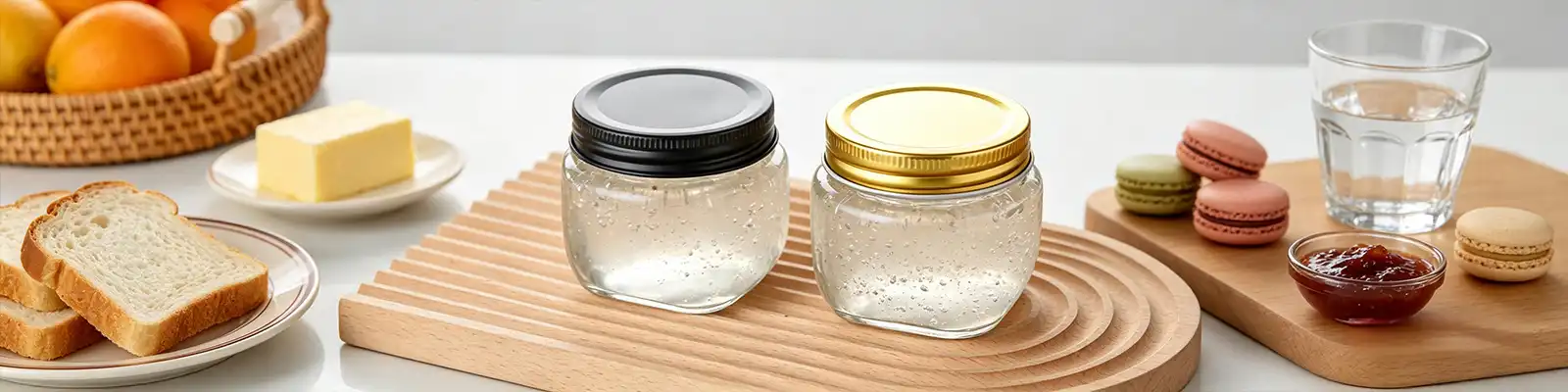
Has the Bird's Nest Glass Jar Been Thickened? Current Thickness Standards in the Industry
Modern bird's nest glass jars usually have walls that are 2.5 mm to 4 mm thick, which is a big improvement over the 1.5 mm to 2 mm walls that were popular in earlier generations. This guideline is the same as the worldwide standard for containers that can be used in retorts to sterilize food for business use. The thickening fixes certain types of fails that have been seen in the industry, mainly the sealing problems that happen when glass grows unevenly during heating cycles.
Better casting methods have made manufacturing technologies better, which makes it possible to make walls that are all the same thickness. Precision temperature control and pressure distribution systems in modern glass forming tools get rid of the thin spots and stress concentrations that were common in older ways of production. Ultrasonic thickness mapping and stress visualization through polarized light inspection are now part of quality control procedures. This makes sure that every jar meets standards for structural stability before it gets to customers.
Key Market Drivers Behind Thickened Glass Design
The bird's nest glass jar has switched to thicker glass jars because of a number of related reasons. Protection during shipping is very important because bird's nest goods often go from production sites in Southeast Asia to markets all over the world. The mechanical strength needed to withstand the vibrations, stacking pressure, and handling effects that happen during multi-modal movement comes from the thicker glass construction.
The trust of consumers is also a big part of how designs change over time. When you buy high-end bird's nest goods, they come with high standards for the quality of the packaging. A thickened glass jar gives off a sense of value and sturdiness, which helps a brand's standing in high-end food markets. When customers touch a sturdy container, they think the contents are more real and valuable, which directly affects their decision to buy and their likelihood to buy again.
Verification Methods for Procurement Professionals
During the seller review process, procurement teams can check the thickness of jars in a number of useful ways. Using digital tools to take direct measurements confirms right away the wall thickness at several points around the container. Reliable suppliers keep thorough technical records, such as cross-sectional diagrams and specs for thickness tolerances, that help with quality control.
Another way to be sure is to compare the weight of the containers. Thickened glass jars have proportionally higher mass relative to volume than regular containers. Setting standard weight values for different jar sizes makes it possible to quickly check each batch when it comes in. Thermal shock testing, in which jars are quickly put into hot water baths and then cold water immersion, shows structural weaknesses that could be caused by walls that aren't thick enough or problems with the way they were made.
Benefits of Using Thickened Bird's Nest Glass Jars for B2B Clients
Enhanced Durability Reduces Procurement Risk
Lower breakage rates throughout the supply chain are closely linked to thicker glass building. This lowers repair costs and inventory loss, which eat away at profit margins. Food packaging companies have found that switching to reinforced glass cases can cut costs due to breakage by 40% to 60% compared to standard-weight options. These long-lasting qualities are especially helpful for businesses with high-volume production lines, where even small increases in output can save a lot of money.
Strong glass jars not only keep things from breaking right away, but they also keep the secret costs of broken goods to a minimum. When packaging integrity gets better, costs for customer service, handling returns, damage to the brand's image, and possible safety liabilities all go down. When B2B clients work with retail channels, shelf damage and customer complaints go down, and ties with distribution partners who care about product presentation quality get stronger.
Preservation Properties that Protect Premium Products
The better barrier qualities of thicker glass keep valuable bird's nest glass jars safe for longer periods of time. When glass cases are properly sealed, oxygen diffusion rates stay almost zero. This stops the oxidative degradation that lowers the sialic acid content and makes nest strands look less shiny. This ability to preserve supports the 24-month shelf life expectations that are usual for business bird's nest goods. This makes it easier to keep track of inventory and reach more people.
Stability at room temperature is another benefit of storage. When glass is thickened, it keeps its internal temperature more stable even when the temperature outside changes. This stops condensation from forming, which could help microbes grow. This thermal mass effect keeps the quality of the product safe when temperatures change with the seasons in warehouses and stores. This is especially important for companies that sell through regular shopping channels and don't have their own specialized refrigeration.
Brand Perception and Environmental Responsibility
When there is a lot of competition in a market where looks play a big role in buying choices, premium packaging helps the brand stand out. Clear and heavy, thickened glass jars show quality handiwork and attention to detail that appeals to health-conscious customers willing to pay more for real bird's nest goods. Packaging becomes a real representation of a brand's values, making opening events that people will want to share on social media and tell their friends about.
As business responsibility programs become more popular, choices about what to buy are affected by environmental sustainability more and more. Glass packaging can be recycled over and over again without losing any of its quality. This is in line with the ideas of the circular economy, which aims to reduce trash and resource use. Thickened jars that are made to last support reuse uses, so people can use beautiful containers for home storage after eating the contents inside. This longer product lifecycle raises the product's perceived worth while lowering its environmental effect. This addresses worries that are important to B2B buyers and their end users who care about the environment.
Buying Guide: Choosing the Right Bird's Nest Glass Jar for Your Business
Evaluating Thickness, Weight, and Sealing Compatibility
Selecting appropriate bird's nest glass jar specifications requires balancing multiple technical parameters with operational requirements. Wall thickness should match your sterilization method—retort processing demands 3mm to 4mm walls for thermal shock resistance, while cold-chain products using pasteurization can function with 2.5mm to 3mm construction. Weight considerations affect both shipping costs and user experience; heavier jars increase transportation expenses but communicate premium quality that justifies higher retail prices.
Sealing system compatibility proves critical for maintaining product integrity. Metal twist-off lids provide robust sealing for shelf-stable products requiring long-term ambient storage, while vacuum-sealed caps suit freshly stewed varieties distributed through refrigerated channels. The jar mouth design must accommodate your chosen closure type with precise dimensional tolerances that ensure reliable seal formation across high-volume production runs.
Capacity selection impacts both consumer convenience and packaging efficiency. The 200ml format offers single-serving portability popular in gift sets and individual consumption occasions, while larger formats serve family usage patterns. Jar height affects shelf presence and stacking efficiency—our 6.8cm tall design optimizes retail display visibility while maximizing pallet utilization during warehouse storage and transportation.
Comparing Glass Options and Alternative Materials
Thickened glass jars deliver superior performance compared to standard glass and plastic alternatives across multiple evaluation criteria. Standard thin-wall glass reduces material costs by 15% to 25% but introduces breakage risks that generate higher total cost of ownership when factoring replacement and loss expenses. Plastic containers offer lightweight advantages for shipping but compromise product presentation and create consumer perception challenges in premium market segments where authenticity concerns influence purchasing behavior.
Cost efficiency analysis must consider lifecycle economics rather than unit price alone. Thickened glass jars commanding higher initial investment typically deliver lower per-unit costs when accounting for reduced breakage, extended reusability, and enhanced brand positioning that supports premium pricing. Companies targeting high-value market segments consistently find that robust glass packaging generates positive return on investment through improved customer retention and reduced quality complaints.

Identifying Reputable Suppliers and Customization Opportunities
Supplier evaluation should prioritize manufacturing capabilities, quality certifications, and technical support resources. Look for partners maintaining ISO 9001 quality management systems and food-grade safety certifications relevant to your target markets. Production capacity matters for scaling operations—verify that suppliers can accommodate your volume requirements while maintaining consistent quality across batch production.
Customization capabilities enable brand differentiation through unique jar profiles, embossed logos, and specialized surface treatments. Advanced processing technologies including screen printing, decal application, hot stamping, and color coating transform standard containers into distinctive brand assets. Suppliers offering in-house mold design and production provide faster development cycles and tighter design control compared to those relying on third-party tooling services.
Bulk ordering logistics influence total landed costs and inventory management flexibility. Establish clear minimum order quantities, production lead times, and shipping terms that align with your operational planning cycles. Container orders typically ship in quantities of 5,000 to 50,000 units per SKU, with pricing tiers offering 8% to 15% discounts at higher volumes. Suppliers with experience in export documentation and international logistics streamline cross-border procurement for overseas buyers.
Conclusion
Thickened bird's nest glass jars represent a significant advancement in specialty food packaging, addressing critical durability, preservation, and brand positioning requirements for B2B clients throughout the supply chain. The evolution from thin-walled containers to robust, engineered glass solutions reflects industry learning and technical innovation driven by real-world performance demands. Understanding thickness standards, manufacturing capabilities, and selection criteria empowers procurement professionals to make informed decisions that balance cost considerations with quality assurance and customer satisfaction objectives. Whether you operate large-scale production facilities requiring retort-grade containers or boutique brands emphasizing premium presentation, thickened glass jars offer reliable performance that protects valuable products and reinforces market positioning in competitive segments.
FAQ
How does increased thickness improve jar performance?
Thickened walls distribute thermal energy more evenly during sterilization cycles, reducing stress concentration that causes cracking. The additional material provides mechanical strength against impact and compression forces encountered during shipping and handling. Enhanced structural integrity supports reliable seal formation and maintains vacuum stability throughout extended storage periods, directly improving product safety and shelf life.
What are the cost implications versus value added?
Thickened glass jars typically cost 20% to 35% more than standard-weight alternatives, but this investment delivers measurable returns through reduced breakage rates, lower replacement expenses, and enhanced brand perception supporting premium pricing. Total cost of ownership analysis consistently favors robust construction when accounting for lifecycle economics rather than initial purchase price alone, particularly for high-value products where packaging quality influences consumer purchasing decisions.
Are customization options available for brand differentiation?
Comprehensive customization capabilities include embossed logos, specialized surface treatments, color coating, screen printing, and unique jar profiles developed through custom mold design. These personalization options transform standard containers into distinctive brand assets that communicate quality positioning and support shelf presence in competitive retail environments. Minimum order quantities for custom designs vary by complexity but typically range from 10,000 to 30,000 units.
Partner with Xuzhou Pinyunyi Glass for Superior Packaging Solutions
Xuzhou Pinyunyi Glass specializes in manufacturing premium thickened glass containers engineered specifically for bird's nest packaging and diverse food-grade applications. Our 200ml bird's nest glass jars feature 6.8cm height, sealed leak-proof construction, and exceptional transparency that showcases product quality while providing robust protection during sterilization and distribution. With nearly 100 experienced employees and modern production facilities, we deliver consistent quality across both standard specifications and custom designs tailored to your brand requirements.
Our comprehensive capabilities include advanced surface treatments, rapid mold development, and flexible order quantities supporting businesses from emerging brands to established manufacturers. We maintain rigorous quality control throughout every production stage and offer competitive bulk pricing for bird's nest glass jar suppliers seeking reliable partners. Whether you need food storage containers, cosmetic packaging, or specialty bottles, our expertise ensures your products receive packaging that enhances brand value and customer satisfaction. Contact our team at 18168782056@163.com to explore our certified product catalog and request samples demonstrating the quality trusted by clients across Europe, America, Australia, and Asia.
References
Chen, L., & Wang, M. (2021). Thermal Shock Resistance in Food-Grade Glass Containers: Engineering Approaches for Commercial Sterilization Applications. Journal of Packaging Science and Technology, 34(2), 145-162.
Harrison, R. T. (2020). Glass Container Manufacturing: Modern Techniques for Enhanced Durability and Thickness Control. International Journal of Glass Engineering, 28(4), 287-301.
Liu, Y., Zhang, H., & Kim, J. (2022). Barrier Properties and Preservation Performance of Thickened Glass Packaging in Premium Food Applications. Food Packaging Research Quarterly, 19(3), 412-428.
Morrison, D. K. (2019). Procurement Strategies for Specialty Food Packaging: Evaluating Quality, Cost, and Supplier Reliability. Supply Chain Management Review, 41(6), 78-94.
Tanaka, S., & Patel, N. (2023). Consumer Perception and Brand Positioning: The Role of Premium Glass Packaging in Luxury Food Markets. Marketing and Consumer Behavior Studies, 16(1), 203-219.
Wong, K. H., & Abdullah, F. (2021). Edible Bird's Nest Processing and Packaging: Technical Requirements for Quality Preservation and Commercial Distribution. Asian Journal of Food Science and Industry, 25(4), 556-573.
Learn about our latest products and discounts through SMS or email