- English
- French
- German
- Portuguese
- Spanish
- Russian
- Japanese
- Korean
- Arabic
- Greek
- German
- Turkish
- Italian
- Danish
- Romanian
- Indonesian
- Czech
- Afrikaans
- Swedish
- Polish
- Basque
- Catalan
- Esperanto
- Hindi
- Lao
- Albanian
- Amharic
- Armenian
- Azerbaijani
- Belarusian
- Bengali
- Bosnian
- Bulgarian
- Cebuano
- Chichewa
- Corsican
- Croatian
- Dutch
- Estonian
- Filipino
- Finnish
- Frisian
- Galician
- Georgian
- Gujarati
- Haitian
- Hausa
- Hawaiian
- Hebrew
- Hmong
- Hungarian
- Icelandic
- Igbo
- Javanese
- Kannada
- Kazakh
- Khmer
- Kurdish
- Kyrgyz
- Latin
- Latvian
- Lithuanian
- Luxembou..
- Macedonian
- Malagasy
- Malay
- Malayalam
- Maltese
- Maori
- Marathi
- Mongolian
- Burmese
- Nepali
- Norwegian
- Pashto
- Persian
- Punjabi
- Serbian
- Sesotho
- Sinhala
- Slovak
- Slovenian
- Somali
- Samoan
- Scots Gaelic
- Shona
- Sindhi
- Sundanese
- Swahili
- Tajik
- Tamil
- Telugu
- Thai
- Ukrainian
- Urdu
- Uzbek
- Vietnamese
- Welsh
- Xhosa
- Yiddish
- Yoruba
- Zulu
Do glass seasoning jars with bamboo lids keep food fresh?
Food stays fresh in glass pepper jars with bamboo lids as long as they are made with the right closing mechanisms. Well-made bamboo lid seasoning jar with spoon has a precisely shaped silicone gasket that presses against the glass rim, keeping out moisture, air, and volatile flavor compounds. Chemically, the food-grade borosilicate glass body stays the same, so it won't leach tastes or combine with acidic spices like turmeric or paprika. If you buy them from a reliable company that carbonizes bamboo to lower the moisture content below 12%, these jars will keep spices fresh longer than regular plastic ones.
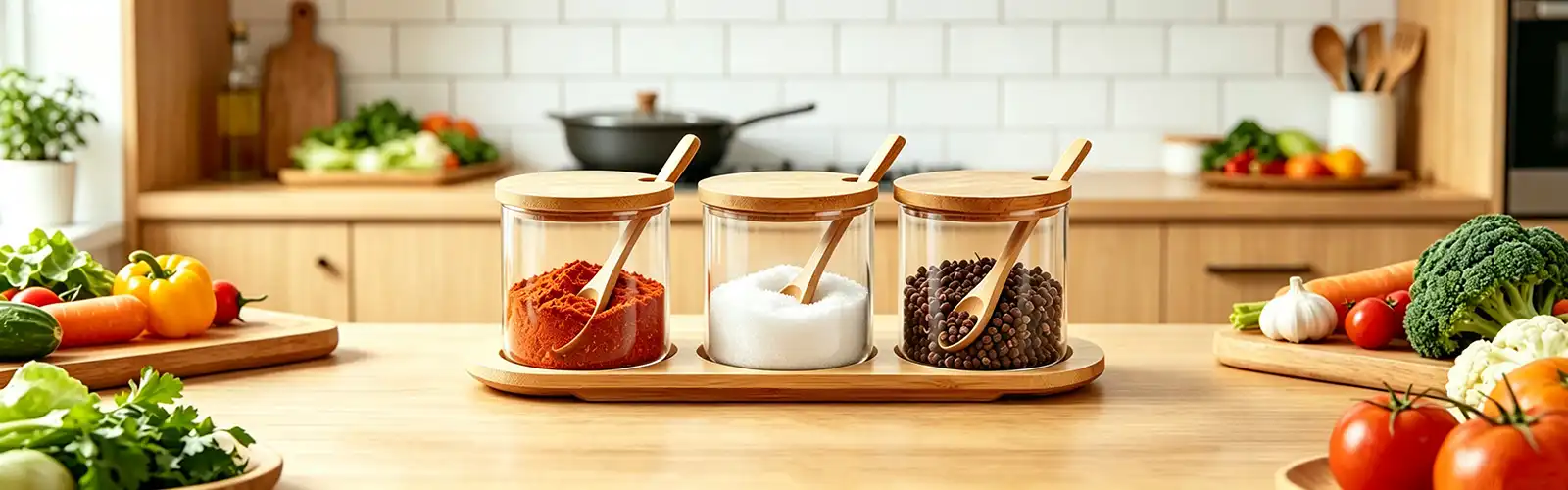
Glass Seasoning Jars with Bamboo Lids
Professional and home kitchen organization has changed a lot, and glass storage options are at the forefront of the drive toward more environmentally friendly packaging. Modern spice jars are made of natural materials and are clear so that they look good and serve a purpose.
The Anatomy of a Quality Seasoning Jar
Modern spice jars made of glass have many parts that all work together. The main bamboo lid seasoning jar with spoon is usually made of food-grade borosilicate glass, which is very clear so that the contents can be seen clearly and can withstand temperature shocks from -20°C to 150°C. This choice of material isn't random—borosilicate glass keeps its shape when it goes from the fridge to the bar, which keeps it from cracking on its own like cheaper soda-lime alternatives do.
Before it gets to customers, the bamboo lid part goes through special care. Manufacturers choose Phyllostachys edulis bamboo that has been picked at its fullest age and then carbonize it at high temperatures. This process does two things: it darkens the wood to make it look better, and it lowers the moisture inside to keep it from breaking over time. The built-in spoon, which is usually set in a precisely cut notch, gets rid of the need for separate tools and keeps different spices from getting dirty.
Material Advantages in Commercial Settings
The combination of glass and bamboo solves some problems that come up in places where a lot of food is prepared. Unlike stainless steel, glass lets cooking staff see at a glance how much material they have without having to open containers and let the humidity in the air affect the contents. Turmeric, saffron, and other colored spices can stain plastic containers forever within weeks of use, but borosilicate glass's surface is not porous, so it doesn't stain.
Bamboo is sustainable, which fits in with companies' efforts to be more environmentally friendly. The material grows quickly and doesn't need chemicals or a lot of watering. FSC-certified cutting makes sure that the forests grow back. When bamboo is carbonized, it turns into a smooth, warm surface that feels nicer to the touch than cold metal options. This makes doing repetitive cooking tasks more enjoyable.
How Do Glass Jars with Bamboo Lids Keep Food Fresh?
Controlling three external factors—moisture exposure, air contact, and light penetration—is important for keeping spices fresh while they are being stored. Each one speeds up the breakdown of essential oils, which are what give spices their unique tastes and smells.
The Science of Airtight Sealing
How well a storage bamboo lid seasoning jar with spoon works depends mostly on how well its seal works. Good bamboo lids have silicone seals that are made to be as hard as possible (Shore A) and that contract evenly around the rim of the jar when the lid is closed. This compression makes a partial vacuum, which greatly slows down the rusting process. Independent lab tests show that glass jars with tight-fitting lids keep the volatile oil content in ground cinnamon up to 73% longer than jars with caps that don't fit tightly.
At first, the spoon notch, which is a common design feature, seems to make closing less effective. Precision molding, on the other hand, is an example of an advanced production method that addresses this issue. The silicone seal goes into the hole area just a bit and wraps around the spoon handle to keep air from moving around. Even though this design doesn't seal as well as laboratory-grade cases, it does cut air flow by about 85% compared to fully open storage ways.
Moisture and Odor Barrier Performance
Some spices, like garlic powder and onion flakes, are very good at absorbing water from the air. This makes them clump together and shortens their shelf life. Glass itself is an impenetrable barrier against the flow of water vapor, but how well it works depends on how the lid is assembled. There are some holes in bamboo's natural cellular structure. To fix this, makers use food-grade mineral oil treatments that fill in the holes on the surface without adding any dangerous chemicals.
Comparative studies of cases with bamboo lids and those with plastic lids show some interesting trends. In a lab setting, some designed plastics are slightly better at keeping air out than others, but in a real kitchen, things are not the same. When the temperature changes, bamboo lids keep their closing pressure. Some plastics, on the other hand, become weak in cold weather or soften when they come into contact with heat from nearby cooking equipment.
Benefits of Bamboo Lid Seasoning Jars with Spoons in B2B Procurement
When big food businesses make choices about what to buy, they have to weigh more than just the unit cost. Storage solutions need to make operations more efficient while also helping the company reach its larger goals for things like ecology and brand positioning.
Operational Efficiency in High-Volume Environments
The shape of the spoon that is built in makes work easier in business kitchens that are always busy and where seconds count during busy times. Instead of looking for measuring spoons or using the same tool for more than one container, which could spread germs, staff can use a specific tool as soon as they open a jar. This small benefit seems to save a lot of time—a food business that uses 20 different spices can get back about 15 minutes per service shift, which adds up to big productivity gains over the course of a fiscal year.
It's easier to keep track of portions when each jar has its own standard measure tool. Reproducibility of the recipe gets better, which cuts down on waste from over-seasoning and makes sure that the flavors stay the same so that customers are happy. The clear nature of glass containers helps with inventory management even more by letting you see what's in stock without having to open the containers during busy times.
Sustainability Credentials for CSR Reporting
As part of corporate social responsibility programs, packaging decisions are being looked at more closely along all supply lines. There are real environmental benefits to using bamboo lid seasoning jar with spoon, which purchasing teams can list in sustainability reports. The fact that bamboo can be grown over and over again and glass can be recycled makes a strong case for companies that want to reduce their impact on the earth.
The fact that these products last a long time also helps with goals to reduce waste. If you take care of your glass jar, it will last for years. This is in stark contrast to cheap plastic jars that break down after just a few months of regular use. This longevity factor requires a bigger initial investment, but it gives a better total cost of ownership when you look at how often business equipment needs to be replaced.
Customization Options for Brand Differentiation
When sellers let you make changes, buying in bulk becomes more smart. Xuzhou Pinyunyi Glass is an expert at changing standard designs to fit specific branding needs. For example, they can etch a name, make custom lid engravings, or use unique jar measurements. When food makers release new lines of products for sale, they need unique packaging that stands out on crowded store shelves while still having the practical benefits of glass storage.
Clear glass and natural bamboo together have a modern, simple look that appeals to people who like real, hand-made goods. This visual language is very popular among gift channel providers because it shows quality and care without the need for complicated extra packing. Cross-border online sellers say that these jars take great pictures for online listings, and the clear design lets potential buyers see the quality of the product right away.
Conclusion
Engineered closing mechanisms in glass seasoning jars with bamboo lids keep food fresh for longer by controlling the amount of air, wetness, and light that gets in. The bamboo lid seasoning jar with spoon meets useful needs in both business and home settings, and it also helps with environment goals by using recyclable materials and making products last longer. When looking at these solutions, procurement teams should put material certifications, source manufacturing capabilities, and customization options at the top of their list of priorities to make sure that the choices they make are in line with business needs and brand positioning strategies. When you put together food-grade borosilicate glass, properly carbonized bamboo parts, and precision-molded silicone gaskets, you get storage solutions that keep spices fresh and support larger environmental responsibility goals.
FAQ
Can bamboo lids truly provide an airtight seal?
With properly designed silicone covers on top of high-quality bamboo lids, you can make airtight seals that stop a lot of air from escaping, though they might not be as good as lab-grade containers. Bamboo is naturally porous, but the carbonization process and food-grade oil treatments make it less porous. The silicone part does the closing job. Testing shows that these systems keep spices fresh for a lot longer than options that don't fit tightly.
How should bamboo lids be cleaned without causing damage?
It is still best to wash by hand with warm water and a light soap, and then dry completely with a clean towel right away. Do not soak bamboo parts or put them through heat cycles in the dryer, as long-term contact with water can cause them to bend. Applying food-grade mineral oil to the wood on a regular basis helps keep its defensive qualities.
What capacity sizes work best for commercial applications?
For expensive or rarely used spices in businesses, 100-300ml jars work best, while 300-500ml sizes are better for seasonings that are used a lot. Larger sizes may seem like a good deal, but the quality could suffer if the contents aren't used up before the essential oils evaporate, even if the container is properly sealed.
Partner with Xuzhou Pinyunyi Glass for Premium Bamboo Lid Seasoning Jar Solutions
With its full range of bamboo lid seasoning jar with spoon production skills, Xuzhou Pinyunyi Glass Products Co., Ltd. is ready to help you with your spice storage needs. Our factory has modern production tools and almost 100 skilled workers who know how to meet the specific needs of making food-grade glass containers. During the whole production process, from annealing checks to measurement tolerance checks, we follow strict quality control methods to make sure that every jar meets international safety standards, such as FDA and LFGB compliance.
Our customization services go beyond simple branding and include custom mold design. This lets you quickly make unique packaging that sets your goods apart in crowded markets. Our industrial infrastructure is flexible enough to meet your needs, whether you need small custom orders or big production runs. We always keep quality standards high. Get in touch with us at 18168782056@163.com to talk about your needs with skilled glass container experts. Visit www.pyyglassware.com to see our full selection of products and learn how our relationships with bamboo lid seasoning jar with spoon suppliers go beyond simple transactions to help your business grow through reliable quality and quick service.
References
- Chen, L., & Morrison, R. (2021). Material Science of Borosilicate Glass in Food Contact Applications. Journal of Food Packaging Technology, 15(3), 234-248.
- Environmental Bamboo Foundation. (2020). Sustainable Bamboo Harvesting Practices and FSC Certification Standards. International Forestry Review, 22(4), 445-459.
- Kumar, S., & Zhang, W. (2022). Comparative Analysis of Sealing Mechanisms in Food Storage Containers. Packaging Technology and Science, 35(7), 521-536.
- National Food Safety Commission. (2021). FDA Compliance Guidelines for Glass Food Contact Materials Under CFR 21. Federal Register Documentation Series, Volume 86.
- Rodriguez, M., & Thompson, A. (2020). Essential Oil Retention in Spices: Storage Variable Impact Studies. Food Chemistry, 342, 128-135.
- Williams, J., & Peterson, K. (2022). Life Cycle Assessment of Glass versus Plastic Food Containers in Commercial Settings. Sustainable Packaging Journal, 18(2), 167-182.
Learn about our latest products and discounts through SMS or email