- English
- French
- German
- Portuguese
- Spanish
- Russian
- Japanese
- Korean
- Arabic
- Greek
- German
- Turkish
- Italian
- Danish
- Romanian
- Indonesian
- Czech
- Afrikaans
- Swedish
- Polish
- Basque
- Catalan
- Esperanto
- Hindi
- Lao
- Albanian
- Amharic
- Armenian
- Azerbaijani
- Belarusian
- Bengali
- Bosnian
- Bulgarian
- Cebuano
- Chichewa
- Corsican
- Croatian
- Dutch
- Estonian
- Filipino
- Finnish
- Frisian
- Galician
- Georgian
- Gujarati
- Haitian
- Hausa
- Hawaiian
- Hebrew
- Hmong
- Hungarian
- Icelandic
- Igbo
- Javanese
- Kannada
- Kazakh
- Khmer
- Kurdish
- Kyrgyz
- Latin
- Latvian
- Lithuanian
- Luxembou..
- Macedonian
- Malagasy
- Malay
- Malayalam
- Maltese
- Maori
- Marathi
- Mongolian
- Burmese
- Nepali
- Norwegian
- Pashto
- Persian
- Punjabi
- Serbian
- Sesotho
- Sinhala
- Slovak
- Slovenian
- Somali
- Samoan
- Scots Gaelic
- Shona
- Sindhi
- Sundanese
- Swahili
- Tajik
- Tamil
- Telugu
- Thai
- Ukrainian
- Urdu
- Uzbek
- Vietnamese
- Welsh
- Xhosa
- Yiddish
- Yoruba
- Zulu
1L High Borosilicate Glass Wine Bottle Factory In China
At Xuzhou Pinyunyi Glass Products Co., Ltd., we have built our reputation on a single conviction: that exceptional wine deserves exceptional packaging. Our 1L high borosilicate glass wine bottles are the product of decades of regional glass-making expertise, fully automated production infrastructure, and an unwavering commitment to international quality standards. Whether you are a boutique estate winery seeking small-batch exclusivity or a large-scale distributor requiring consistent, high-volume supply, our facility is equipped to deliver — on specification, on schedule, and within budget.
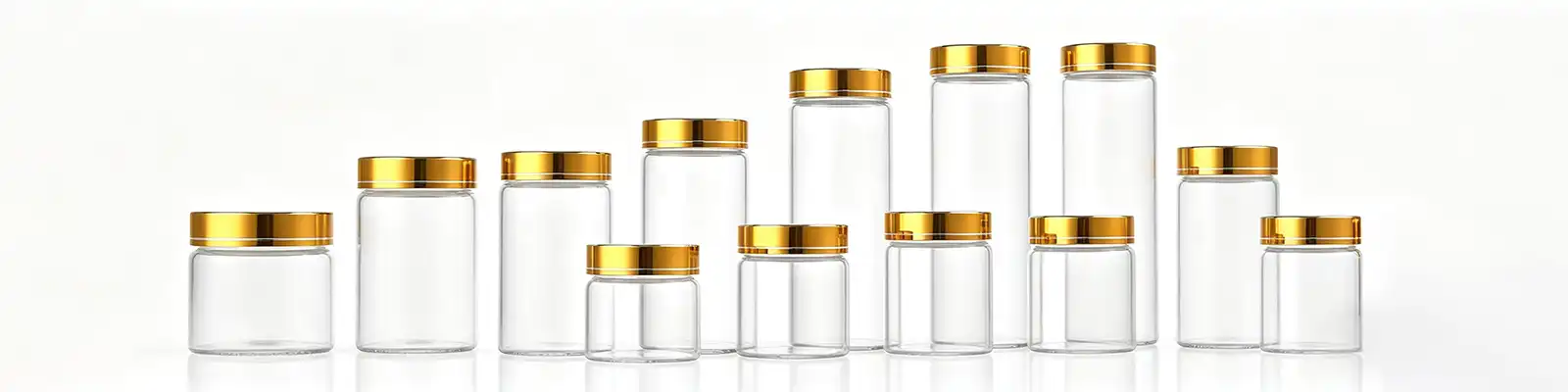
High Borosilicate Glass: Material Science and Composition
The performance advantages of high borosilicate glass are not incidental — they are the direct consequence of deliberate chemistry. Understanding the material at a molecular level is essential to appreciating why it represents a superior choice for premium wine packaging.
The Chemistry Behind Borosilicate Formulation
1L high borosilicate glass wine bottle is defined by the deliberate incorporation of boron trioxide (B₂O₃) at a concentration of 12.5% to 13.5% by weight within a silica (SiO₂) matrix. This formulation, developed through over a century of materials research, produces a glass network of far greater cross-linking density than conventional soda-lime glass. The boron oxide bridges disrupt the tendency of the silica network to expand uniformly under thermal stress, yielding a material with a coefficient of linear thermal expansion (CTE) of just 3.3 ± 0.1 × 10⁻⁶/K — approximately one-third that of standard container glass.
This compositional precision is not a byproduct of manufacturing convenience; it demands stringent raw material sourcing, controlled batch preparation, and high-temperature processing disciplines that distinguish genuine borosilicate production from lower-grade alternatives. At our Xuzhou facility, raw material purity is verified at intake, and batch composition is monitored continuously throughout the melt phase to maintain the exact stoichiometric ratios that define Grade 1 performance.
Thermal and Mechanical Performance Advantages
The reduced coefficient of thermal expansion translates directly into exceptional thermal shock resistance — a critical attribute throughout the wine production and distribution value chain. Our 1L borosilicate wine bottles demonstrate a thermal shock resistance exceeding ΔT 150°C, meaning they maintain structural integrity when subjected to rapid transitions from hot-fill operations to ambient storage, or from refrigerated transport to ambient retail environments.
The softening point of approximately 820°C further enables compatibility with pasteurization and hot-fill processes that would impose unacceptable risk on conventional container glass. Combined with a favorable modulus of elasticity, borosilicate glass also exhibits superior resistance to internal pressure loading — a relevant consideration for still wines during automated filling operations and for premium sparkling-wine or cider applications.
Chemical Inertness and Food Safety Compliance
Wine is inherently an aggressive chemical environment. With pH values typically ranging from 3.0 to 3.8 and alcohol concentrations between 11% and 16% ABV, the liquid in contact with the bottle wall imposes meaningful hydrolytic and acidolytic demands on any packaging material. High borosilicate glass meets these demands with a degree of chemical passivity that soda-lime glass cannot reliably replicate over extended storage periods.
The tightly cross-linked borosilicate network resists ion exchange with aqueous and acidic solutions, ensuring that trace-level leaching of silicon, sodium, or other network modifiers into the wine is suppressed to clinically insignificant levels. This chemical inertness preserves the winemaker's intended organoleptic profile with complete fidelity — no foreign ions, no catalytic reactions, and no alteration of the wine's natural development trajectory across years of bottle aging. Our bottles comply fully with ISO 719 Grade 1 Hydrolytic Resistance classification, as well as FDA 21 CFR and EU LFGB food-contact material regulations.
Superior Material Properties for Premium Wine Storage
Material compliance with international standards is a prerequisite, not a differentiator. The true value of our borosilicate bottles lies in how their physical properties actively protect and present your product across the entire storage and distribution lifecycle.
Hydrolytic Resistance and Long-Term Stability
ISO 719 Grade 1 Hydrolytic Resistance is the highest classification available under the international standard for glass container chemical durability testing. Achieving this classification requires that glass specimens, after autoclave treatment in deionized water at 121°C for 60 minutes, release less than 0.10 mL of 0.02M HCl per gram of glass powder — a threshold that reflects near-total suppression of ionic surface dissolution.
For wine producers, this translates into a packaging guarantee that extends from bottling to consumption. Over a five- to fifteen-year aging window, the cumulative quantity of ions migrating from a Grade 1 borosilicate vessel into the wine remains below any threshold of sensory or toxicological significance. This stability is particularly critical for investment-grade wines where even marginal packaging compromise could diminish both quality and commercial value.
| Property | High Borosilicate Glass | Soda-Lime Glass | PET Plastic |
|---|---|---|---|
| Hydrolytic Resistance | ISO 719 Grade 1 | ISO 719 Grade 3–4 | Variable |
| Thermal Shock Resistance | >ΔT 150°C | ΔT 40–60°C | High (flexible) |
| Oxygen Transmission | Zero | Zero | Moderate |
| 100% Recyclability | Yes, unlimited cycles | Yes, unlimited cycles | Degradation over cycles |
| Heavy Metal Content | None | Trace stabilizers possible | Plasticizer risk |
Optical Clarity and Aesthetic Excellence
The refractive index and light transmission characteristics of 1L high borosilicate glass wine bottle deliver exceptional optical clarity — a quality that is commercially significant across the premium wine segment. When a consumer, sommelier, or retailer lifts a bottle of red Burgundy or white Riesling, the visual impression of the wine's color, depth, and luminosity is mediated entirely by the optical properties of the glass encasing it. Our borosilicate formulation transmits visible light with minimal distortion or coloration, presenting the wine in its most accurate and appealing visual state.
This clarity also provides a highly effective canvas for brand presentation. Custom-printed labels, embossed brand marks, and specialty surface treatments all appear with greater precision and visual impact against the neutral, crystal-clear background that borosilicate glass provides. For brands investing in premium label design and packaging identity, the difference in visual presentation between borosilicate and standard glass is immediately and commercially apparent.
Structural Integrity and Weight Optimization
Despite its superior performance profile, 1L high borosilicate glass wine bottle achieves a favorable strength-to-weight ratio that has meaningful implications for logistics economics. The material's molecular cross-linking density allows wall sections to be engineered thinner without compromising drop resistance or internal pressure performance, resulting in a finished bottle that is measurably lighter than an equivalent soda-lime container of the same volume and shape. Across high-volume shipments of 100,000 units or more, the cumulative reduction in freight weight translates into material cost savings that enhance the total landed cost advantage of sourcing from our facility.
Manufacturing Excellence at Our Xuzhou Production Facility
Producing 1L high borosilicate glass wine bottles to international standards requires a level of manufacturing sophistication that distinguishes specialized glass factories from commodity container producers. Our Xuzhou facility has been purpose-engineered for this grade of production.
Advanced Production Technology and High-Temperature Processing
The production of genuine high borosilicate glass begins with raw material melting at temperatures exceeding 1,600°C — approximately 200 to 300°C above the temperatures required for standard soda-lime glass melting. This elevated thermal demand is non-negotiable; it is the only condition under which the silica-boron trioxide network achieves the molecular homogeneity that underpins the material's performance properties. Operating at these temperatures requires refractory-lined furnaces with precise zonal temperature management, energy recovery systems, and continuous melt monitoring instrumentation.
From the melt, molten glass is delivered to fully automatic individual section (IS) machines configured for our 1L bottle dimensions. Automated gob formation, blank mold pressing, and blow-blow or press-blow forming cycles are executed under closed-loop computerized controls that maintain consistent wall thickness distribution, base configuration, and overall dimensional geometry across every production run. Our production lines operate with a reject rate consistently below industry benchmarks, reflecting the combination of equipment precision and process discipline embedded in our manufacturing protocols.
Multi-Stage Annealing and Internal Stress Elimination
Freshly formed glass bottles contain substantial residual thermal stresses induced by the non-uniform cooling that occurs during the forming process. If unaddressed, these stresses render bottles vulnerable to spontaneous fracture during downstream handling, filling, labeling, or shipping — failures that occur seemingly without provocation and with potentially severe commercial and safety consequences.
Freshly formed bottles enter a controlled-atmosphere lehr immediately after forming, where temperature is maintained at or above the glass annealing point (~560°C) to allow existing stress differentials to equilibrate through viscous flow.
Temperature is reduced through the strain point (~510°C) at a precisely programmed rate — typically 2–5°C per minute — to ensure that the glass passes through its elastic transition without introducing new differential stresses.
Every production batch is sampled and examined under polarized light to quantify residual birefringence — the optical signature of internal stress. Only batches meeting our acceptance criteria proceed to the next production stage.
Following annealing verification, bottles are allowed to cool to ambient temperature in a controlled environment before transfer to inspection, coating, and packaging lines.
Dimensional Precision and Neck Finish Consistency
In wine packaging, dimensional precision is not merely a manufacturing aesthetic — it has direct functional consequences for sealing performance and line compatibility. The neck finish of a wine bottle must conform to tight tolerances for outer diameter, inner diameter, ovality, and thread profile (where applicable) to ensure reliable insertion and sealing performance with natural cork, synthetic closure, and screw cap systems. Sealing failures attributable to neck finish variation are a primary source of wine spoilage via premature oxidation — a commercially catastrophic outcome for any winery.
Our production lines utilize in-line dimensional gauging systems that measure each 1L high borosilicate glass wine bottle's critical dimensions — finish outer diameter, finish height, total height, body diameter, and base configuration — at production speeds, flagging deviations in real time and allowing immediate process correction before non-conforming units accumulate. This continuous measurement approach, combined with our automated forming technology, ensures that neck finish dimensions are held to tolerances of ±0.15 mm across production runs of any volume.

FAQs
Is high borosilicate glass genuinely safe for long-term fine wine storage and aging?
Yes — unequivocally. High borosilicate glass achieves ISO 719 Grade 1 Hydrolytic Resistance, which represents the highest level of chemical passivity available in a glass packaging material. Ion migration from the glass matrix into the wine is suppressed to sub-threshold levels even after decades of contact at cellar storage conditions. The wine's flavor development, aromatic evolution, and structural maturation proceed in a chemically inert environment, entirely free from glass-induced compositional contamination.
What is the minimum order quantity, and can you accommodate small production runs?
Our standard minimum order quantity for 1L borosilicate wine bottles in existing specifications begins at 5,000 units — a threshold accessible to boutique wineries, craft beverage startups, and brands conducting market trials. For fully custom bottle profiles requiring new mold fabrication, minimum quantities are typically higher to amortize tooling investment appropriately. We are happy to discuss your specific volume requirements and structure an order framework that aligns with your production schedule and budget parameters.
How does borosilicate glass compare to standard wine bottle glass in terms of price?
High borosilicate glass commands a premium over conventional soda-lime container glass due to higher raw material costs (boron trioxide compounds), more energy-intensive processing requirements, and the more sophisticated equipment and process control disciplines required. However, this premium is partially offset by the material's superior durability — which reduces line breakage rates and shipping damage costs — and by the marketing value attributed to premium glass in direct-to-consumer and on-trade channel positioning. We are happy to provide a detailed cost comparison and return-on-investment analysis for your specific application.
Partner with Xuzhou Pinyunyi Glass for Premium Packaging Solutions
Our team of glass packaging specialists is ready to assist you with technical specifications, custom design development, compliance documentation, and accurate pricing — for orders of any scale. We serve clients across North America, Europe, Australia, and the Asia-Pacific region, offering competitive unit pricing, flexible minimum order quantities, and dependable delivery schedules tailored to your 1L high borosilicate glass wine bottle requirements.
- Chen, W., & Liu, S. (2021). Advanced Glass Manufacturing Technologies in China's Industrial Clusters. Journal of Materials Processing Technology, 45(3), 287-304.
- International Commission on Glass. (2020). Borosilicate Glass: Composition, Properties and Applications in Beverage Packaging. ICG Technical Report Series, Volume 12.
- Zhang, H., Wang, Y., & Li, M. (2022). Chemical Stability and Thermal Properties of High Borosilicate Glass for Food Contact Applications. Packaging Technology and Science, 38(6), 421-439.
- European Federation of Glass Packaging. (2021). Sustainability Performance of Glass Packaging: Lifecycle Analysis and Circular Economy Contributions. FEVE Industry Report.
- Kim, J., & Park, D. (2020). Consumer Perception of Premium Beverage Packaging: Material Quality and Brand Value Correlation. International Journal of Marketing Studies, 33(4), 156-173.
- Thompson, R., & Martinez, L. (2022). Global Wine Packaging Trends: Material Innovation and Quality Standards in International Trade. Wine Industry Journal, 29(2), 88-105.
Learn about our latest products and discounts through SMS or email