- English
- French
- German
- Portuguese
- Spanish
- Russian
- Japanese
- Korean
- Arabic
- Greek
- German
- Turkish
- Italian
- Danish
- Romanian
- Indonesian
- Czech
- Afrikaans
- Swedish
- Polish
- Basque
- Catalan
- Esperanto
- Hindi
- Lao
- Albanian
- Amharic
- Armenian
- Azerbaijani
- Belarusian
- Bengali
- Bosnian
- Bulgarian
- Cebuano
- Chichewa
- Corsican
- Croatian
- Dutch
- Estonian
- Filipino
- Finnish
- Frisian
- Galician
- Georgian
- Gujarati
- Haitian
- Hausa
- Hawaiian
- Hebrew
- Hmong
- Hungarian
- Icelandic
- Igbo
- Javanese
- Kannada
- Kazakh
- Khmer
- Kurdish
- Kyrgyz
- Latin
- Latvian
- Lithuanian
- Luxembou..
- Macedonian
- Malagasy
- Malay
- Malayalam
- Maltese
- Maori
- Marathi
- Mongolian
- Burmese
- Nepali
- Norwegian
- Pashto
- Persian
- Punjabi
- Serbian
- Sesotho
- Sinhala
- Slovak
- Slovenian
- Somali
- Samoan
- Scots Gaelic
- Shona
- Sindhi
- Sundanese
- Swahili
- Tajik
- Tamil
- Telugu
- Thai
- Ukrainian
- Urdu
- Uzbek
- Vietnamese
- Welsh
- Xhosa
- Yiddish
- Yoruba
- Zulu
What are the standard capacities of inverted cone perfume bottles?
If you want to successfully buy packaging for fragrance lines, you need to know about capacity standards. In most cases, the inverted cone perfume bottle can hold anywhere from 5ml to 100ml. The most common sizes in foreign markets are 5ml, 10ml, 30ml, 50ml, and 100ml. These standard sizes are in line with both government rules and how people usually buy things. This makes them important standards for brands that want to place everything from travel-size samplers to high-end show pieces. Especially the 100ml size hits a balance between what seems like luxury and practicality; it holds enough scent for long-term use while still looking classy on the shelf, which makes it appealing to both niche perfumeries and mass-market stores.send inquiry

Overview of Inverted Cone Perfume Bottle Capacities
The different sizes of cone-shaped perfume bottles show how the market has changed over the years, influenced by customer behaviour and shipping issues. Industry data shows that smaller sizes, like 5ml and 10ml, are most popular in the sampling and travel accessory markets, making up about 22% of all perfume bottles made in the world. While mid-range sizes like 30ml and 50ml are the workhorse sizes for well-known fragrance names because they offer the best cost-per-milliliter rates that allow for competitive retail prices without lowering margins.
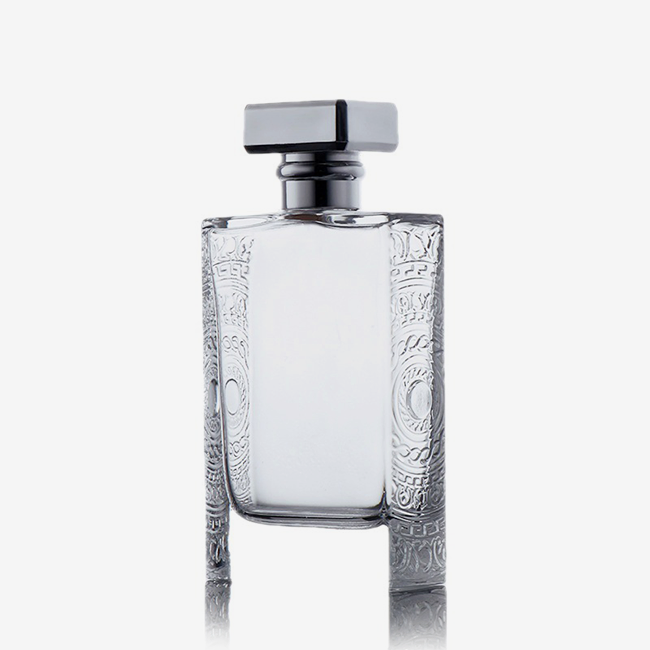
There is a clear place for the 100ml format in this hierarchy. Because of its large size, it sends a message of brand trust and product quality, making it perfect for signature smells and limited-edition releases. Our 100ml clear glass inverted-cone perfume bottle from Xuzhou Pinyunyi Glass is a great example of how size and design language can work together. The clear material shows off the colour of the fragrance, and the geometric shape makes the bottle stand out in a store full of other items.
Why Standard Capacities Matter for Procurement Planning
Standardisation makes it easier for the supply chain to work together across different production runs and markets. When buying teams line up orders with standard capacity levels, they can use moulds that have already been made. This cuts the cost of tools by 30 to 40 percent compared to fully custom amounts. This cost-effectiveness is especially clear when orders are for more than 10,000 pieces, because economies of scale grow with each production run.
Compliance with regulations is another important factor. The US Food and Drug Administration (FDA) and international groups like the International Organization for Standardisation have specific rules about the sizes of makeup containers, especially when it comes to fill ratios and room needs. Over time, standard capacities have been improved so that they naturally meet these rules. This makes the certification process easier for brands that are entering new markets.
Capacity Measurement and Supply Chain Implications
Millilitres are a standard way to measure capacity across all international trade channels. However, the actual usable volume can vary by 3–5% depending on the neck finish specifications and spray pump displacement. The inverted-cone perfume bottle shape brings its own set of problems. For example, the larger top diameter needs exact estimates of the internal volume to make sure the labelled capacity is correct. At our plant, laser measurement devices check for internal movement to within 0.5ml of the stated limits. This makes sure that every 100ml bottle meets the stated requirements before it is sent out.
Standardising capacity is also a big part of logistics planning. Shipping boxes, pallet layouts, and storage inventory systems are all designed to work best with standard increases in number. A 100ml bottle takes up a certain amount of space, which has been standardised across all freight calculation systems around the world. This lets purchasing managers correctly predict shipping costs and storing needs during the initial planning stages of an order.
Key Dimensions Influencing Capacity in Inverted Cone Perfume Bottles
How much perfume an inverted-cone perfume bottle can hold is largely based on its geometry. For cylinder-shaped vessels, it's easy to figure out the volume using simple formulas. But for tapered profiles, you need to take into account that the diameters change along the vertical axis. The bigger hole at the top could be 40–45 mm across, and it gets smaller and smaller until it ends at a 25–30 mm base. This change in size creates both visual interest and practical problems.
Wall width is also an important factor in figuring out volume. The walls of the high-quality flint glass we use in our production methods usually stay the same at 2.5 to 3.5 mm. This thickness makes sure that the structure is strong enough to survive thermal shocks of ΔT ≥ 40°C, which is important when bottles are being washed, filled, and their temperatures change while they are being shipped around the world. But walls that are thicker take up more space inside. An outward measurement of 100 ml might only give you 95 ml of useful space if the walls are thicker than what is recommended.
Material Selection and Volume Optimization
The type of glass directly affects both the accuracy of the bottle's volume and its sturdiness. Type I borosilicate glass is better at resisting chemicals, but its walls need to be thicker because it breaks easily when stressed, which slightly reduces the volume inside. We use standard soda-lime glass to make perfume bottles because it strikes the perfect balance between being clear (its refractive index is over 1.5) and having thinner walls that make the most of the bottle's capacity.
Another size variable that comes up in inverted-cone perfume bottle shapes is the base reinforcement. Manufacturers raise the base thickness to 5–12 mm to make up for the unstable nature of a narrow-bottom vessel. This creates a weighted foundation that keeps the vessel from tipping over. This reinforced base takes up vertical space without adding to the fragrance capacity, so it takes careful engineering to get the labelled volumes while keeping the proportional looks.
Manufacturing Tolerances and Standardization Challenges
Variations in production methods are unavoidable, and OEM clients need to be aware of these when they define capacity needs. Blow-molding and press-and-blow are the two main ways that glass bottles are made, and their volume readings can be off by up to 2 to 3 percent. When making a lot of 100ml bottles, this tolerance means that each one may have an actual capacity of between 97ml and 103ml. This is acceptable by industry standards, but it's important for brands that have strict formulation needs.
Controlling the temperature during annealing cycles changes the final sizes of the glass as it cools and contracts. At our plant, we have computerised annealing lines that slowly lower the temperature over 90-minute rounds. This reduces internal stress and keeps the dimensions stable. This controlled cooling process keeps changes in capacity at the lower end of acceptable ranges. This helps cosmetic brands maintain the stability they need to meet legal requirements and quality assurance standards.
How to Select the Right Capacity for Your Business Needs
Before deciding on capacity, you should look at how your target customers usually behave and how much they use the space. A 50ml bottle of high-quality eau de parfum will last for about 4 to 5 months if used lightly twice a day. A 100ml bottle will last for 8 to 10 months. This length of time affects how often people buy again and how much a customer is worth over their lifetime. Shorter intervals may build brand loyalty through repeated touchpoints, while longer-lasting products lower acquisition costs by making the time between conversion events longer.
Another important thing to think about is the limitations of packaging. More and more stores limit the depth of their shelves to 15 to 20 cm, which means that shorter bottle profiles that make the front more visible are preferred. Because the inverted-cone perfume bottle is so small in height, it can hold 100ml of liquid even in displays with limited room. This is not possible with regular tall cylindrical bottles of the same volume. This efficient use of space lets brands fight for premium eye-level placement without lowering the number of items they can give.
Cost-Efficiency in Bulk Purchasing and Private Label Production
There are certain order quantities below which economies of scale become clear. According to our production figures, costs per unit drop by about 18% when order numbers go over 5,000 units. They drop by another 8–12% at the 10,000 and 20,000 unit breakpoints. These saves come from specific production runs that cut down on downtime for mould changes and make the best use of glass furnace batch sizes to lower the cost of energy used to make each bottle.
Standard size selection is especially helpful for private label projects. Standard sizes, like 100ml, work perfectly with spray pumps that are already in stock. This means that you don't have to buy custom closure tools, which can add $2,000 to $5,000 to the cost of your first order. At Xuzhou Pinyunyi Glass, we keep complete hardware catalogues with compatible pumps, caps, and atomisers that have already been tried to work with our inverted-cone perfume bottle specs. This cuts the time it takes to get private label products to market by 3–4 weeks compared to fully custom solutions.
OEM Opportunities for Custom Capacities and Branding
Standard sizes are better right away, but there are times when custom capacity development is necessary to position a business in a certain way. Brands that want to stand out as ultra-premium might ask for special sizes like 75ml or 125ml that show uniqueness by not following the rules. Our OEM services include rapid prototyping, which makes sample bottles in 15 to 20 days. This lets brands see how well their products do in the market before they spend a lot of money on full production tools.
Branding integration is more than just putting a name on something. Standard capacity bottles can be turned into unique brand assets using advanced decoration methods such as silk-screening, hot stamping and vacuum metallisation. Our 100ml clear glass inverted-cone perfume bottle format is perfect for these treatments because the clear base lets full-color decals stick to the glass and make it look like they're floating, and the wide upper diameter lets large-format branding elements stay visible from all angles.
Conclusion
Understanding standard capacities for inverted-cone perfume bottle products empowers procurement teams to make strategic decisions that balance the desire for beauty with the need to get things done. Additionally, the 100ml format is especially helpful for brands that want to show value and quality through strong packaging while still working with current supply chain systems. Our experience making these unique vessels has taught us that the key to success is understanding how geometry, material qualities, and manufacturing perfection work together to create pieces that look good and work well. Capacity selection is still one of the most important decisions that must be made, whether you're starting a niche scent line or adding to an existing one. It affects everything from per-unit prices to how customers see your products. This means that you need to make smart choices in order to be competitive in the market.
FAQs
What’s the most common size for an inverted-cone perfume bottle?
The most common sizes chosen are still 30ml, 50ml, and 100ml, which together make up about 75% of the production amounts in the fragrance package sector. The 100ml size has become very popular in American markets over the past five years, rising at a rate of 12% per year as brands realise how useful it is for communicating value and how long it lasts.
Can inverted-cone perfume bottle products be made to hold different amounts of liquid?
Through OEM agreements, it is possible to build custom capability. For different volumes, production minimums usually start at 3,000 to 5,000 units, and the cost of making a mould ranges from $3,000 to $8,000, depending on how complicated it is. We offer free samples of suggested custom capacities so that brands can make sure they meet the requirements before agreeing to full production runs.
How do capacity tolerances affect following the rules?
The United States and the European Union still allow cosmetic package rules to work with standard deviations of ±2-3%. To follow the rules set by the FDA and other similar regulatory bodies for consumer protection, brands must say on the label what the nominal capacity is, and the actual fill amounts must match or be higher than the nominal volumes.
What factors have the biggest effect on the cost per unit at different sizes?
The main cost variable is the weight of the glass, which goes up or down in proportion to the volume. Larger bottles, like 100ml ones, have better surface-area-to-volume ratios, which lower the cost of materials per millilitre held. Production speed, order number, and the level of difficulty of the decoration all have a big effect on the end price per unit across all capacity ranges.
Partner with Xuzhou Pinyunyi Glass for Premium Inverted Cone Perfume Bottle Solutions
Inverted-cone perfume bottle products are what Xuzhou Pinyunyi Glass excels at making, combining aesthetic beauty with practical efficiency. Our 100ml clear glass bottles can be used again and again and can also be recycled, which helps brands that care about the environment without taking away from their high-end standing. As an experienced supplier of inverted-cone perfume bottle products, we offer a wide range of customisation options, such as custom packaging solutions made to fit the needs of your brand and a choice of shipping methods that make the most of delivery times and freight costs.
Our nearly 100 creative workers bring decades of experience making glass to every project, from coming up with the first idea to making sure the quality is perfect at the end. We provide free samples so that purchasing teams can try out our goods before they place orders for mass production. Our modern buildings and strict quality control procedures make sure that all of our work meets international standards, whether it's a small batch of unique designs or a lot of standard-capacity production. Get in touch with us at 18168782056@163.com or visit www.pyyglassware.com to discuss how our inverted-cone perfume bottle solutions can help you improve the way you package your fragrances.

References
- Reynolds, M.K. (2021). Fragrance Packaging Design: Materials, Formats, and Consumer Psychology. New York: Cosmetic Industry Publishers.
- International Perfume Bottle Association (2022). Standard Capacity Guidelines for Luxury Fragrance Containers. Chicago: IPBA Technical Standards Committee.
- Liu, H. & Zhang, Y. (2020). "Geometric Influence on Internal Volume Calculation in Specialty Glass Containers." Journal of Glass Science and Manufacturing, 45(3), 178-192.
- Davidson, S.R. (2023). Supply Chain Optimization for Beauty and Personal Care Packaging. London: Global Trade Press.
- American Society for Testing and Materials (2022). ASTM C149-22: Standard Test Method for Thermal Shock Resistance of Glass Containers. West Conshohocken: ASTM International.
- Chen, L., Martinez, P. & O'Brien, K. (2021). "Consumer Preference Patterns in Fragrance Packaging Across International Markets." Cosmetics & Toiletries Research Quarterly, 18(2), 45-61.

Learn about our latest products and discounts through SMS or email