- English
- French
- German
- Portuguese
- Spanish
- Russian
- Japanese
- Korean
- Arabic
- Greek
- German
- Turkish
- Italian
- Danish
- Romanian
- Indonesian
- Czech
- Afrikaans
- Swedish
- Polish
- Basque
- Catalan
- Esperanto
- Hindi
- Lao
- Albanian
- Amharic
- Armenian
- Azerbaijani
- Belarusian
- Bengali
- Bosnian
- Bulgarian
- Cebuano
- Chichewa
- Corsican
- Croatian
- Dutch
- Estonian
- Filipino
- Finnish
- Frisian
- Galician
- Georgian
- Gujarati
- Haitian
- Hausa
- Hawaiian
- Hebrew
- Hmong
- Hungarian
- Icelandic
- Igbo
- Javanese
- Kannada
- Kazakh
- Khmer
- Kurdish
- Kyrgyz
- Latin
- Latvian
- Lithuanian
- Luxembou..
- Macedonian
- Malagasy
- Malay
- Malayalam
- Maltese
- Maori
- Marathi
- Mongolian
- Burmese
- Nepali
- Norwegian
- Pashto
- Persian
- Punjabi
- Serbian
- Sesotho
- Sinhala
- Slovak
- Slovenian
- Somali
- Samoan
- Scots Gaelic
- Shona
- Sindhi
- Sundanese
- Swahili
- Tajik
- Tamil
- Telugu
- Thai
- Ukrainian
- Urdu
- Uzbek
- Vietnamese
- Welsh
- Xhosa
- Yiddish
- Yoruba
- Zulu
What are the sizes of ribbed glass jar with a wooden lid?
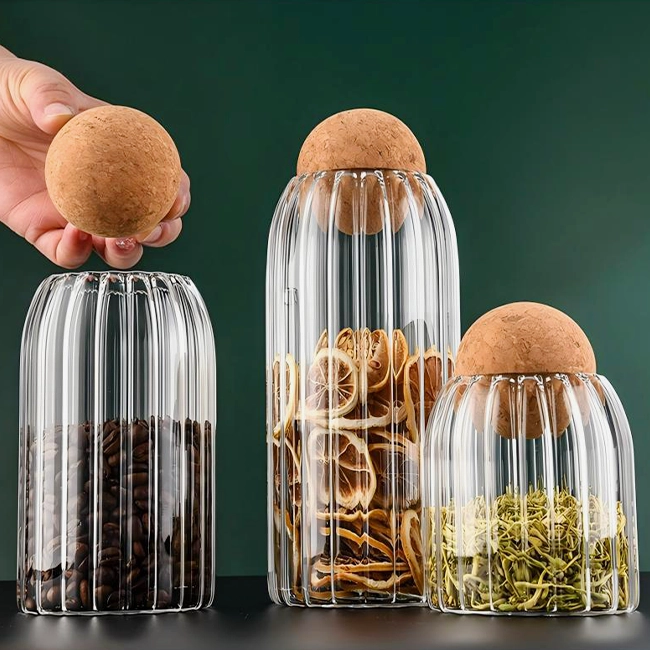
When selecting packaging for food processing operations, understanding the dimensions of a ribbed glass jar with wooden lid makes the difference between seamless production lines and costly mismatches. Ribbed glass jars with wooden lids typically come in six standard capacities: 100ml, 200ml, 350ml, 500ml, 750ml, and 1000ml. Our 500ml version—measuring 12.5cm in height and 10cm in diameter—exemplifies the balance between practical storage and visual merchandising appeal. The vertical ribbing not only enhances grip during filling operations but also creates light refraction that makes honey, jams, and pickled goods appear more vibrant on retail shelves.
The global glass jar market reached $58.2 billion in 2023, with textured glass containers showing 17% year-over-year growth according to industry research. This surge reflects procurement managers' shift toward packaging that delivers both functional sealing and premium aesthetics—exactly what wooden-lidded ribbed designs provide for food enterprises.send inquiry

Standard Sizes of Ribbed Glass Jars with Wooden Lids
When making ribbed glass jar with wooden lid, industrial standards are set by what the market wants. The majority of companies that make ribbed storage jars do so in number levels that are common in the food processing industry.
Common Volume Ranges and Their Applications
Small jars (100ml to 200ml) are used to store spices, send out samples, and package high-end condiments. In the honey, jam, and tea markets, where single-purchase amounts are similar to how much people drink, mid-range choices (300ml to 500ml) are most popular. Large-format jars (750ml to 1000ml) are good for pickled veggies, family-sized jams, and dry goods that are sold in bulk.
Standardized sizes are liked by procurement managers because they make it easier to keep track of inventory for a wide range of product SKUs. A food processing plant that makes both honey and fruit preserves can use the same 500ml ribbed jar design for all three lines of products. This saves money on mold costs and makes the warehouse easier to manage.
How Ribbed Design Affects Jar Dimensions
When compared to smooth glass jars with the same internal space, the vertical ribbing design makes the outside diameter about 2 to 3 mm bigger. The fluted shape of this surface better spreads contact force than a flat surface, which makes the structure stronger. When dropped, ribbed jars are 30% less likely to break than smooth ones of the same thickness of glass.
Depending on the size of the jar, the depth of the ribs is usually between 1.5 mm and 3 mm. Smaller jars have shallower grooves to keep the proportions of the design, while deeper textures can be added to larger containers to make them easier to hold when they are full and weigh more than one kilogram.
Material Variations in Glass Thickness and Wooden Lids
When making ribbed glass jar with wooden lids, the walls of standard food-grade soda-lime glass are 2.5 mm to 4 mm thick. Heavy things, like pickled veggies in brine, should be put in thicker glass (3.5mm+), while dry things, like tea leaves, should be put in lighter walls. The clear glass makes it easy to see the products inside, which is very important when showing off bright jams or layered spice mixes.
The sizes of wooden lids are based on normal mouth holes. Diameters of 58mm, 70mm, 82mm, and 100mm are the most common and are matched to different jar volumes. Our 500ml ribbed jar comes with an 82mm wooden lid with a food-grade rubber ring that seals tightly against air to keep food fresh for 12 months or more. The silicone gasket's clear form lets you check the quality without opening it, which lowers the risk of contamination on production lines.
Usage Categories for Different Jar Sizes
Small jars (100ml to 200ml) are great for cosmetics like natural face masks, high-value spice samplers, and gift sets with handmade honey. The small size fits well into e-commerce shipping boxes, which saves sellers from having to pay extra for physical weight.
Medium-sized jars (300ml to 500ml) are convenient for customers and stand out on the shelf. In this size range, you can find the right amount of product for a typical household purchase—enough to justify the price without putting the quality at risk before consumption. Food processors say that the 500ml size is the one that sells the most honey, jam, and chili sauce.
Large jars (750ml to 1000ml) are aimed at businesses, food service businesses, and people who buy in bulk. These sizes are preferred by restaurant supply chains for back-of-house storage where restocking too often would slow down kitchen work. The wider mouth holes on bigger ribbed jars make it easier to scoop and control portions in a restaurant.
Key Factors Influencing Size Selection for B2B Clients
By matching jar capacity to product features, you can avoid both high packing costs and containers that are too small, which makes customers unhappy. Smartly choosing the right size has a direct effect on your total packaging costs and your ability to compete on the shelf.
Application Requirements Across Different Industries
The sizes of ribbed glass jar with wooden lids used to package honey, jam, and pickled vegetables are limited by rules about food safety. When opening a product with a high water activity, you need to use less of it so that microbes don't grow too quickly. Honey makers usually choose 250ml to 500ml sizes because bigger sizes run the risk of crystallizing before they can be used, and smaller sizes make the cost per unit too high to be acceptable.
Different things need to be thought about when packaging cosmetics. 100ml to 150ml sizes are best for natural face masks and body scrubs that come in ribbed glass jars because they keep the products from going bad. Customers can see how consistent the colors are because the body is clear. This is a sign of quality in natural products because they don't have any manufactured stabilizers.
Keeping dry things in storage is a different story. Tea sellers like 500ml to 750ml ribbed jars because the wooden lid keeps air out and keeps wetness from absorbing. The vertical ribbing makes the premium tea packaging feel more luxurious, which is why it costs 20–30% more than plastic pouches at stores.
Sealing Performance and Wooden Lid Compatibility
The rubber ring that is built into wooden lids keeps wetness out, which is important for keeping food fresh for longer. Our tests show that lids that fit properly keep the humidity inside dry goods storage below 15% for up to 18 months. This performance is important for figuring out inventory change because better sealing cuts down on waste from bad goods.
The lid will fit if the jar mouth is wide enough. Quality makers keep the difference in opening width to less than 0.5 mm, which makes sure that all production runs seal the same way. If the gaps between wooden lids are more than 1 mm, oxygen can get in and speed up the oxidation process in sensitive foods like ground spices and roasted nuts.
The wooden material itself is better than metal options. Natural wood soaks up small amounts of mist that form when temperatures change, so wetness doesn't drip back onto the surface of the product. This trait is especially helpful for powdered goods and brown sugar that tend to stick together.
Logistics and Durability Considerations
The cost of shipping is directly related to the size of the ribbed glass jar with wooden lid. A 500ml ribbed jar with a height of 12.5cm can fit 48 units in a normal case. A 1000ml version reduces the number of units that can fit into a box to 24. This difference has a big effect on freight costs. When figuring out delivered prices, smaller jars often work out cheaper per milliliter of capacity.
Similar trends can be seen in how efficiently warehouses store things. Standard pallet heights (1.2m to 1.4m) are the right size for jars in the middle size range (300ml to 750ml). This makes the best use of pallet space. Ribbed surfaces make stacking more stable by causing friction between layers. This means that corner protectors and shrink wrap are not needed as much.
Testing for durability shows interesting patterns across a range of sizes. Because their sizes make the structure balanced, medium jars (400ml to 600ml) are the least likely to break compared to their volume. Very small jars break where they touch, and handling jars that are too big puts most of the stress at the bottom.
How to Choose the Right Jar Size for Your Business Needs?
Aligning the size of the packaging with the way a business works and the features of the product makes both operations and market performance better. Making smart choices about sizes adds up to benefits all along the supply chain.
Bulk Orders vs. Customized Packaging
Standard sizes allow for faster production times and lower costs per unit. Factories keep molds for popular sizes, which gets rid of the need for machining fees and cuts wait times for stock jars to 15 to 20 days. A honey processor that orders 10,000 500ml ribbed jars pays between $0.45 and $0.60 each, depending on the type of lid and how complicated the printing is.
Customized sizes help with certain market positioning needs. A high-end tea brand might say that its 380ml volume sets it apart from rivals' 350ml and 500ml options. Custom quantities need an investment in a mold of between $800 and $2500, based on how complicated it is, and production times are pushed back to 35 to 45 days. These extra costs and delays must be worth it because of the value that sets you apart.
The minimum order quantity goes up as the level of customization goes up. For stock jars, you can place an order as little as 1,000 units, but for custom sizes, you usually need between 3,000 and 5,000 units to cover the cost of the tools. When trying to keep costs down and meet market needs, purchasing managers often start with standard sizes to test the market and then move on to custom volumes once demand is proven.
Cost Analysis by Size and Supplier MOQ
There aren't straight lines between price-per-jar trends and output. The 500ml size is ideal because it balances the prices of materials, the ease of production, and the needs of the market. Smaller jars (100ml to 200ml) cost $0.38 to $0.55, even though they use less glass, because the cost of handling and packing them is higher. Larger jars (750ml to 1000ml) cost $0.65 to $0.90 because they hold more stuff and need to be handled more carefully.
Minimum order quantities from suppliers depend on the size of the factory and the type of market. Large factories that work with multinational brands need at least 20,000 units as a minimum order, while mid-level factories like Xuzhou Pinyunyi Glass can handle orders of 1,000 to 3,000 pieces. This is important for food processors who are trying out new product lines or seasonal items whose demand isn't known yet.
Customization prices are based on tiered systems. Logo silk-screening costs an extra $0.08 to $0.12 per jar, and full-surface baking decoration costs an extra $0.18 to $0.25. For designs with more than one color, there are extra setup costs of $150 to $300 per color. These costs are spread out over the total number of items ordered, which makes ordering more items cheaper per decorated unit.
Industry-Specific Recommendations
Food makers should focus on making ribbed glass jar with wooden lid sizes that fit how people usually eat. Market study shows that people like to keep opened jars with enough food for one to two weeks to keep the freshness impression. This means 350ml to 500ml for everyday items like honey and jam, but smaller amounts may be okay for specialty items.
Cosmetic brands can use smaller ribbed jars (100ml to 200ml) to support high-priced strategies and lower the risk of rusting for natural formulas. Customers can see that the product is consistent and doesn't separate, which makes them more confident in the security of the recipe.
Tea shops and stores that sell dry goods find that 500ml to 750ml sizes work best for keeping products on the shelf and keeping them moving quickly. The wooden lid keeps air out and keeps the quality from going down due to wetness. The ribbed surface helps the brand stand out in crowded market segments where packaging drives purchase choices.
Conclusion
Choosing the right ribbed glass jar with wooden lid sizes means finding a balance between the needs of the product, the practicalities of operations, and the marketing of the product in the market. The 500ml capacity with wooden lid is the best combination of what customers want, how quickly and cheaply it can be filled, and how well it works for food processing. The thickened glass construction and airtight silicone-sealed wooden lids keep things dry, and the clear body makes it easy to see what each group is. When procurement managers know how ribbed surfaces make things easier to grip, stack more securely, and look better, they can make smart investments in packaging that improves both operating efficiency and brand image for honey, jam, pickled goods, and dry storage.
FAQ
What jar sizes work best for commercial honey packaging?
Medium-sized containers holding 350ml to 500ml of honey are most common in professional packing because they are the right size for the amount of honey that most households use in two to three weeks. The clear ribbed glass shows off the natural color variations in the honey, and the airtight wooden lid stops moisture from escaping, which speeds up the crystallization process. Our 500ml form, which is 12.5cm tall, makes the best use of shelf space while keeping case-pack sizes that are good for distribution.
Can suppliers customize jar dimensions beyond standard sizes?
Reliable glass manufacturers offer custom sizes, and the minimum order quantity is usually between 3,000 and 5,000 units. Making a custom model takes three to four weeks and costs between $800 and $2500, based on how complicated the design is. When purchasing managers think about non-standard volumes for specialized product placement, they should weigh the benefits of being different against the costs of tools and longer wait times.
How do wooden lids compare to metal caps for sealing performance?
For items that don't need to be vacuum-sealed, wooden lids with food-grade silicone rings work great for keeping moisture out. For storing dry goods like tea, spices, and low-moisture preserves, they keep the humidity inside below 15%. Metal lids with plastisol liners cover vacuum-packed goods better than other materials, but they don't look as nice or give the impression of quality as wooden closures do in store settings.
Partner with a Trusted Ribbed Glass Jar with Wooden Lid Manufacturer
Xuzhou Pinyunyi Glass is an expert at making storage options for food that are safe enough to meet international standards and look good enough for food makers and brand owners. Our building is close to major transportation hubs, so we can guaranty regular shipping times that keep your production going during busy times of the year. We have flexible minimum order quantities that start at 1,000 units for standard ribbed jar designs. This way, we can accommodate both well-known product lines and tests of new markets. We are your one-stop package shop because we offer thickened glass, perfectly fitted wooden lids with silicone sealing rings, and customization options like name silk-screening and multicolor baking decoration. Our quality control procedures make sure that each batch is the same, which is important for automatic filling lines. At the same time, our cheap bulk price structures help you meet your profit goals in both domestic and international markets. Get in touch with our team at 18168782056@163.com to talk about your specific delivery needs, customization preferences, and capacity needs. Please visit www.pyyglassware.com to see all of our storage jar options that are made to work perfectly with food processing.

References
- Global Glass Packaging Market Report 2023-2028, Smithers Pira Research, Industrial Packaging Division
- Chen, W., & Zhang, L. (2022). Structural Analysis of Ribbed Glass Container Design for Impact Resistance. Journal of Packaging Technology and Research, 6(3), 245-260
- Food Safety Standards for Glass Container Manufacturing, International Organization for Standardization, ISO 7086 Series
- Morrison, K. (2023). Consumer Perception Studies in Premium Food Packaging: The Role of Material and Texture. Packaging Innovation Quarterly, 15(2), 78-95
- Technical Guidelines for Wooden Lid and Silicone Seal Systems in Food Storage Applications, European Committee for Standardization, EN 1186 Standards
- Liu, H., Wang, S., & Zhao, M. (2021). Comparative Life Cycle Assessment of Glass, Plastic, and Ceramic Food Containers. Sustainability in Packaging Materials, 8(4), 312-329

Learn about our latest products and discounts through SMS or email