- English
- French
- German
- Portuguese
- Spanish
- Russian
- Japanese
- Korean
- Arabic
- Greek
- German
- Turkish
- Italian
- Danish
- Romanian
- Indonesian
- Czech
- Afrikaans
- Swedish
- Polish
- Basque
- Catalan
- Esperanto
- Hindi
- Lao
- Albanian
- Amharic
- Armenian
- Azerbaijani
- Belarusian
- Bengali
- Bosnian
- Bulgarian
- Cebuano
- Chichewa
- Corsican
- Croatian
- Dutch
- Estonian
- Filipino
- Finnish
- Frisian
- Galician
- Georgian
- Gujarati
- Haitian
- Hausa
- Hawaiian
- Hebrew
- Hmong
- Hungarian
- Icelandic
- Igbo
- Javanese
- Kannada
- Kazakh
- Khmer
- Kurdish
- Kyrgyz
- Latin
- Latvian
- Lithuanian
- Luxembou..
- Macedonian
- Malagasy
- Malay
- Malayalam
- Maltese
- Maori
- Marathi
- Mongolian
- Burmese
- Nepali
- Norwegian
- Pashto
- Persian
- Punjabi
- Serbian
- Sesotho
- Sinhala
- Slovak
- Slovenian
- Somali
- Samoan
- Scots Gaelic
- Shona
- Sindhi
- Sundanese
- Swahili
- Tajik
- Tamil
- Telugu
- Thai
- Ukrainian
- Urdu
- Uzbek
- Vietnamese
- Welsh
- Xhosa
- Yiddish
- Yoruba
- Zulu
Is there a difference between mason jars and glass food canning jars?
There is a real difference between mason jars and glass food canning jars, even though people use them interchangeably all the time. Mason jars are a trademarked design that was first invented by John Landis Mason in 1858. They have a screw-top lid that is made to fit tightly. Glass food canning jar is a more general term for all kinds of glass cases made to preserve food through heat processing. This includes mason jars and other lids and bails made of wire or clamps. It's important to know these differences when looking for containers for business food production, store packing, or bulk distribution, because each type has its own benefits when it comes to sealing mechanisms, following regulations, and saving money in the long run.
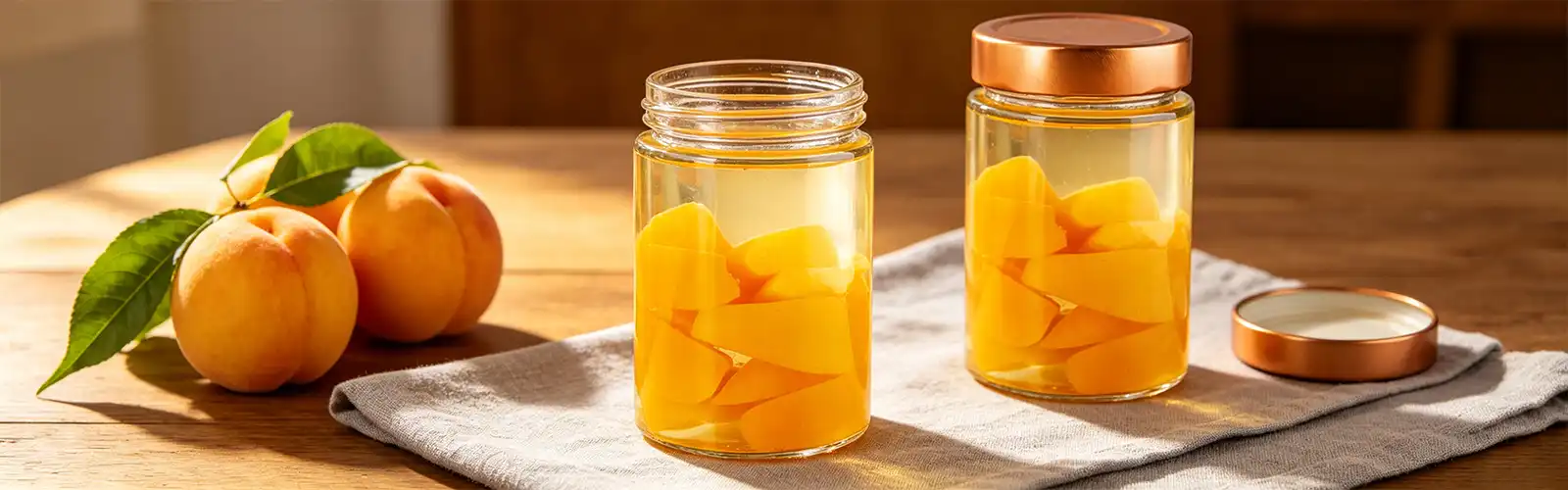
Glass Food Canning Jars and Mason Jars
Historical Development and Manufacturing Evolution
When home canning became popular in the United States in the middle of the 1800s, the preserve jar business started to change. The 1858 invention by John Landis Mason created the threaded mouth and metal screw-on lid system. This changed the way food was stored by making vacuum seals that worked reliably without using complicated machinery. This new idea solved the very important problem of keeping food from going bad during long storage times without cooling.
The ways things are made have changed a lot since those early days. Modern factories use automatic glass casting methods that make sure that all thousands of units have the same wall thickness and strength. Older soda-lime formulations have been replaced by high-white glass formulas in high-end uses because they offer better clarity and chemical resistance. Newer annealing methods lower the internal stress points that used to cause thermal shock breakdowns. Manufacturers today can make containers with very tight limits on dimensions, which means that the closing will always work the same way across entire production runs.
Material Composition and Safety Standards
Some modern cases for storing food are made from special glass mixtures that are made to handle food. There are carefully controlled amounts of silica, sodium carbonate, and limestone in high-white glass that make it very clear while also keeping its structure strong when heated. This substance doesn't let chemicals leak through, so acidic foods like tomatoes and pickled foods won't take out unwanted chemicals during long keeping times.
In foreign supply lines, following the rules is still very important. Containers going to the US market have to follow FDA rules for food-contact products, which set limits on the amount of lead and cadmium that can be present. European markets require products meant to come into contact with food to be in line with EU Regulation 1935/2004 and later general regulations. Manufacturers that sell to customers all over the world usually get more than one license to make it easier to do business across borders and give buyers the paperwork they need for customs clearing and store distribution.
Lid systems have changed at the same time. Modern two-piece lids have a flat metal disk with food-safe closing material around the edges and a separate screw band that goes over it. When heated during processing, the sealing material forms an airtight barrier. When cooled, it shrinks to create vacuum pressure. As a result of changes in regulations and worries about customer health, many suppliers now offer lids that don't contain BPA. glass food canning jar manufacturers are increasingly prioritizing these safety standards.
Key Differences Between Mason Jars and Glass Food Canning Jars
Design Elements and Closure Mechanisms
The threaded neck design that makes mason jars unique is just one way that airtight seals can be made in glass containers for food storage. For this method to work, perfectly machined threads are formed into the glass rim and matched with threads on metal bands that hold flat lid discs in place. The quality of these threads' measurements has a direct effect on how well they seal. Even small differences can make it harder for a vacuum to form during heat processing.
Different types of closing methods are used for different tasks. Rubber gaskets and wire bail devices are popular in European markets and craft beverage uses because they can be used more than once to seal things. These systems can be opened and closed many times without having to replace any parts. This makes them cost-effective for goods that are used up slowly over time. Twist-off lids, like the ones on commercial jam jars, make it easy to use just one time, and the equipment needed for them is simple enough to be used on high-speed production lines. Clamp-style lids look good and seal well, which is why expensive brands like them when they want unique packing that shows quality and tradition.
Usage Scenarios and Applications
Mason jars have become very popular in handmade and craft food stores, where their distinctive shape shows that the food is real and home-cooked. Small-batch makers of jams, honey, pickled vegetables, and fermented foods use this visual connection to make their goods stand out on store shelves that are already full of other products. The containers' sturdiness lets them be used for other things after the original product is gone. This is an eco-friendly feature that appeals to people who reuse jars for storage, drinking glasses, or craft projects.
Larger types of glass food canning jars are used by industrial food processing plants that need to make sure that millions of units every year work the same way. Manufacturers of drinks choose designs with straight sides because they allow for the best packing density during shipping and storage. This lowers transportation costs during high-volume production cycles. Food processing plants look for containers that can survive strict washing and cleaning procedures and still keep their shape after being heated and cooled many times. Agricultural groups and large-scale producers often ask for custom jar designs that balance usefulness with brand uniqueness.
Size Variations and Logistics Considerations
Container capacity has a direct effect on many aspects of buying, such as shipping prices, how well storage works, and how convenient it is for end users. Small sizes, from 100ml to 220ml, are good for single-serving, sample, and high-end items where controlling the amount added to the value perception. People are willing to pay more per unit for unique products like infused honey, gourmet mustards, or handmade spice mixes, so these small packages work well for them.
Most food items sold in stores come in containers with sizes between 280ml and 500ml. These sizes are a good compromise between being useful and saving money on packaging. They fit standard retail shelf dimensions and have enough space for normal home usage habits. Straight-sided shapes of these sizes stack well in corrugated shipping cases, which increases the number of containers that can fit on a pallet and lowers the cost of freight across delivery networks.
Performance Metrics and Durability Factors
When storage containers are filled with hot liquid, thermal resistance is an important performance trait that must be met. Good glass can handle temperature differences of 40°C or more without breaking, which is useful for hot-fill processes used in making jam and sauce. High-white glass is better at withstanding heat shock than regular soda-lime mixtures. This means that it breaks less often, which lowers production costs and trash.
How the wall's width is distributed affects both its strength and its weight. When you use precision casting to make walls that are all the same thickness, you don't get stress concentration points that cause cracks when they are hit by something or heated up. The weight of the container affects how much it costs to move. Lighter designs lower freight costs, but they must keep their structural stability throughout the distribution cycle. When looking at possible sources, procurement teams weigh these factors against the supplier's skills and the stability of the quality.
Comparison of Mason Jars and Glass Food Canning Jars for Procurement
Supplier Reliability and Quality Assurance
Well-known companies have built their names over many years by consistently producing high-quality goods and ensuring a smooth supply chain. These brands have strict testing procedures that make sure that all production batches are accurate in terms of size, glass makeup, and the effectiveness of the closing system. Their presence in the market gives buying teams faith that products will be available and that specs will be standard, which makes managing inventory and planning production easier.
New suppliers, especially those based in manufacturing hubs across Asia, offer great value by having reasonable price structures made possible by modern production facilities and low labor costs. Xuzhou Pinyunyi Glass is a good example of this type of company. It has almost 100 workers and modern equipment that it uses to make a wide range of glass containers, such as straight-sided storage jars with sizes from 100ml to 1000ml. Our plant provides high-white glass food canning jar cases that can be printed with logos, meeting the needs of brands that need to be customized in order to stand out in the market.
Cost Analysis and Wholesale Pricing Structures
Unit prices change a lot depending on how many you buy, and you can save a lot of money by making volume agreements. Suppliers usually charge more for small test orders of a few hundred units because they have to spread out the costs of setting up the mold and the time it takes to change over production over a smaller number of units. When you buy between 5,000 and 50,000 units, you can get better prices and keep your inventory levels low enough for your business to grow. Large pledges of more than 100,000 units per year unlock the lowest costs per unit and often come with specialized customer service support and priority schedules for production.
Total cost of ownership extends beyond initial buy price. Shipping, taxes, storage, and possible damage during distribution are all parts of the total cost of ownership that go beyond the initial buy price. While domestic providers may charge more per unit, they also offer shorter lead times, cheaper shipping, and easier customs processes. International sources offer lower unit prices, but they need careful logistics planning to handle ocean freight schedules, import paperwork, and quality check procedures at receiving sites.
Logistical Considerations and After-Sales Support
The position of a supplier affects lead times and shipping costs, which in turn affect how much inventory to plan for and how much operating cash is needed. Orders are usually filled by domestic makers within two to four weeks, which lets just-in-time inventory tactics work and cuts down on the need for storage space. International sellers need eight to twelve weeks for ocean freight, which means that companies need to keep more safety stock and use more accurate demand forecasts to keep production from stopping because of supply delays.
Good packaging during shipping keeps things from breaking, which costs a lot and takes away from the economic benefits of low prices. Reliable providers use corrugated dividers, cushioning materials, and the right case strengths to keep glass packages safe during the rough handling that happens in foreign shipping networks. Find out how often things break during shipping and who is responsible for filing damage claims. When suppliers promise to repair damaged goods during shipping, it shows that they care about their customers in ways that go beyond the initial transaction.
Conclusion
There is a big difference between mason jars and glass food canning jars when it comes to business buying, where the choice of container affects how well the product is protected, how well the company follows the rules, and how the company positions its brand. There is a specific type of closure system design that is well known in the market for Mason jars. The larger group of canning jars includes a wider range of sealing methods that can be used for a variety of purposes. Successful sourcing strategies match the requirements for containers with the properties of the product, the ability to handle it, and the company's place in the market. They also build relationships with suppliers that ensure uniform quality and reliable supply. When you know about the qualities of a material, the rules that it has to follow, and its total cost, you can make choices about what to buy that are best for both short-term and long-term profits in both domestic and foreign lines of distribution.
Partner with Xuzhou Pinyunyi Glass for Reliable Glass Food Canning Jar Solutions
Picking the right glass food canning jar manufacturer has a direct effect on the quality of your product, the stability of your supply chain, and your success in the market. Xuzhou Pinyunyi Glass Products Co., Ltd. has modern production tools and almost 100 trained workers who work together to make high-quality glass containers that meet strict international standards. Our high-white glass straight-sided jars can hold anywhere from 100ml to 1000ml, so they can be used for a wide range of products, from small-batch specialty items to large-format commercial goods. We offer name printing services that turn plain containers into branded items without having to buy custom molds. This lets you enter the market in a way that is both unique and cost-effective. Our plant focuses on making molds quickly and customizing them, and it uses cutting-edge processing technologies and decorative methods to make products look better on store shelves. You can email us at 18168782056@163.com or visit our website at www.pyyglassware.com to look through our catalog of products, ask for samples, and talk about how our experience as a seller can help you reach your goals.

FAQ
Can mason jars and glass food canning jars be used interchangeably?
When following tried-and-true recipes for preserving food and processing instructions, mason jars and other canning jars with the right closing systems work about the same in many home canning situations. Businesses have to compare different types of containers and closures based on their processing needs, the compatibility of their tools, and government rules. Different makers and product lines use different thread sizes, glass thickness, and lid sealing methods, which could affect how the equipment is set up and how the process is validated. Compatibility tests should be done on any glass food canning jar before switching.
Are mason jars suitable for commercial food preservation?
Mason jars work well for business purposes as long as the right ones are chosen based on the product and how it needs to be processed. A lot of small and handmade food makers use mason jars to show that their products are real and made by hand, which appeals to their target customers. Larger businesses may want different container designs that improve production efficiency by having features like straight sides that make automatic handling easier or closure systems that work with high-speed capping equipment. When choosing the best container specs, you should think about how much you produce, what tools you have, and your brand strategy.
How do I verify containers and lids meet BPA-free and food-safe standards?
Ask your providers for material safety data sheets and compliance paperwork that prove the materials used to make the glass and lids meet the food contact standards for the markets you serve. Independent confirmation of material safety promises comes from testing by third-party, accredited labs. Most reliable suppliers can easily show that their products meet basic standards set by the FDA for sales in the United States and the EU for sales in Europe. Before closing buying relationships, suppliers who are unwilling to provide testing paperwork or compliance certificates should be looked at more closely.
References
- Smith, J.R. (2019). Glass Container Manufacturing: Modern Techniques and Quality Standards. Industrial Packaging Press.
- Anderson, M.K., & Williams, P.T. (2021). "Food Safety Regulations in Glass Packaging: A Comparative Analysis of FDA and EU Standards." Journal of Food Packaging Technology, 15(3), 287-304.
- Thompson, L.D. (2020). Commercial Food Preservation: Equipment, Containers, and Processing Methods. Culinary Technology Publishers.
- European Commission. (2018). Framework Regulation on Materials and Articles Intended to Come into Contact with Food. Official Journal of the European Union.
- Patterson, R.S., & Chang, H.Y. (2022). "Sustainability in Glass Packaging: Lifecycle Analysis and Recycling Efficiency." Packaging Science Quarterly, 28(1), 45-62.
- United States Food and Drug Administration. (2021). Compliance Policy Guide: Glass Containers for Food Products. FDA Compliance Publications.
Learn about our latest products and discounts through SMS or email