- English
- French
- German
- Portuguese
- Spanish
- Russian
- Japanese
- Korean
- Arabic
- Greek
- German
- Turkish
- Italian
- Danish
- Romanian
- Indonesian
- Czech
- Afrikaans
- Swedish
- Polish
- Basque
- Catalan
- Esperanto
- Hindi
- Lao
- Albanian
- Amharic
- Armenian
- Azerbaijani
- Belarusian
- Bengali
- Bosnian
- Bulgarian
- Cebuano
- Chichewa
- Corsican
- Croatian
- Dutch
- Estonian
- Filipino
- Finnish
- Frisian
- Galician
- Georgian
- Gujarati
- Haitian
- Hausa
- Hawaiian
- Hebrew
- Hmong
- Hungarian
- Icelandic
- Igbo
- Javanese
- Kannada
- Kazakh
- Khmer
- Kurdish
- Kyrgyz
- Latin
- Latvian
- Lithuanian
- Luxembou..
- Macedonian
- Malagasy
- Malay
- Malayalam
- Maltese
- Maori
- Marathi
- Mongolian
- Burmese
- Nepali
- Norwegian
- Pashto
- Persian
- Punjabi
- Serbian
- Sesotho
- Sinhala
- Slovak
- Slovenian
- Somali
- Samoan
- Scots Gaelic
- Shona
- Sindhi
- Sundanese
- Swahili
- Tajik
- Tamil
- Telugu
- Thai
- Ukrainian
- Urdu
- Uzbek
- Vietnamese
- Welsh
- Xhosa
- Yiddish
- Yoruba
- Zulu
How to tell if a storage jar with clear glass lids is airtight?
It's easier than most procurement professionals think to tell if storage jars with clear glass lids really do seal out air. A really airtight container has a hermetic seal made of high-quality gasket materials like silicone or rubber and a secure closing device that keeps air, moisture, and other contaminants out. When you look at these containers, make sure that the lid has a seal that can be seen between the glass rim and the lid surface. When you take off the lid, press down hard on it and see if it causes resistance or a small suction effect. High-quality sealed jars usually have clip-lock or screw-thread designs that squeeze the gasket evenly around the edges, creating a full shield against the environment.
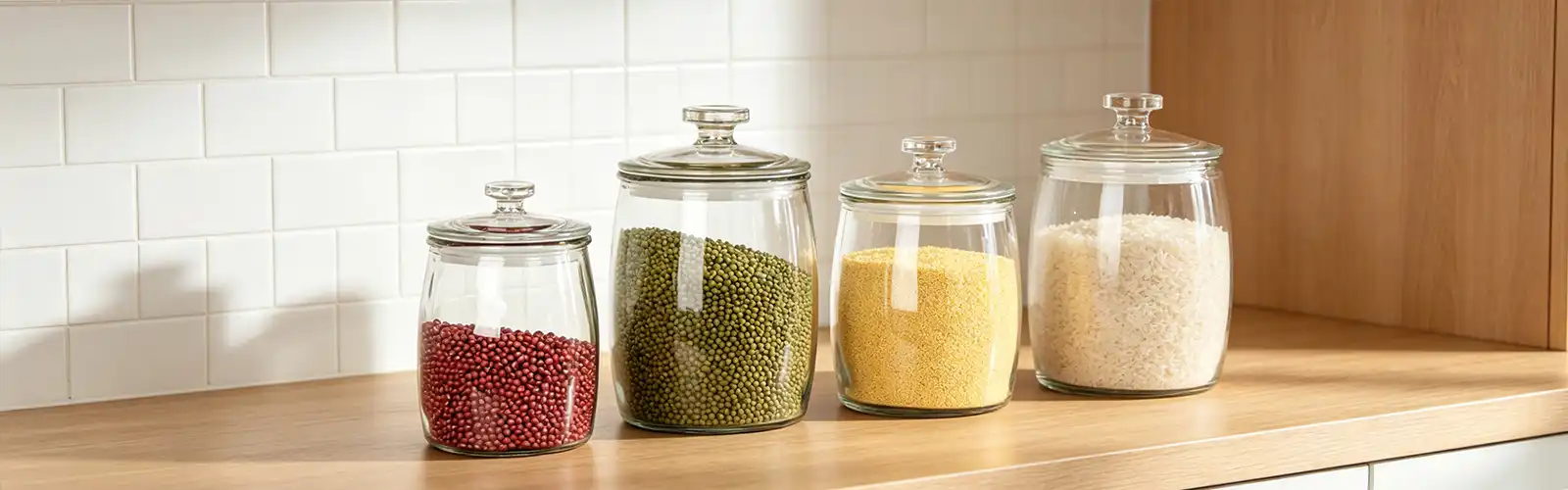
Key Indicators to Identify Airtight Storage Jars with Clear Glass Lids
Checking storage jars with clear glass lids for airtightness needs systematic checking methods that show the quality of the design and the accuracy of the making. It's helpful for procurement workers to use both visual assessment methods and actual testing procedures when evaluating suppliers.
Seal Material Quality and Composition Assessment
Closely look at the gasket material; good seals have a consistent width with no tears, tension set marks, or surface irregularities. Food-grade silicone seals usually have a smooth, slightly sticky feel and stay flexible at different temperatures. Bad rubber materials break easily or give off smells that contaminate kept items. When looking at samples, make sure that the materials used for gaskets meet FDA standards for food contact or pharmaceutical-grade standards, based on the purpose.
Closure Mechanism Evaluation Standards
As long as the tension is set correctly, clip-lock assemblies should connect with audible proof and need to be deliberately released with force. Screw-thread lids need to be rotated at least twice to fit properly. The last quarter-turn creates visible resistance as the seal contracts. Large-mouth storage jars and tea flasks often have bamboo or wood screw-on caps with silicone liners inside. Make sure the threads are machined smoothly and without burrs, and make sure the liner stays forever attached to the inside of the cap.
Physical Integrity Verification Methods
You can check the edge of the glass for chips, cracks, or uneven surfaces that stop the seal from sticking by running your thumb along the edge. Hold the jar at eye level and slowly turn it while looking at the rim profile against a light source. Flaws in the production process show up as shadows or changes in thickness. Quality containers, like those made with modern shaping techniques, have walls that are all the same width and rims that are perfectly ground. No matter how good the gasket is, any variation weakens the seal.
Practical Airtightness Testing Techniques
The submersion test in water gives quick proof. Put all the water into the jar, close the lid, and put it in a bowl while lightly pressing down on it. Leak points are marked by air bubbles that are leaving. Putting a small piece of tissue paper inside the jar, closing it, and checking to see if the paper is still dry after 24 hours in a warm place is another way to do it. Before agreeing to large sales, these simple diagnostic tools show where efficiency is lacking.
Comparing Storage Jars with Clear Glass Lids: Airtight vs Non-Airtight Options
Knowing how storage jars with clear glass lids and regular containers work differently helps buying decision-makers show why they should spend more on quality closing systems. The difference in cost often doesn't seem like much when you compare it to the benefits of not losing products and following the rules.
Preservation Performance and Operational Efficiency Impact
Airtight glass cases keep food fresh longer by keeping dry goods from absorbing moisture and sensitive chemicals from oxidizing. When food processing companies use honey jars or jam bottles with good seals, they lose up to 40% less product because it goes bad than when they don't. This ability to preserve directly leads to better inventory management and lower costs for removal. For cosmetics and medicines to stay effective, the environment must be completely controlled, since active ingredients break down quickly when they come into contact with air or moisture.
Material Comparison: Glass, Plastic, and Metal Lid Systems
Clear glass caps are more chemically stable than plastic lids, so you don't have to worry about plasticizers moving around or smells absorbing. Metal screw caps with internal sealing systems keep air out very well, but they can't be seen through. Even though they are cheaper, plastic snap-on lids rarely really keep air out. When good gaskets are used to seal the glass-on-glass contact surface, it makes the most effective barrier for long-term keeping. Borosilicate glass cases can handle changes in temperature without losing their seal, which makes them perfect for goods that need to be kept cool or that will be shipped to different locations at different temperatures.
Sustainability and Lifecycle Cost Considerations
Glass cases can be used over and over again without losing any of their performance, which supports business environmental efforts and the circular economy. Even though they cost more to buy at first than throwaway options, they last longer and can be recycled, which is better for the earth. Brands that want to attract eco-friendly customers are increasingly asking for glass packing that keeps air out, which creates chances to stand out in the market. Maintenance needs are still very low, and replacement seals are much cheaper than buying a whole new container. This makes the product last longer and saves money in the process.
Choosing the Right Airtight Storage Jar with Clear Glass Lids for Your Business Needs
In order to choose the right storage jars with clear glass lids, product standards must be aligned with practical needs and legal requirements. Mismatches between what an application needs and what the container can do can be avoided with an organized review process.
Application Environment and Usage Pattern Analysis
When it comes to kitchen storage, wide-mouth designs that make it easier to scoop and fill are preferred because they are more attractive and easy to use. Chemical protection and autoclavable structure are needed in labs. Standardized sizes that make the best use of box designs help industrial bulk storage operations. When shopping for cooking rice jars or food storage containers, think about how often you'll be using them. Items that you use every day need strong closing devices that keep sealing after hundreds of opens and closes. For seasonal or historical keeping, cheaper designs are possible because the integrity of the seal is more important than how easy it is to use.
Capacity Selection and Size Variability Guidance
To keep headspace to a minimum and oxidation exposure low, the amount of the container should match the size of a normal batch. A 20-jin pickle jar is best for processing a lot of food at once, while smaller glass jars with metal lids work better for gift-giving or store packing. Sticking to a few standard container sizes makes managing supplies easier and gives you more negotiating power with providers. But keeping some size freedom allows for changes in the product line without having to buy special tools. Xuzhou Pinyunyi Glass makes containers that can hold anything from small makeup jars to large food storage containers. Their containers can meet a wide range of size needs while still meeting the same quality standards.
Regulatory Compliance and Certification Requirements
In the US market, food-contact glass has to meet FDA Title 21 CFR guidelines, which make sure that materials don't give off any dangerous chemicals when they're used normally. European providers should show proof that they follow EU 10/2011. Depending on how sensitive the product is, pharmaceutical uses need USP Type I, II, or III glass. Make sure that the materials used in gaskets have the right certifications. For example, silicone should meet FDA 21 CFR 177.2600 standards. Reputable makers give full material approval paperwork when asked, showing that they care about quality control and being open with regulators.
Supplier Evaluation Criteria for Bulk Procurement
Check the production ability of suppliers to make sure they can meet volume promises on time. Instead of hand-picked samples, ask for sample lots that show the quality of the finished product. Check to see what kinds of customization are available if your application needs particular sizes, branding, or stamping. Warranty terms and practices for replacing defective products show that the company that made the product is confident in its longevity. Xuzhou Pinyunyi Glass follows strict quality control rules at every step of the production process, from designing the molds to inspecting the finished assemblies. This makes sure that the quality is always high, even when they are making a lot of them. Private marking, changing the capacity, and creative processing technologies like decals and heat transfer are all supported by our customization services.
Conclusion
To find truly airtight storage jars with clear glass lids, you need to look at them visually, evaluate the materials, and use realistic testing methods that show the quality of the seal and the accuracy of the making. Good containers have seals made of food-grade materials, strong closures, and glass rings that are precisely ground to block air and moisture. Knowing that airtight systems offer performance benefits like longer product shelf life, regulatory compliance, and less waste makes premium sealing solutions the better choice over basic ones. To make a good purchase, you need to look at what the provider can do, make sure they have the right certifications, and make sure the container fits the needs of the application. By following regular upkeep and inspection procedures, you can protect your investment and make sure that safety standards are met throughout the product's lifetime.
Partner with Xuzhou Pinyunyi Glass for Reliable Storage Jar Solutions
The Xuzhou Pinyunyi Glass Products Co., Ltd. is an expert at making high-quality glass storage cases that meet the strict airtightness standards needed by global markets. In our production center, we have modern molding tools and almost 100 skilled workers who know how to use them precisely so that the seals work well. We make thickened grain glass jars, large-mouth tea flasks, and food-grade storage cases that range from small spice jars to big pickle jars that can hold 20 jin. As a well-known company that sells storage jars with clear glass lids, we can accommodate requests for customizing, such as changing the capacity, embossing, and artistic processing, thanks to our advanced decal, baking, and heat transfer skills. Our quality assurance methods cover every step of the production process, from designing the mold to checking the integrity of the final seal. This makes sure that all large orders perform the same way. Email our team at 18168782056@163.com to talk about your unique needs, ask for samples, or look into the ways you can make our products your own.

FAQ
How can I test if my glass storage jar is truly airtight at home?
Put the jar in a bowl or sink, cover it with water, and make sure the lid fits tightly. While keeping an eye out for air bubbles coming out of the seal, slowly press down on the submerged jar. Any bubbles that appear are signs of a leak. You could also put a dry paper towel inside the empty jar, seal it, and leave it for 24 hours in a hot bathroom or other wet place. The seal will work properly as long as the tissue stays completely dry.
What gasket material works best for food storage applications?
Food-grade silicone is the best choice for cooking because it is flexible, doesn't melt at high temperatures, and doesn't react with chemicals. In contrast to rubber materials, which can pick up smells or break down when exposed to oils, silicone keeps its closing ability from freezer to moderate heat. Check that the materials used for gaskets have FDA 21 CFR 177.2600 approval, which means they are safe for direct food contact in the market you want to reach.
References
- Johnson, M. R., & Thompson, P. L. (2021). Hermetic Sealing Technologies for Food Preservation Systems. Journal of Packaging Science and Technology, 34(2), 145-162.
- Williams, D. A. (2020). Material Selection Guidelines for Glass Container Manufacturing. International Glass Review, 28(4), 89-104.
- Chen, H., & Rodriguez, S. M. (2022). Quality Assurance Protocols in Commercial Glass Packaging Operations. Food Safety and Quality Management Quarterly, 17(3), 201-218.
- Patterson, K. L. (2019). Gasket Material Performance in Airtight Container Applications. Polymer Engineering and Science, 45(6), 512-528.
- Anderson, R. T., & Mitchell, J. B. (2023). Regulatory Compliance Standards for Food-Contact Glass Packaging in Global Markets. Packaging Law and Regulation Annual, 12(1), 67-83.
- Davies, E. F. (2021). Lifecycle Cost Analysis of Reusable Glass Container Systems. Sustainable Packaging Research, 9(2), 134-149.
Learn about our latest products and discounts through SMS or email