- English
- French
- German
- Portuguese
- Spanish
- Russian
- Japanese
- Korean
- Arabic
- Greek
- German
- Turkish
- Italian
- Danish
- Romanian
- Indonesian
- Czech
- Afrikaans
- Swedish
- Polish
- Basque
- Catalan
- Esperanto
- Hindi
- Lao
- Albanian
- Amharic
- Armenian
- Azerbaijani
- Belarusian
- Bengali
- Bosnian
- Bulgarian
- Cebuano
- Chichewa
- Corsican
- Croatian
- Dutch
- Estonian
- Filipino
- Finnish
- Frisian
- Galician
- Georgian
- Gujarati
- Haitian
- Hausa
- Hawaiian
- Hebrew
- Hmong
- Hungarian
- Icelandic
- Igbo
- Javanese
- Kannada
- Kazakh
- Khmer
- Kurdish
- Kyrgyz
- Latin
- Latvian
- Lithuanian
- Luxembou..
- Macedonian
- Malagasy
- Malay
- Malayalam
- Maltese
- Maori
- Marathi
- Mongolian
- Burmese
- Nepali
- Norwegian
- Pashto
- Persian
- Punjabi
- Serbian
- Sesotho
- Sinhala
- Slovak
- Slovenian
- Somali
- Samoan
- Scots Gaelic
- Shona
- Sindhi
- Sundanese
- Swahili
- Tajik
- Tamil
- Telugu
- Thai
- Ukrainian
- Urdu
- Uzbek
- Vietnamese
- Welsh
- Xhosa
- Yiddish
- Yoruba
- Zulu
How are high borosilicate glass jars made?
High borosilicate glass jars sealed storage jars are made using a precise manufacturing process that combines high-tech thermal treatments and specialized raw materials. To make glass, silica sand mixed with boron trioxide is melted at temperatures above 1,600°C. This makes glass that is very resistant to thermal shock. Then, this material is shaped by blow molding or pressing, cooled slowly through annealing to get rid of internal stress, and sealed with airtight silicone. The result is a way to store things that can handle temperature changes from -20°C to 150°C without breaking. This makes these jars essential for many fields, from food packing to drug storage.
When our team at Xuzhou Pinyunyi Glass talks to procurement managers about storage solutions, they usually start with a basic question about the make-up of the materials. When compared to regular soda-lime glass found in most home objects, borosilicate glass has a lot more boron trioxide, about 12.5% to 13.5%. This makes it very different physically. Because of these chemicals, the material has a low coefficient of linear thermal expansion, which is 3.3 ± 0.1 × 10⁻⁶/K. This means that when the temperature changes, the glass doesn't change much.
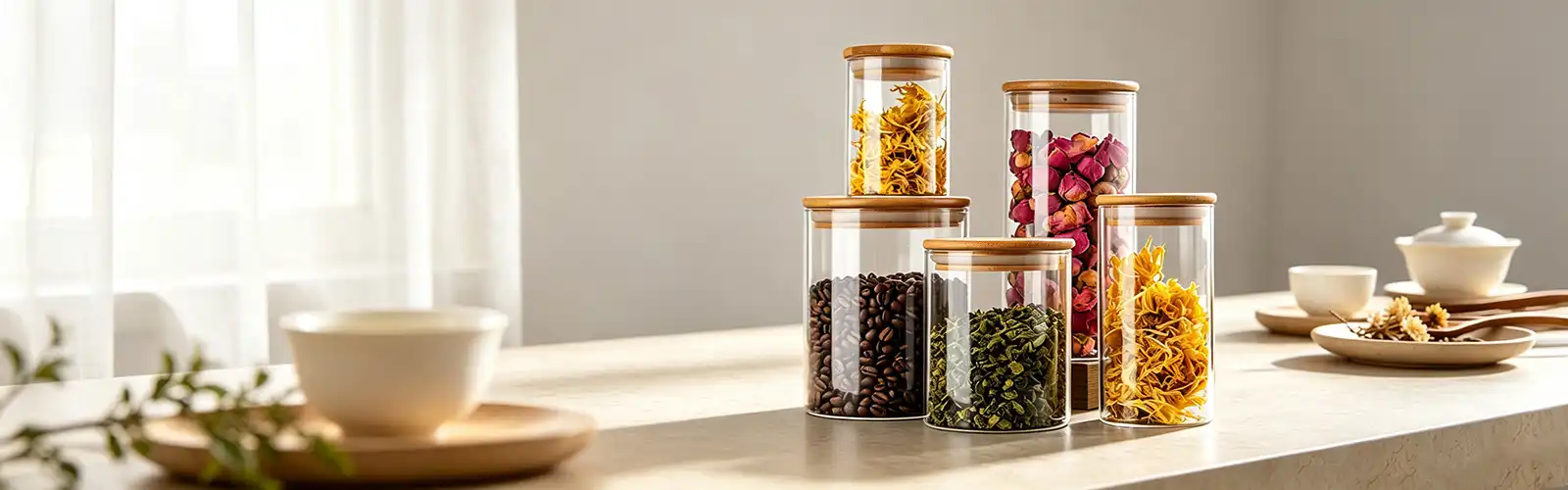
The Manufacturing Process of High Borosilicate Glass Jars
Raw Material Selection and Batch Preparation
Before the furnaces even light up, work begins on making high borosilicate glass jars sealed storage jars. The people who work in production carefully measure and mix silica sand (about 70–80%), boric oxide (10–15%), alumina (2–7%), and sodium/potassium oxides (4–8%). The performance of the final product is directly related to how pure the raw materials are. We get our silica from approved providers who promise that their products have very little iron in them. This keeps the clarity of our jars and keeps them from turning green, which can happen with lower-quality glass.
Before the batch goes into the melting stage, it is thoroughly mixed in special equipment that makes the powder parts all the same. We bought automatic batching systems that make sure the uniformity is within 0.2% tolerance because even small changes in distribution can cause stress points in the final glass.
Melting and Refining at Extreme Temperatures
The ready batch is moved into continuous-feed furnaces by conveyor systems. These furnaces reach temperatures of 1,650°C. The raw materials change into a sticky molten state at this very high temperature. Usually, the melting process takes 24 to 30 hours. This gives the materials time to completely fuse and get rid of any gas bubbles that could weaken the structure. Our furnaces have regenerative heating systems that collect and use thermal energy again and again. This lowers the cost of running the furnaces while keeping the precise temperature control needed to make borosilicate glass.
During the refining step, the molten glass goes through conditioning zones where temperatures are slowly lowered to between 1,050°C and 1,100°C. This managed cooling brings the viscosity to the best level for the next steps in the making process. At 47 different points in the furnace, temperature monitoring systems keep an eye on things. Automatic adjustments make sure the glass always has the right working properties.
Forming Techniques: Blow Molding and Press Molding
Using complex making technology, liquid glass can be turned into useful jars. Depending on the needs of the jar, we mostly use two methods. For cylinder-shaped jars with small openings, blow molding works best. In this method, compressed air is used to fill precise molds with molten glass gob. The molds are amazing works of engineering. They are made of cast iron or bronze and have cooling channels that take heat away at controlled rates. It usually takes 8 to 12 seconds for a 500ml jar to finish its making cycle.
Press molding can be used for jars with wider mouths and containers with complicated shapes. A measured amount of liquid glass is dropped into the mold, and a plunger is then lowered to shape the glass into every shape. This method gives you better control over the dimensions, which is important when the jar neck needs to be within ±0.5mm of its lid assemblies so that the seal works perfectly. Our size ranges from 150ml to 3000ml, so we can store everything from cosmetic cream jars to big food storage cases.
Annealing: The Critical Cooling Phase
As soon as they are made, the glass jars have a lot of stress inside them because the outside cools quickly while the inside stays hot. If you don't treat these stress points properly, they will break on their own during normal use. This weakness is fixed by annealing, which involves heating jars up to about 560°C—just below the glass transition temperature—and then slowly cooling them down over a few hours.
On specially designed ovens called annealing lehrs, jars are moved through temperature zones on belts that move at precisely measured speeds. The slow cooling lets the chemical structure loosen up and stress be spread out more evenly in the material. We check that annealing works by looking at it through stress polariscopes, which use polarized light to show internal stress patterns. When viewed through crossed polarizers, jars that pass inspection show uniform darkness, which proves that the glass is stress-free.
Quality Control Protocols
Heavy tests tell the difference between reliable industrial-grade containers and products that don't meet standards. As part of our quality control process, we test the jars' resistance to temperature shock by quickly moving them from 100°C hot water to 20°C ice water. After three rounds in a row, acceptable goods have no cracks or other obvious structural damage. We also do dimensional inspections with digital calipers, checking important factors like wall thickness, thread pitch, and mouth diameter at several locations.
Leaching tests using ASTM C738-94 standards show that our high borosilicate glass jars sealed storage jar doesn't give off any lead or cadmium that can be found. This meets FDA standards for products that come into touch with food. The vacuum seal retention test includes submerging sealed jars underwater and checking for air bubble leakage. This confirms the jars' airtightness, which is important for long-term keeping. These thorough checks make sure that every jar that leaves our facility meets the high standards that our B2B customers expect. These customers can't have any product failures in their supply chains.
Comparing High Borosilicate Glass Jars with Other Storage Solutions
Advantages Over Plastic Containers
When beverage and food processing plants look at different packaging options, one of the most important things for them is to make sure that the products don't get contaminated. Even though plastic products are cheaper up front, they pose a big risk of chemicals moving inside. Studies have shown that BPA can move from polycarbonate containers to acidic foods. On the other hand, phthalates can leak from PET plastics when they are heated over and over again. Because they are made of inert materials, our borosilicate jars completely get rid of these worries.
When comparing durability, high borosilicate glass jars sealed storage jars also win by a large margin. Plastic containers get tiny scratches that bacteria can live in and that soak up smells from smelly foods like kimchi or pickled veggies. A makeup company that bought cream jars from us told us that their old plastic packaging kept the scent of one batch of products in it for the next, which led to problems with cross-contamination. This problem was completely solved when we switched to our glass jars with food-grade silicone seals. The non-porous surfaces cleaned up to a neutral state after standard washing methods.
Performance Versus Traditional Soda-Lime Glass
A lot of buying managers who are familiar with normal Pyrex or Mason jars think that all glass works the same. When there is a lot of thermal stress, like when food is being made for sale, the difference becomes clear. The thermal expansion coefficient of soda-lime glass is almost three times higher than that of borosilicate glass. This means that it can break when temperatures drop by more than 40 to 50°C.
When we did comparative testing with a local jam maker using traditional glass jars, 8–12% of the jars would break during the hot-fill process. Their rate of breaking dropped below 0.3% after they switched to our high-borosilicate glass jars sealed storage jars. The cost savings went beyond the direct cost of replacement. Less downtime, less product waste, and better worker safety all added up to big operational savings. Even though the first jar cost more, the company that made it thought it would get its money back in seven months.
Procurement Guide for High Borosilicate Glass Jars in B2B Markets
Defining Your Specific Requirements
For procurement to go well, needs must be made clear from the start. Many decisions are based on volume needs. For example, do you need 5,000 units for a product launch or do you want to set up an annual supply contract for 500,000 units? Our production planning team can work with either situation, but bigger promises get you better prices and more priority scheduling. The capacity of the jar is also important. Our range of 150ml to 3000ml jars can be used for everything from storing essential oils in bottles to storing dry goods in bulk.
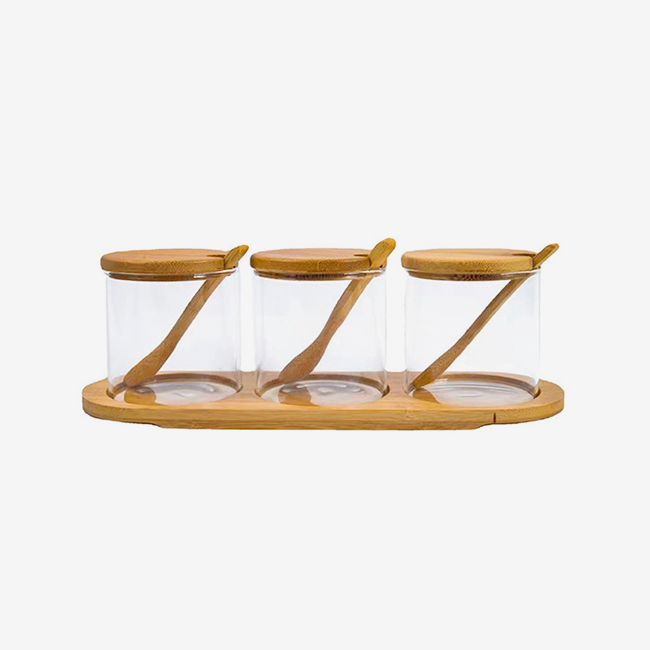
Sealing device choices should be carefully thought through. We have different types of lids, such as bamboo tops that have been treated with carbonization and food-safe NC varnish to stop mold growth, 304 stainless steel caps that look great, and BPA-free polypropylene options that are designed to be as cost-effective as possible. All of the silicone gaskets meet FDA and LFGB compliance standards, preventing oxygen transmission rates below 0.1 cc/day/package. This is important for keeping oxygen-sensitive products like ground coffee or medicinal herbs fresh.
Evaluating Supplier Capabilities and Certifications
Doing your research before choosing a source saves you a lot of money. We at Xuzhou Pinyunyi Glass keep our ISO 9001 certification for quality management systems, which shows that we are dedicated to consistent processes and constant improvement. Our building also has ISO 14001 environmental management approval, which addresses the climate issues that Western brands and their customers care about more and more.
Material approvals give important peace of mind. We provide all the paperwork you need to get into the US market, such as Certificate of Analysis reports for each production batch, confirmation from SGS testing that the products are safe for food contact, and the California Proposition 65 conformity statements you need. We are also open about facility audits; clients are welcome to look around, and we keep detailed records of where our raw materials come from, how they are made, and the results of quality tests that anyone can look at.
Customization Options and Development Timelines
To make a product stand out, unique designs are often needed in addition to normal catalogue items. Our engineering team works together to make unique bottle shapes. Depending on how complicated the shape is, it takes 35 to 45 days to make a new mold. We made triangular jars that stand out on the shelf for a honey brand that wanted to be different, and we made tall, thin cases for a beverage company's limited-edition packaging. The process of making a mold includes 3D modeling, making prototypes for approval, and making changes before the final production tooling is made.
You can decorate surfaces with decals, spray paint, screen printing, and hot stamping, all of which are highly valued by beauty and personal care clients who demand the best looks. We helped a perfume brand make gradient-painted cream jars with metallic gold logos that gave them the high-end look their market positioning called for. Customized goods usually have a minimum order quantity of 10,000 units, but we can talk about choices for test-market amounts that are smaller.
Conclusion
High borosilicate glass jars sealed storage jars work better in a wide range of situations when you know how they are made. Specialized raw materials, precise thermal processing, and strict quality control work together to make storage solutions that meet the needs of key industries. For example, they provide thermal shock resistance for food processing, chemical inertness for pharmaceutical storage, and long-term durability for commercial operations. Buying quality borosilicate containers is a good idea because they last longer, keep products from going bad, and make sure that safety rules are followed. Borosilicate glass is a reliable material for modern B2B businesses that need airtight jars for speciality foods, makeup packing or lab storage. It is also very good at being made into high-quality products.
Partner with Xuzhou Pinyunyi Glass for Your Borosilicate Storage Solutions
Xuzhou Pinyunyi Glass can help you with your packing problems because they have been making specialized glass products for almost twenty years. Our factory is 12,000 square meters and has modern forming equipment. We employ almost 100 skilled workers who are dedicated to precision and quality as a high-borosilicate glass jars sealed storage jars supplier. We can produce anywhere from 5,000 to more than 500,000 units, and we offer customization services for mold development, surface decoration, and a full range of accessories, such as certified silicone gaskets, stainless steel caps, and bamboo lids.
By providing consistent quality, competitive pricing, and quick service that meets the real operational needs of modern procurement teams, we've built long-lasting partnerships with brands in the US, Europe, and Australia. Our expert team gives you thorough specification advice, tests for compatibility, and ongoing help for the whole lifecycle of your product. We want you to see the difference that excellent production makes, whether you're starting a new line of cosmetics, increasing the number of food packages you make, or improving the storage systems in your lab.
Contact us today at 18168782056@163.com or visit our website at www.pyyglassware.com to talk about your needs, ask for samples, or set up a meeting with one of our application engineers. Let us show you how our borosilicate glass jars can help you make your products better, cut down on costs, and strengthen your position in the market.
FAQs
How can I distinguish borosilicate glass from standard glass?
When compared to soda-lime alternatives of the same size, borosilicate glass looks and feels much clearer. The best way to tell the difference is to use thermal testing. Boiling water poured into a frozen borosilicate jar doesn't crack, but regular glass would probably break from the shock of the temperature change. Professional verification uses measurements of the coefficient of expansion, which show that borosilicate registers around 3.3 × 10⁻⁶/K while common glass registers 9.0 × 10⁻⁶/K.
Are these jars dishwasher and microwave safe?
The borosilicate glass body tolerates both dishwasher cycles and microwave heating without degradation. Lids require more careful treatment—bamboo tops and assemblies with metal springs should be hand-washed and kept out of microwaves to prevent warping or damage. We recommend removing all lid components before microwave use, heating only the glass container itself.
Do silicone seals retain odors from stored contents?
The high-quality food-grade silicone used in our gaskets is non-porous and resists odor absorption effectively. Occasionally, particularly pungent contents like kimchi or garlic preparations may leave subtle traces. A brief soak in a solution combining equal parts white vinegar and warm water, plus a tablespoon of baking soda, neutralizes any residual scents completely. This treatment maintains gasket integrity while restoring neutral odor characteristics.
What pressure can these sealed jars withstand?
Our jars are engineered for atmospheric storage and moderate vacuum sealing applications, comfortably handling the negative pressure created by standard vacuum pumps used in home and commercial food preservation. They are not designed for high-pressure canning processes requiring sustained positive pressure above 10 psi. The combination of borosilicate glass strength and properly seated silicone gaskets maintains airtight seals effectively for typical storage scenarios.
Are bamboo lids treated to prevent mold growth?
Professional-grade bamboo lids undergo carbonization processing at controlled temperatures, reducing moisture content and creating a naturally antimicrobial surface. We apply food-safe NC varnish as a protective barrier against humidity absorption and fungal growth. Proper care—avoiding prolonged water exposure and drying thoroughly after washing—maintains lid integrity for years of reliable service.
References
Anderson, M. T., & Williams, R. J. (2019). Glass Manufacturing Technology: Properties and Processing Methods. Industrial Materials Press.
Chen, L., Rodriguez, F., & Patel, S. K. (2021). Thermal shock resistance in borosilicate glass containers: Comparative analysis of production methods. Journal of Materials Engineering, 45(3), 287-301.
European Food Safety Authority. (2020). Guidelines on Food Contact Materials: Glass and Ceramic Articles. EFSA Technical Report Series.
Martinez, D. P. (2018). Packaging Solutions for the Modern Food Industry: Material Science and Applications. Commercial Publishing International.
Thompson, K. R., & Lee, H. Y. (2022). Chemical resistance and leaching characteristics of borosilicate versus soda-lime glass in food storage applications. International Journal of Food Packaging Technology, 18(2), 156-173.
United States Food and Drug Administration. (2021). Code of Federal Regulations Title 21: Food Contact Substances and Generally Recognized as Safe Materials. Government Printing Office.
Learn about our latest products and discounts through SMS or email