- English
- French
- German
- Portuguese
- Spanish
- Russian
- Japanese
- Korean
- Arabic
- Greek
- German
- Turkish
- Italian
- Danish
- Romanian
- Indonesian
- Czech
- Afrikaans
- Swedish
- Polish
- Basque
- Catalan
- Esperanto
- Hindi
- Lao
- Albanian
- Amharic
- Armenian
- Azerbaijani
- Belarusian
- Bengali
- Bosnian
- Bulgarian
- Cebuano
- Chichewa
- Corsican
- Croatian
- Dutch
- Estonian
- Filipino
- Finnish
- Frisian
- Galician
- Georgian
- Gujarati
- Haitian
- Hausa
- Hawaiian
- Hebrew
- Hmong
- Hungarian
- Icelandic
- Igbo
- Javanese
- Kannada
- Kazakh
- Khmer
- Kurdish
- Kyrgyz
- Latin
- Latvian
- Lithuanian
- Luxembou..
- Macedonian
- Malagasy
- Malay
- Malayalam
- Maltese
- Maori
- Marathi
- Mongolian
- Burmese
- Nepali
- Norwegian
- Pashto
- Persian
- Punjabi
- Serbian
- Sesotho
- Sinhala
- Slovak
- Slovenian
- Somali
- Samoan
- Scots Gaelic
- Shona
- Sindhi
- Sundanese
- Swahili
- Tajik
- Tamil
- Telugu
- Thai
- Ukrainian
- Urdu
- Uzbek
- Vietnamese
- Welsh
- Xhosa
- Yiddish
- Yoruba
- Zulu
Do you need a glass jar for secondary fermentation wine?
If you really want to make good wine. For secondary fermentation to happen, you need a container that keeps the flavors whole and lets you keep a close eye on how the wine grows. All of these needs can be met by an oval glass wine jar. Second fermentation is a delicate stage where flavors develop and the wine becomes clearer. The first fermentation phase is active and moves quickly. How your finished product smells, tastes, and stays fresh on the shelf will depend on the container you choose. And oval glass wine jars are especially good at keeping chemicals from reacting with each other. They are also strong, clear, and easy to see. When the quality of each batch and the brand's reputation are at risk, these traits are very important. send inquiry
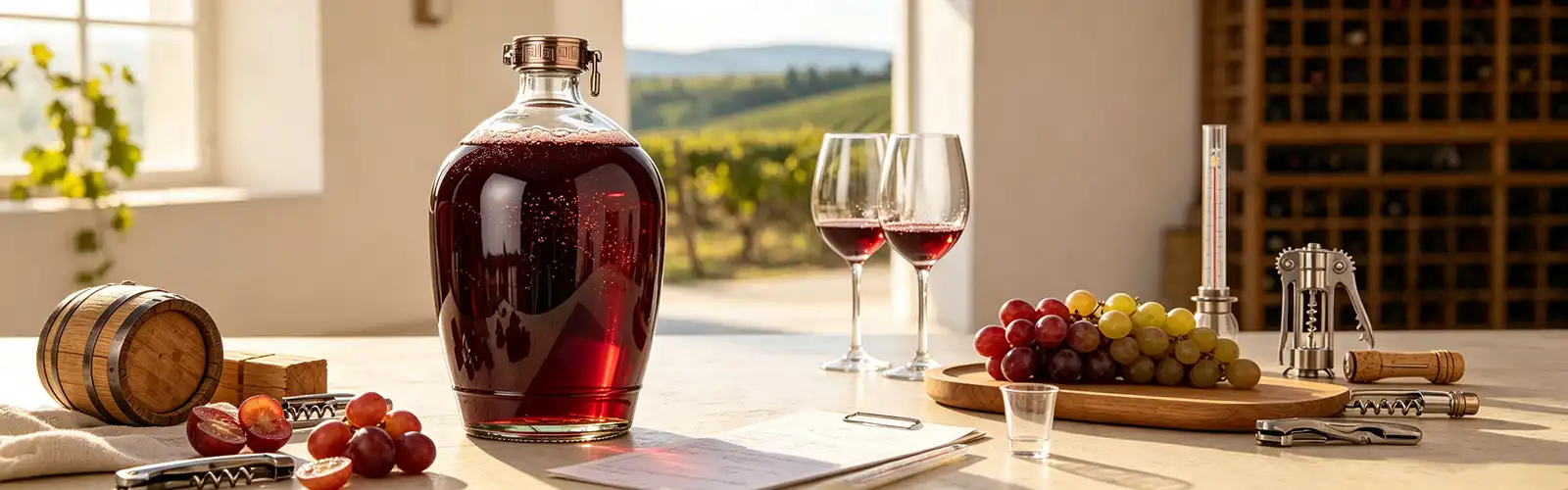

Oval Glass Wine Jars in Wine Fermentation
What Makes Oval Geometry Unique in Fermentation
Oval glass wine jars are different from cylindrical or spherical ones because of the way their geometry is designed. The wider axis of the jar's horizontal surface area is made bigger by the longer profile. This helps the sediment settle more quickly during malolactic fermentation and aging. The shape we have now came about because we needed to store more bottles in a small cellar while still keeping the building strong. Curved walls spread the pressure inside more evenly than flat walls in rectangular containers. This makes stress fractures less likely, which can happen when the temperature changes naturally in old cellars.
Borosilicate Glass Composition and Advantages
Borosilicate glass is made of silica and boron trioxide. It is very resistant to thermal shock (ΔT ≥ 40°C) and has low thermal expansion coefficients. This mix keeps the oval glass wine jar from breaking when moved from cool cellars to warmer bottling areas. Chemicals won't get into your wine if you use high-alcohol types or let them sit for a long time because Class HGB1 has a high hydrolytic resistance. Because they help keep the subtle fruit notes and tannin structures that make premium wines special, these technical traits are important.
Visual Monitoring Without Contamination Risk
Because the walls are see-through, you can watch the sediment build up, the fermentation process, and the changes in clarity as they happen. Without having to open the oval glass wine jar or add oxygen, winemakers can watch as CO2 bubbles form, yeast clumps together, and the color changes over time. Because it looks better, less work needs to be done on it, and the anaerobic environment that is so important for secondary fermentation stays the same. If you find problems early on, like too much sediment or cloudiness that wasn't expected, you can fix them before the batch fails.
Benefits of Using Oval Glass Wine Jars for Secondary Fermentation
Chemical Inertness Protects Flavor Profiles
Wine in glass doesn't change chemically at all, but wine in plastic containers can pick up off-flavors or aromatic compounds. Traditional pots and bowls are made of ceramic, but their unglazed, porous surfaces can hold germs between batches. The oval glass wine jar doesn't react with other things, so it keeps the flavors the winemaker wants, whether they're making strong reds or light fruit wines. When you age wines for a long time, this inertness is very helpful because the flavors don't change slowly over months or years.
Capacity Options for Varied Production Scales
Our available specifications include 2500ml (5-jin) and 5000ml (10-jin), so both small and large businesses can use them. The 5-jin size works well for small batches of specialty goods, tests, or fruit wines made during certain times of the year. It's also a good way to try out recipes before making bigger batches. With a 10-jin capacity, wineries that have been around for a while and have steady demand can make batches that are easy to handle while still being productive. The geometric benefits of the oval glass wine jar stay the same no matter what size they are because they are proportional.
Durability and Lifecycle Cost Efficiency
Oval glass wine jars are more expensive than plastic ones, but if you take good care of them, they can last for decades. It doesn't stain, hold smells, or scratch easily like cheaper materials do after a while of use. Glass is still easy to clean. Hot water, food-grade detergents, and sterilization solutions will all do the job ok and not hurt the glass. Glass costs less per batch over its useful life because it lasts longer. If a business wants to keep making things, this is the best choice.
Here are the practical operational benefits these jars deliver in daily winemaking routines:
- Simplified sanitation: Because smooth glass doesn't have cracks where germs can hide, it cleans up about 30% faster than textured materials.
- Temperature stability: The thick borosilicate walls protect against sudden changes in the environment, so the temperature during fermentation stays within ±2°C all the time.
- Stackable storage geometry: The oval glass wine jar shape makes it safe to stack with custom racks, which adds 15–20% to the cellar's space.
- Logo customization capability: Adding permanent branding like printing or etching helps small producers who are going into retail markets make their brand known.
As a whole, these benefits help winemakers avoid real issues such as the chance of contamination, batches that don't match up, inefficient operations, and issues with making their brands stand out in crowded markets.
How to Buy Oval Glass Wine Jars for Your Wine Business?
Identifying Reputable Manufacturers with Certifications
Choose suppliers who can prove their food-safe materials meet FDA and LFGB rules. Ask a third party, like SGS or Intertek, to certify that the product is free of lead and cadmium and has good ratings for hydrolytic resistance. Manufacturers should be very specific about the materials they use. For example, they should measure the wall thickness (4–10 mm for fermentation uses) and show proof that the oval glass wine jar was annealed, which makes sure it is stress-free. With almost 100 skilled workers with decades of experience making glass, Xuzhou Pinyunyi Glass Products Co., Ltd. keeps full records of all its certifications to ensure every run of production is the same level of quality.
Customization Options That Support Brand Identity
You can finish your products in clear, but you should also think about other ways to make them unique. When you print a logo on the oval glass wine jar, it stays there for good, which makes them look good on store shelves. Mold changes can be used to make custom capacity options when order volumes are high enough. Light-sensitive types are kept safe from UV rays by surface treatments like frosting or tinting while maintaining visual monitoring. You should talk about the minimum order quantities right away; most of the time, batch sizes need to be between 500 and 1000 units for customization.
Logistics Considerations for Bulk Purchasing
When moving glass, it needs to be carefully packed and handled according to certain rules. Good suppliers offer foam inserts, corrugated dividers, and reinforced pallets to keep the oval glass wine jar from breaking while being shipped across borders. When you figure out total landed costs, you should think about duty classifications, freight insurance, and possible breakage reserves (usually between 1% and 2%). You can save a lot on logistics costs per unit if you work with manufacturers that offer consolidated shipping, where different types of goods share containers.
After-Sales Support and Warranty Terms
Make it clear what the rules are for defects before you finish orders. Most warranties cover flaws in the way the oval glass wine jar was made, like uneven wall thickness or stress cracks, but not damage from misuse or extreme temperatures. Find out how to make a claim, how long it takes to get a replacement, and whether parts of replacements ship for less. Companies that only do business overseas take longer to fix problems than companies that have partners in North America.
Conclusion
When it comes to secondary fermentation equipment, it needs to be clean, easy to see, and long-lasting. These needs are met by oval glass wine jars made of borosilicate glass, which also has measurable operational benefits. It is easier to keep the sediment in check because of its unique shape, and the clear walls let you check the quality without changing the anaerobic conditions. They are a better value for money than disposable options, even though they cost more at first. They last longer and have better batch consistency. If purchasing managers want to find trustworthy fermentation vessels, they should look for suppliers who offer customization, certification paperwork, and help with logistics. Crafters and businesses that make a lot of things have found that these jars are good investments that help the quality of the goods and the business grow.
FAQ
Can oval jars handle carbonation pressure during sparkling wine production?
The wall thickness gives us an idea of the pressure tolerance. Bubble wines need walls that are 8 to 10 mm thick and strong enough to hold 3 to 5 bars of pressure. Walls that are only 4 mm thick can store still wines. To keep things from going wrong in a dangerous way, always ask the supplier what the pressure rating is for the oval glass wine jar you are using for carbonated fermentations.
How does the oval shape affect cleaning efficiency?
Brushes and spray guns are easier to use on the wider surfaces than on round bottles with narrow necks. But you need to be careful not to let residue build up in the corners where the oval curves meet the base. When hot alkaline solutions are sprayed around for 10 to 15 minutes, they clean all interior surfaces of the oval glass wine jar well.
What size best suits a 50-gallon production volume?
Ten jin, which is 5,000 milliliters, is equal to three and a half gallons. It would take about 38 jars for a 50-gallon batch. This makes it easier to handle and keeps track of the batch. Many producers choose several smaller vessels over one large one so they have more control over the aging times and the ways the wine can be mixed.
Are replacement lids and seals readily available?
Normal jar openings work with T-corks, glass stoppers, and screw caps, which are simple to find in stores that sell things you need to make wine. When you place your order, make sure that the lid's specs are clear so that it can be used with the closure systems you want for your oval glass wine jar. You can use silicone gaskets more than once as long as you clean them well after each use.
Partner with Xuzhou Pinyunyi Glass for Your Fermentation Vessel Needs
Xuzhou Pinyunyi Glass Products Co., Ltd. has decades of experience making glasses and can help winemakers who are looking for reliable ways to ferment their wine. There are two sizes of borosilicate oval glass wine jars we sell: 2500ml and 5000ml. They are made using both old-fashioned blown-glass methods and newer quality control systems. We have a lot of oval glass wine jars in stock because we are a well-known company that sells them. We can also make any changes you want, like printing logos and treating the surface. Our company is good at many things, like designing molds, making them, and testing them very carefully to make sure they meet food safety standards around the world. Our purchasing agents can be reached at 18168782056@163.com or by visiting www.pyyglassware.com to learn more about bulk pricing, shipping options, and solutions that are made to fit the needs of your winery.

References
Anderson, K. (2018). Modern Winemaking Equipment: Choosing Vessels for Quality and Efficiency. Vintner's Press.
Chen, L., & Rodriguez, M. (2020). Material Science in Beverage Production: Glass Composition and Wine Preservation. Journal of Food Packaging Technology, 34(2), 145-162.
Thompson, R. (2019). Secondary Fermentation Techniques for Craft Wineries. Artisan Beverage Publications.
Williams, J. (2021). Comparative Cost Analysis of Fermentation Vessel Materials Over Ten-Year Lifecycles. Wine Business Economics Quarterly, 12(4), 78-91.
Zhang, H., & Peterson, D. (2022). Impact of Container Geometry on Fermentation Kinetics and Sediment Formation. International Wine Research Symposium Proceedings, 289-304.
Mitchell, S. (2020). The Glass Container Handbook: Specifications, Testing, and Selection Criteria for Beverage Industries. Industrial Materials Press.
Learn about our latest products and discounts through SMS or email