- English
- French
- German
- Portuguese
- Spanish
- Russian
- Japanese
- Korean
- Arabic
- Greek
- German
- Turkish
- Italian
- Danish
- Romanian
- Indonesian
- Czech
- Afrikaans
- Swedish
- Polish
- Basque
- Catalan
- Esperanto
- Hindi
- Lao
- Albanian
- Amharic
- Armenian
- Azerbaijani
- Belarusian
- Bengali
- Bosnian
- Bulgarian
- Cebuano
- Chichewa
- Corsican
- Croatian
- Dutch
- Estonian
- Filipino
- Finnish
- Frisian
- Galician
- Georgian
- Gujarati
- Haitian
- Hausa
- Hawaiian
- Hebrew
- Hmong
- Hungarian
- Icelandic
- Igbo
- Javanese
- Kannada
- Kazakh
- Khmer
- Kurdish
- Kyrgyz
- Latin
- Latvian
- Lithuanian
- Luxembou..
- Macedonian
- Malagasy
- Malay
- Malayalam
- Maltese
- Maori
- Marathi
- Mongolian
- Burmese
- Nepali
- Norwegian
- Pashto
- Persian
- Punjabi
- Serbian
- Sesotho
- Sinhala
- Slovak
- Slovenian
- Somali
- Samoan
- Scots Gaelic
- Shona
- Sindhi
- Sundanese
- Swahili
- Tajik
- Tamil
- Telugu
- Thai
- Ukrainian
- Urdu
- Uzbek
- Vietnamese
- Welsh
- Xhosa
- Yiddish
- Yoruba
- Zulu
Can glass dessert glasses be used for hot desserts?
Desserts must now be served in glass dessert glasses in high-end restaurants, catering businesses, and food service shops. These special cases make sweets look better and keep the amounts the same and the cleanliness level good. People who buy for businesses and want to know if these pretty serving pieces can hold hot desserts are looking for glasses that can be used in many ways in the kitchen. Restaurant owners, hotel purchasing managers, and people who sell food packaging need to know for sure about the material's safety limits, thermal qualities, and other details before they place big orders.
This full guide covers both the technical and practical parts of using dessert glasses to serve hot treats. We look at the basics of material science, the best ways to do things in the business, and buying techniques to help people choose glassware based on how it looks and how long it will last. When working in a hotel, learning about these things lowers the chance of accidents, keeps customers happy, and cuts down on broken-item losses.
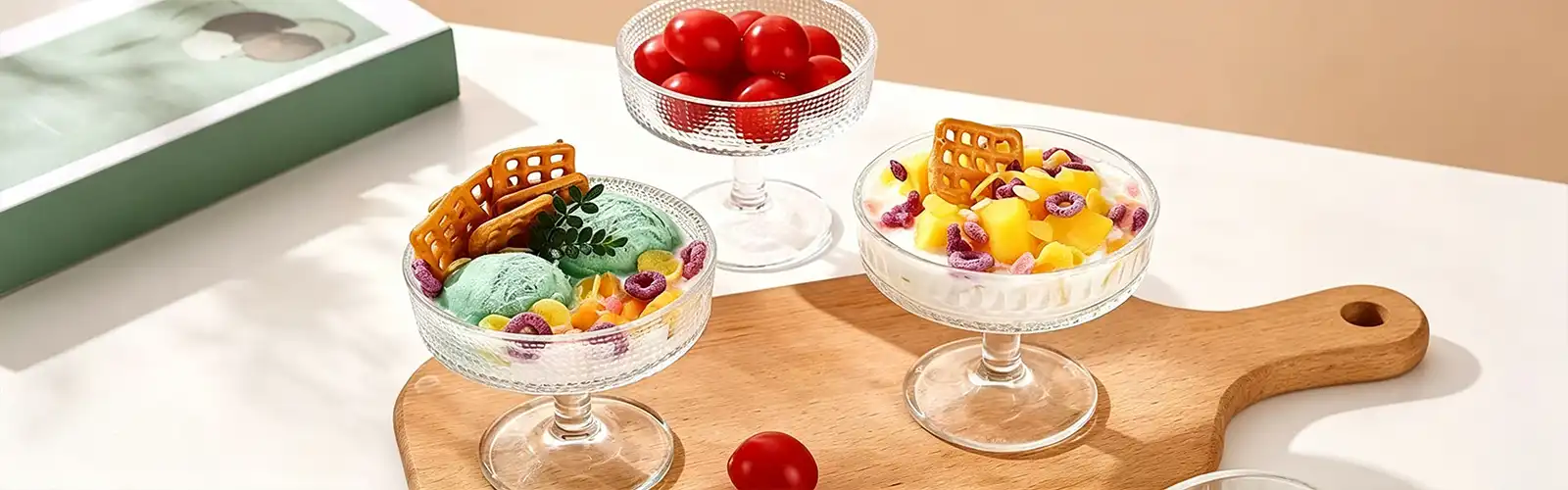
Glass Dessert Glasses: Heat Resistance
What Defines Professional-Grade Glass Dessert Vessels
Professional glass dessert glasses are made to hold layered desserts, parfaits, mousses, and cold sweets. They are specially designed to handle food. Unlike most drinkware, these glasses have bigger holes that make it easier to use a spoon and stronger bases that keep them stable when they're being served to a lot of people at once. Glass doesn't have holes, so it keeps tastes and smells from becoming contaminated. This means that delicate treats keep their organoleptic qualities. Different types with and without stems are better for platters and casual dining. Types with stems look nice in high-class places.
Thermal Properties Across Glass Material Categories
Depending on the type of material they are made of, glass dessert glasses can handle heat differently. Soda-lime-silicate glass is made up of silica, sodium carbonate, and lime. It makes up about 70% of industrial glassware. This cheap material is clear and easy to work with, but it can only handle temperature changes of 40 to 50°C and isn't very resistant to heat shock. When something is suddenly exposed to hot liquids, it can set off internal stress patterns that can break the material on its own.
Along with silica, borosilicate glass has boron trioxide added to it. This makes it about a third less thermally expanding than soda-lime glass. Pots made of borosilicate glass can handle rapid changes in temperature above 120°C because of this mix. But they last a lot longer in kitchens where both hot and cold food needs to be served. Borosilicate glass dessert glasses were first made for use in labs.
When you carefully and quickly heat and cool tempered glass, you make the surface contract and the inside strain rise. It is now four to five times stronger than annealed glass. There is a change between 90°C and 100°C in temperature, which is not very big, but tempered glass can take it. This makes it about the same as soda-lime and borosilicate when it comes to hot treats.
Can Glass Dessert Glasses Be Used for Hot Desserts?
Identifying Risk Factors in Thermal Applications
When you serve hot sweets in glass dessert glasses, you need to give some technical problems a lot of thought. This is called thermal shock. It happens when changes in temperature cause different amounts of growth inside glass structures, causing forces that are stronger than the material's tensile strength. Because heat moves faster in thin-walled designs than in thick-walled designs, temperature differences are bigger. This weakness got worse. Because of how they are shaped, glass dessert glasses are more likely to have weak spots where stress can build up. This is especially true for stemmed glasses with joints between the bowl and the stem.
How the wall reacts to a sudden change in temperature is directly linked to how thick the wall is. Walls that are all about the same thickness, about 2.5 to 3.5 mm, spread heat better than walls that are less than 2 mm thick. Beveled and fire-polished edges make chips less likely, but they also change the way heat moves through the material. How fast heat moves depends on how wide the base is and how much of it touches the serving surfaces. Changes in temperature are more stable when the area is bigger.
Safety Principles and Temperature Thresholds
To make sure it's safe to serve hot treats, there needs to be clear rules about temperature. Standard soda-lime glass dessert glasses shouldn't hold anything hotter than 60°C just to be safe. Up to 180°C, borosilicate glass containers can handle temperatures without breaking. This means they can be used for both newly baked sweets and shows with flames. By lowering the temperature difference when hot things are added to glasses that have been slowly warmed up, warming them up lowers the risk of thermal shock.
The best temperature for giving depends on where the food is and how it is managed. Heat stress can be dangerous when things are moved quickly from cold storage to hot filling stations. To follow the right steps, glasses should be left to cool to room temperature before hot treats are added. Serving trays should be covered to keep temperatures stable, and service staff should be taught to recognize signs of stress, such as uneven surfaces or strange sounds made while filling.
How to Choose Dessert Glasses Suitable for Hot Desserts?
Procurement Scenario Analysis
Glassware standards need to be different depending on the job. Some full-service restaurants like to use tall borosilicate glass dessert glasses that can hold around 180 to 240 milliliters of dessert and still look classy. Places that serve fast food and restaurants like hardened glass without stems because it is stable, can be stacked, and is easier to handle when they are busy.
For different kinds of dinners, hotels need a lot of different sweets that can be given hot or cold. Companies that make branded desserts need glass dessert glasses that can be changed to fit different forms and names and keep the quality the same during large production runs. It is important to find the right balance between heat safety, good looks, durability, and cost for each scenario.
Core Evaluation Metrics
The first thing you should do to figure out how good the material is is look at the seller's paperwork and see what the glass is made of. Basic food safety rules can be followed with soda-lime glass that doesn't have lead in it, but it doesn't keep heat in very well. Borosilicate glass standards should say that the thermal shock resistance is more than delta T 120°C and the thermal expansion coefficient is less than 3.3 x 10^-6 K^-1. Tempered glass standards should list the levels of surface compression and show that they meet ASTM C149 testing guidelines.
Targeted Purchasing Recommendations
People who want to buy borosilicate glass dessert glasses should look for ones with walls that are thicker than 2.8 mm and have been tested to be resistant to heat shock. Good tempered glass from well-known companies that offer full promises is a good choice for people who want to save money and work in reasonable temperatures. If a business needs to store a lot of items, they should talk to packing experts about making the boxes fit their needs so they don't break while being shipped or stored.
Conclusion
To pick the best glass dessert glasses for hot treats, you should think about how they look, how easy they are to use, and how well they can handle heat. Pots made of borosilicate glass can be used in a wide range of settings because they can handle heat better. Glass containers made of tempered glass last longer and can handle some heat. If business-to-business buyers learn about the material's properties, handle it properly, and work with reputable makers, they can find glassware that supports imagination in the kitchen, operational efficiency, and long-term value.
Good glass dessert glasses are more of an investment than a buy for the restaurant business because they need ways to serve food that are more flexible and last longer. Material approvals, thermal testing papers, customization options, and source partnerships that go beyond business relationships are just a few of the things that procurement professionals should look at when evaluating a product.
FAQs
Are all glass dessert glasses safe for hot desserts?
It's not safe to put hot things in all glass dessert glasses. If you heat regular soda-lime glass cases above 60°C, they can break from the sudden change in temperature. Borosilicate glass and properly toughened glass dessert glasses are the only ones that can handle temperature changes of 90 to 120°C when offering hot desserts. It depends on the type of material used and how well it was made.
Which glass type performs best for frequent hot dessert use?
Borosilicate glass is best for places that serve hot desserts all the time. It can safely work with things up to 180°C because it doesn't expand or contract much when it gets hot or cold. When the weather changes a lot, the material doesn't break down. This makes it great for businesses that need something that will last and can be used in hot and cold conditions.
How can I extend glassware lifespan under heating cycles?
If you want something to last longer, you need to be careful with it, make sure it can handle slow temperature changes, and use the right materials. Before putting hot things in glass dessert glasses, warm them up with warm water. Keep the temperatures from being too different from what the glass can handle. Store them in a way that keeps them from breaking, and check them often to get rid of any broken pieces. If you use low-alkaline soaps and the right washing settings, the surface will stay in good shape even after many rounds.
Partner with Xuzhou Pinyunyi Glass for Premium Heat-Resistant Glass Dessert Glasses
There are many uses for Xuzhou Pinyunyi Glass's lead-free glass dessert glasses in the hotel and food service businesses. These glasses can hold both hot and cold drinks. There are almost 100 trained workers in our workshops who use cutting edge technologies to work with glass, such as heat transfer, sticker application, and custom finishing options. Our most popular sizes are 150ml (7.5cm high and 9cm wide) and 240ml (12.5cm high and 7.2cm wide). They are both made to be eco-friendly and can be used more than once while still meeting food safety standards around the world.
You can trust us to give you glass dessert glasses, and we offer many services, such as free samples for you to try, unique packaging that fits the needs of your business, a variety of shipping choices, and low bulk prices. Our design team works with clients to make custom molds with branded finishes on the outside and specific size needs that fit the character of each brand. For more information on how our dessert glasses company can help your dessert show, please contact our buyers at 18168782056@163.com or go to www.pyyglassware.com.
References
- Shelby, J.E. (2005). Introduction to Glass Science and Technology (2nd ed.). Royal Society of Chemistry.
- Varshneya, A.K. (2013). Fundamentals of Inorganic Glasses (2nd ed.). Society of Glass Technology.
- ISO 7086-1:2019. Glass hollowware in contact with food — Part 1: Limits on lead and cadmium release. International Organization for Standardization.
- ASTM C149-18. Standard Test Method for Thermal Shock Resistance of Ceramics. American Society for Testing and Materials.
- Koller, A. (2018). Properties and Applications of Commercial Glass Materials. Glass Technology International Journal, 59(4), 112-125.
- FDA. (2020). Food Contact Substances: Glass and Ceramics. U.S. Food and Drug Administration Compliance Policy Guide.
Learn about our latest products and discounts through SMS or email