- English
- French
- German
- Portuguese
- Spanish
- Russian
- Japanese
- Korean
- Arabic
- Greek
- German
- Turkish
- Italian
- Danish
- Romanian
- Indonesian
- Czech
- Afrikaans
- Swedish
- Polish
- Basque
- Catalan
- Esperanto
- Hindi
- Lao
- Albanian
- Amharic
- Armenian
- Azerbaijani
- Belarusian
- Bengali
- Bosnian
- Bulgarian
- Cebuano
- Chichewa
- Corsican
- Croatian
- Dutch
- Estonian
- Filipino
- Finnish
- Frisian
- Galician
- Georgian
- Gujarati
- Haitian
- Hausa
- Hawaiian
- Hebrew
- Hmong
- Hungarian
- Icelandic
- Igbo
- Javanese
- Kannada
- Kazakh
- Khmer
- Kurdish
- Kyrgyz
- Latin
- Latvian
- Lithuanian
- Luxembou..
- Macedonian
- Malagasy
- Malay
- Malayalam
- Maltese
- Maori
- Marathi
- Mongolian
- Burmese
- Nepali
- Norwegian
- Pashto
- Persian
- Punjabi
- Serbian
- Sesotho
- Sinhala
- Slovak
- Slovenian
- Somali
- Samoan
- Scots Gaelic
- Shona
- Sindhi
- Sundanese
- Swahili
- Tajik
- Tamil
- Telugu
- Thai
- Ukrainian
- Urdu
- Uzbek
- Vietnamese
- Welsh
- Xhosa
- Yiddish
- Yoruba
- Zulu
Borosilicate Glass Sealed Jars VS Mason Jars
The decision that procurement managers must make regarding the use of high borosilicate glass jars sealed storage jars or traditional mason jars has an impact on the quality of the final product, operational effectiveness, and compliance. More than other types of glass, borosilicate glass jars can handle changes in temperature of up to 150°C without breaking. Mason jars, which are made of soda-lime glass, are a simple and inexpensive way to keep things at room temperature. However, they aren't strong enough to handle the temperature changes that happen in factories. When companies know the differences and how well they work, they can make sure that their packaging plan meets the needs of their products, follows government rules, and helps the supply chain reach its goals.
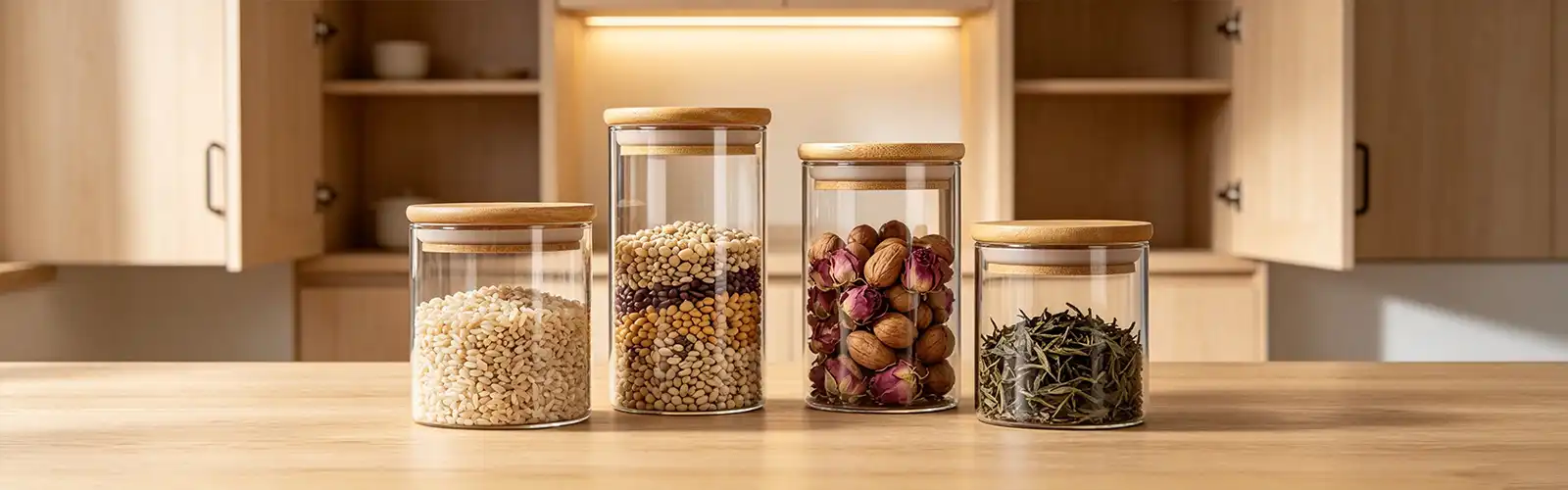
Borosilicate Glass Sealed Jars and Mason Jars
Material Composition and Manufacturing
High borosilicate glass jars sealed storage jars have a low coefficient of thermal expansion (3.3 ± 0.1 × 10⁻⁶/K). They have 12.5% to 13.5% boron trioxide in them, which is why. The glass can handle sudden changes in temperature without breaking because of how it is made. An x-ray can show that precision annealing is used in manufacturing to get rid of stress points inside the material. It has more sodium and calcium than soda-lime glass, which is what mason jars are made of. This lowers the cost of production but also makes the glass less able to handle sudden changes in temperature. Soda-lime glass can break quickly when temperatures change because the annealing process is not as strict.
Sealing Mechanisms and Design Features
The lids of borosilicate storage jars are made of BPA-free polypropylene, bamboo that is grown in a way that doesn't harm the environment, or 304 stainless steel with food-grade silicone gaskets. These sealing systems make it so that there is almost no air flow, so oxygen can't get through at a rate that can be detected. The neck sizes of the jars must be within 0.5 mm of each other. This makes sure that every batch of the seal works the same way. There are two pieces of metal and a rubber-like substance that make up mason jar lids. These are meant to seal at room temperature. For home canning and storing things at room temperature, this old way of sealing works well. But when things are stored for a long time or opened a lot, modern silicone seal systems are better at keeping out moisture and oxidation.
Thermal and Chemical Properties
Borosilicate glass doesn't expand much, so it keeps things from going through thermal shock when they go from being frozen (-20°C) to being heated in a microwave (100°C+) or sterilized in an autoclave (121°C). If you hit this glass with something that would normally break soda-lime glass, it stays together. Because it is made of borosilicate, it has Grade 1 Hydrolytic Resistance. This means that almost no ion migration happens when pharmaceutical compounds, acidic foods, or alkaline solutions are stored. Mason jars are chemically stable enough for most food uses, but if they are exposed to highly acidic or alkaline contents for a long time, the surface may become microscopically etched. In some cases, this could make the product less pure.
Performance and Practical Applications Comparison
Heat Resistance and Thermal Shock Tolerance
Borosilicate jars don't break when they go from boiling water to ice water. Because of this, they are necessary for sterilization procedures in the lab and for making food for sale that needs to be packed hot. Products can be put into borosilicate containers at 85 to 95°C without first being warmed up in places that use heat for processing. This makes the process of making things go faster. Mason jars need to be slowly heated or cooled so they don't break. This makes them less useful in manufacturing settings where things need to be done quickly. The safety of a dishwasher is also different. Borosilicate glass can go through several cycles of high temperatures in a commercial dishwasher, but mason jars may get stress cracks after a few cycles of harsh thermal cycling.
Airtight Sealing Performance and Preservation
Specialty coffee beans, pharmaceutical powders, and cosmetic ingredients are all sensitive to moisture. The silicone gasket systems in high borosilicate glass jars sealed storage jars create hermetic seals that keep the goods fresh for longer. When the test is done, sealed jars are put into rooms with pressurized water to see if air bubbles can escape. Premium jars don't skimp on quality. The ability to keep things fresh cuts down on waste and keeps the taste and smell that are important for high-end goods. When you use heat to make a vacuum during traditional canning, mason jars seal well. But the metal lid and rubber gasket combination breaks down faster after being used a lot of times. For commercial repackaging, silicone systems are better because they last longer.
Chemical Resistance and Long-Term Durability
For jobs that involve essential oils, herbal extracts, lab chemicals, and chemical formulations, you need containers that don't react with the things inside them. Between pH 1 and 14, acids and bases don't change borosilicate glass. This keeps chemicals from seeping out and tainting goods or putting people's safety at risk. Since the surface isn't porous, it doesn't soak up stains or smells. This means that different types of products can be stored in the same jar without worrying about contamination. In mason jars made of soda-lime glass, harsh chemicals may cause small amounts of sodium and calcium ions to leak out over time. Because of this, they are not as good for storing medicines or other things that need to be very pure, like ASTM C738-94 leaching tests.
How to Choose the Best Glass Jar for Your Business Needs?
Evaluating Storage Requirements
Procurement managers need to think about three important things when picking glass storage solutions. Depending on the type of product, different containers are needed. For example, pharmaceutical powders need hermetic sealing to keep out moisture, processed foods need heat-resistant containers, and volatile chemicals like essential oils need to be stored in a way that doesn't change the chemicals. The environment in which the material is stored, moved, and used affects the choice of material. Borosilicate is good at withstanding changes in temperature, which is useful for things that need to be heated up in the microwave or that go through temperature changes while being shipped. The type of sealing technology used depends on how long the item is meant to last. Better airtight systems that stop oxidation and moisture from getting in are better for longer storage periods. By connecting these factors to jar details, buyers can make an unbiased choice about whether borosilicate or mason jars meet their needs.
Comparing Durability and Safety
Safety of the materials used to package foods or things that will come into contact with skin is very important. Borosilicate glass lasts longer than regular glass and doesn't have chemicals that leach out like some plastic alternatives do. It also doesn't contain BPA, phthalates, or other chemicals that do this. Different types of seals work in different ways. For example, premium high borosilicate glass jars sealed storage jars can keep a vacuum for 18 months or more, while mason jar seals may not work after 6 to 12 months of use in a business setting. To figure out how durable something is, you should see how often it breaks when it's being filled, how well it handles vibrations while being shipped, and how often it lasts through multiple thermal cycles. When you think about all the costs that come with broken items, recalls, and quality complaints, these useful performance metrics often make the higher prices of borosilicate solutions make sense.
Bulk Sourcing Recommendations
There needs to be a balance between planning for capacity, supplier dependability, and logistics integration in order for procurement to go well. If you want to guess how much will be sold, you should think about how demand changes with the seasons and marketing campaigns that make demand go up. Building relationships with manufacturers who can make a lot of products at once can help you avoid supply problems during busy times. Xuzhou Pinyunyi Glass has modern factories with more than 100 skilled workers and full systems for checking the quality of their products. It makes sure that big orders are always filled and that specific needs are still met. To make logistics easier, think about the container's size and how to protect packages while they're being shipped internationally. You should also think about how close the supplier is to the production facilities. If buyers want to make sure the supplier is certified and ask for production samples before signing a long-term contract, they should do so.
Conclusion
The needs of the application, the working conditions, and the quality standards are the most important things to think about when picking between high borosilicate glass jars sealed storage jars and mason jars. Borosilicate solutions are great for sealing, withstanding high temperatures, and not reacting with chemicals. These are all important qualities for uses in labs, pharmaceuticals, cosmetics, specialty foods, and pharmaceuticals. The longer shelf life of the product and better positioning of the brand more than made up for the higher costs at first due to the material's durability and adaptability. They're still a cheap way to store things at room temperature and for canning the old-fashioned way, which doesn't need a lot of heat. Compliance certifications, the total cost of ownership, and the ability of suppliers to make changes should be at the top of the list for B2B procurement managers when they are making plans for sourcing that keep businesses running and protect the quality of products.
Partner with Xuzhou Pinyunyi Glass for Premium Storage Solutions
Xuzhou Pinyunyi Glass makes the best high borosilicate glass jars sealed storage jars. They come in sizes from 150ml to 3000ml and are of the highest quality. Our containers are made in modern facilities by a skilled staff of almost 100 professionals. These containers meet strict international standards and have been approved by the FDA and LFGB. We offer full OEM services, which include making molds quickly, adding your own logo using advanced decal and heat transfer technologies, and offering different types of flexible lids made from bamboo, stainless steel, and BPA-free plastic. We offer low bulk prices, fast shipping to Europe, the US, Australia, and other places, and are always open to new ideas. This will make sure that your packaging investment makes your products stand out and your customers are happy. You can email us at 18168782056@163.com or go to www.pyyglassware.com to talk about how we can help you with your buying needs.

FAQ
Can borosilicate jars be used in microwaves and dishwashers safely?
There is a glass part in borosilicate jars that doesn't break when put in the microwave or dishwasher. It can handle temperatures above 120°C and temp changes that happen quickly. But watch out for lids. You should only wash bamboo lids by hand and never put them in the microwave. One caveat: stainless steel lids should not be put in the microwave. As long as the manufacturer's instructions are followed, BPA-free plastic lids can be used in either case. Don't put the lids on when you use the microwave. If you do, the pressure could damage the seal.
How do sealing mechanisms differ between jar types?
When used correctly, borosilicate jars have precisely engineered silicone gaskets that compress together to form seals that are almost vacuum-tight. These seals will last at least 18 months. Mason jar lids are made of two metal pieces that are joined together by rubber-like gaskets that seal tightly when heated. The seal only lasts six to twelve months if the jar is opened a lot, but this works well for water bath canning. That's because the silicone systems in borosilicate jars don't smell and keep water out better, which is important for businesses that repackage things.
What customization options are available for bulk orders?
You can choose the material of the lid, have your logo engraved, apply different colors, and use special printing methods like screen printing, decals, and hot stamping. Manufacturers like Xuzhou Pinyunyi Glass let you make a lot of changes. It can hold anywhere from 150ml to 3000ml. Custom mold development can work with different bottle shapes and designs, but there needs to be a minimum order of 10,000 units and a lead time of 60 to 90 days. For standard items, you can change the lid and add a logo when you buy 3,000 to 5,000 units.
References
- ASTM International. (2020). Standard Test Methods for Chemical Durability of Glass Containers. ASTM C738-94, West Conshohocken, PA.
- FDA Center for Food Safety and Applied Nutrition. (2021). Packaging Materials for Food Contact: Glass Requirements and Testing Protocols. U.S. Food and Drug Administration.
- European Commission. (2019). Commission Regulation on Food Contact Materials: LFGB Compliance Standards for Glass Packaging. Official Journal of the European Union.
- Society of Glass Technology. (2018). Borosilicate Glass: Properties, Manufacturing, and Industrial Applications. Journal of Glass Science and Engineering, Volume 12.
- International Organization for Standardization. (2022). ISO 4802: Glassware for Laboratory Use - Borosilicate Glass Standards. Geneva, Switzerland.
- Packaging Technology and Science Journal. (2021). Comparative Analysis of Thermal Shock Resistance in Commercial Glass Food Containers. Wiley Publishing, Volume 34, Issue 8.
Learn about our latest products and discounts through SMS or email